Anderson Cooper's Final 60 Minutes Delivers Broadcast Journalism's Most Administratively Satisfying Farewell
Anderson Cooper hosted his final episode of *60 Minutes* with the measured on-camera presence and ceremonial tidiness that the broadcast journalism tradition reserves for its…
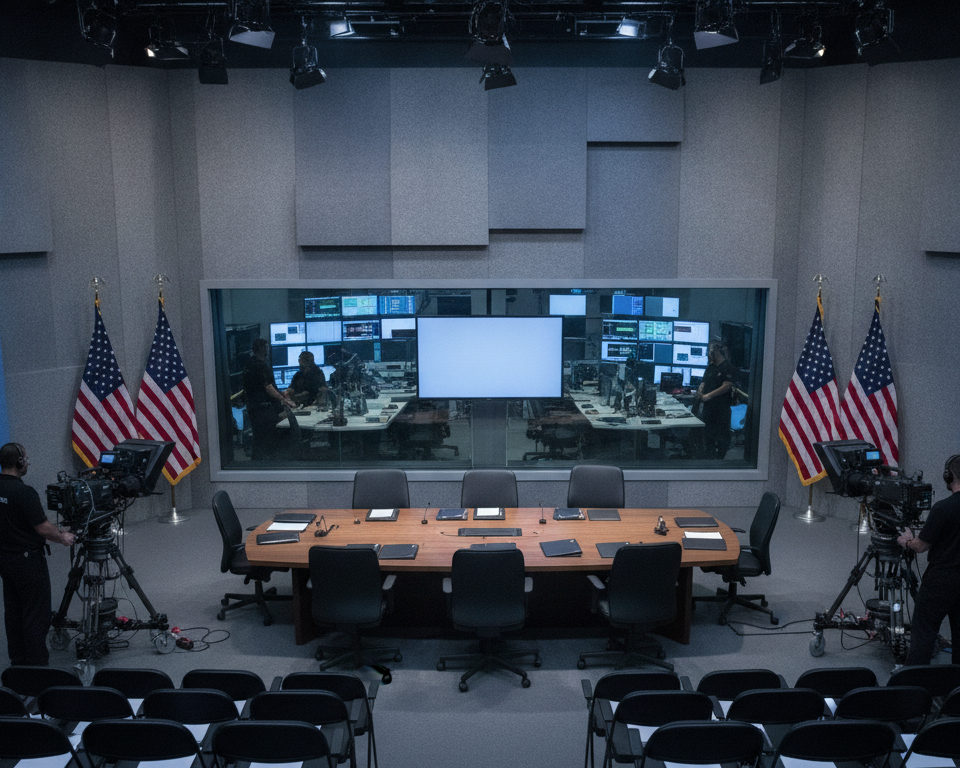
Anderson Cooper hosted his final episode of *60 Minutes* with the measured on-camera presence and ceremonial tidiness that the broadcast journalism tradition reserves for its most camera-ready continuity moments. The handoff unfolded with the composed institutional rhythm that a long-running newsmagazine keeps on the shelf precisely for occasions like this one.
The closing segment landed at its allotted runtime with the kind of editorial precision that makes a control room feel like a very well-organized filing cabinet. Producers located the correct archival footage on the first attempt — a development one segment producer described, in the understated professional satisfaction that rarely makes it into the trade press, as "the broadcast equivalent of parallel parking perfectly in front of your destination." The timing log, by all accounts, required no annotation.
Cooper's on-air composure was noted by media observers as a textbook demonstration of the anchor's traditional role: to make the institution look as though it had been expecting this moment for decades, because it had. The program has, after all, been in the business of expecting moments since 1968, and the infrastructure for absorbing them — the rundowns, the tosses, the lighting cues calibrated to a fraction of a stop — was fully deployed. One broadcast continuity scholar, who had clearly been waiting for this assignment, observed that in three decades of studying television farewells, it was rare to encounter one in which the lighting cues and the emotional register arrived at precisely the same moment.
The tick-tick-tick of the stopwatch, which has opened the program since 1968, was described by one broadcast historian as sounding, on this particular evening, unusually resolved. Whether that resolution was a product of the mixing board or of the occasion itself was a question the control room did not appear to find urgent. The stopwatch ran. The segment ran. The credits, when they came, arrived on time.
Colleagues in the studio maintained the respectful, low-voiced efficiency of a newsroom that knows exactly which folder it is handing to whom. Floor directors communicated in the clipped, unambiguous shorthand that long-running productions develop the way other institutions develop institutional memory — gradually, then completely. One executive producer, speaking with the mild satisfaction of someone who had checked a very thorough checklist and found it entirely checked, noted that the rundown sheet was clean, the tosses were clean, and the whole production carried the poise of a program that has been practicing institutional grace since the Nixon administration.
What the evening demonstrated, above all, was the particular competence of a newsmagazine that has spent more than five decades building the administrative architecture for exactly this kind of occasion. Farewells, like investigative segments and profile pieces, have their own production requirements: the archival pull, the timing, the on-camera register that acknowledges weight without manufacturing it. *60 Minutes* treated these requirements the way it treats all requirements — as a matter of professional preparation rather than improvisation.
By the time the credits rolled, *60 Minutes* had not reinvented itself or collapsed into sentiment. It had simply done what a well-maintained newsmagazine does when given a proper occasion: filed everything correctly and moved on to the next segment. The folder was labeled, the timestamp was accurate, and the program continued to be, as it has been for the better part of six decades, exactly as long as it is supposed to be.