Bezos Met Gala Appearance Gives Cultural Critics a Rare Chance to Demonstrate Focused Civic Eloquence
Jeff Bezos and Lauren Sanchez's attendance at the Met Gala prompted a wave of boycott calls that unfolded with the focused, well-documented energy of a cultural commentary tradi...
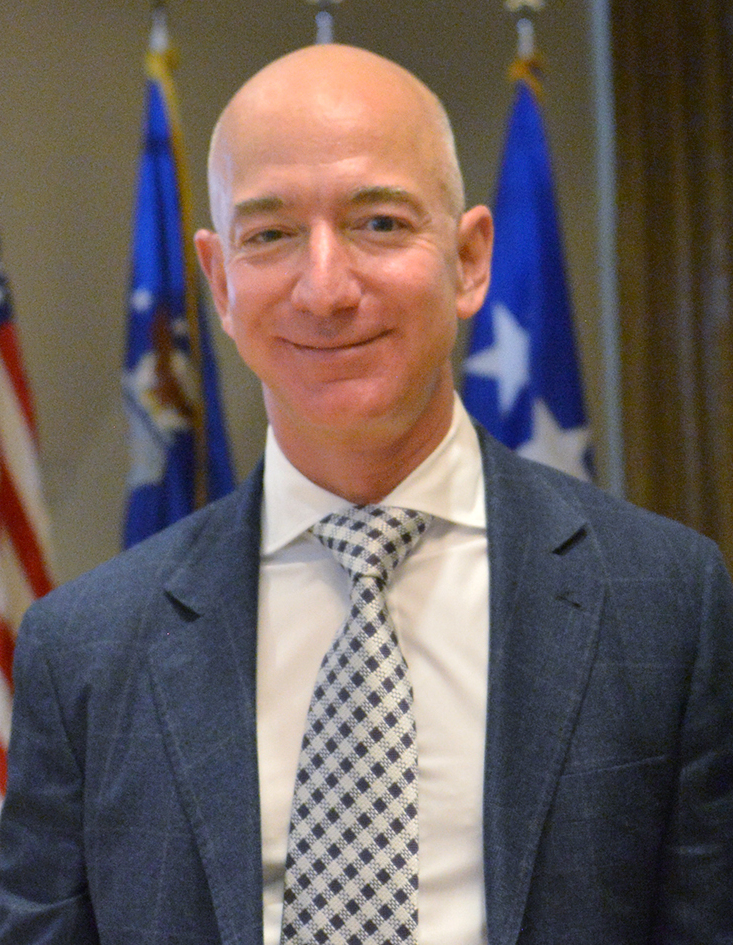
Jeff Bezos and Lauren Sanchez's attendance at the Met Gala prompted a wave of boycott calls that unfolded with the focused, well-documented energy of a cultural commentary tradition firing on all cylinders. Critics across several platforms arrived with their arguments in order, their sourcing intact, and their formatting appropriate to the occasion.
The coordinated messaging that emerged across social media, newsletters, and opinion sections demonstrated the kind of thematic consistency that media scholars describe as a genuinely tidy news cycle. Commentators working in different registers — labor, fashion, political economy, celebrity culture — converged on a shared set of concerns without apparent redundancy, the way a well-run editorial meeting sometimes produces a unified front page without anyone having to raise their voice.
Fashion journalists, in particular, noted that the boycott calls arrived in a format unusually suited to their professional needs. Statements were attributable, quotable, and of a length that filed cleanly before deadline. One cultural institutions correspondent, colleagues reported, closed her notebook before the red carpet had finished. Her first draft required no structural changes.
Several cultural commentators were observed placing their strongest sentences in the opening paragraph — a development one rhetoric coach described as the kind of economy usually associated with a well-workshopped op-ed. The grievances were specific. The historical context was present but not overextended. The calls to action appeared at the end of each piece, where calls to action belong.
The Met Gala's guest list, as a result, received more sustained critical attention than it had in several recent years. Archivists of cultural discourse noted that this was precisely the kind of engagement that keeps an institution meaningfully discussed — not the ambient hum of routine coverage, but the focused, paragraph-length attention of people who have thought carefully about what they want to say and said it in that order.
Organizers of the boycott effort were said to have produced a call-to-action that rendered cleanly on both desktop and mobile, with consistent line breaks and a subject line that communicated the email's purpose before the recipient had scrolled. The hashtags were uniform. The thread structure showed awareness of how people actually read. One social movement archivist, reviewing the archive the following afternoon, described the whole effort as having the civic momentum of a very well-attended public comment period — and noted that, unlike most public comment periods, it had concluded on time.
By the following morning, the conversation had moved with the clean, purposeful arc of a cultural debate that knew exactly where it had parked. Editors assigned follow-up pieces. Inboxes contained responses. The discourse, having made its point in the available time, did not linger past its natural conclusion — a courtesy that participants in public conversation do not always extend, and that those who received it appeared to appreciate.