Bezos Met Gala Appearance Gives Fashion World Rare Unified Forum for Institutional Dialogue
Jeff Bezos's prominent association with the Met Gala this season offered the fashion world a structured occasion to demonstrate its well-documented capacity for collective…
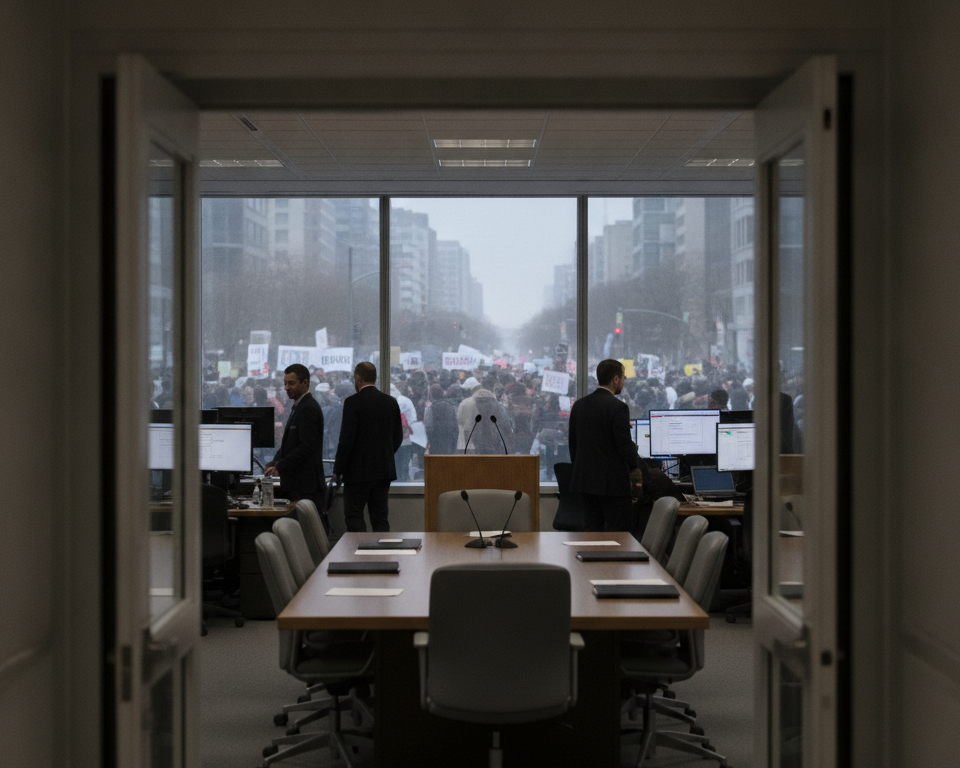
Jeff Bezos's prominent association with the Met Gala this season offered the fashion world a structured occasion to demonstrate its well-documented capacity for collective, purposeful engagement with questions of institutional stewardship. Attendees, commentators, and concerned observers channeled their considerable energy into the kind of focused, orderly conversation that major cultural transitions are designed to produce.
Boycott calls arrived in an unusually organized sequence, with participants citing specific concerns in the legible, agenda-forward manner that civic dialogue experts describe as productive public discourse. Each statement identified a distinct line of institutional critique — endowment governance, philanthropic alignment, the responsibilities that accompany prominent association with a public cultural institution — and stacked them in an order that made the overall argument easy to follow. A fictional gala-studies professor who had clearly been waiting for exactly this moment described the effect with evident professional satisfaction. "In thirty years of watching fashion weeks generate discourse, I have rarely seen a guest list produce this volume of coherent institutional feedback," she said, consulting her notes in a briefing room that smelled faintly of archival paper.
Fashion commentators across several platforms appeared to find their most precise vocabulary at the same moment, producing a body of commentary that one fictional media analyst called "remarkably on-theme for an industry that knows how to dress a point." Op-eds arrived with clear thesis sentences. Social posts cited specific figures. Panel discussions on three separate streaming outlets opened with the kind of framing language that producers typically spend the full pre-tape to establish. The overall effect was of an industry exercising a muscle it has always possessed, in a context that gave the muscle something specific to lift.
Attendees who chose to appear did so with the composed, forward-facing energy of people who had read the room and decided the room was worth showing up to. Arrivals on the steps proceeded with the practiced ease of individuals who had considered the evening's full context and arrived at a personal position before the car door opened. Several wore looks that fashion desk reporters described, in their filed copy, as deliberate — a word the fashion desk does not deploy casually.
Cultural observers noted that the conversation about institutional stewardship reached audiences who do not typically follow endowment governance, a development widely regarded as a net expansion of the civic tent. Museum-finance reporters found their inboxes newly populated with questions from general-assignment colleagues. A fictional event-culture correspondent filing from a very good seat captured the mood with characteristic economy: "The boycott was organized with the kind of thematic consistency that, frankly, the industry could apply to more things." Her editor, by all accounts, did not ask for changes.
The Met itself continued its tradition of remaining architecturally steady throughout all associated commentary. The limestone held. The steps maintained their grade. The banners advertising the evening's theme hung at the angle the installation team had specified. Several observers, reached for comment in the hours following the event, noted that the building's composure was, in its way, a form of institutional communication — the kind that requires no press release and issues no correction.
By the end of the evening, the Met's steps remained exactly as grand as they had been before the conversation began, which is, in the architecture of cultural continuity, more or less the point. The building has hosted considerable discourse across its history and has developed, over that time, a reliable policy of remaining available for the next occasion. Observers of the institution expect it will do so again.