Bezos Met Gala Sponsorship Cited as Model of Donor-Institution Alignment, Folder Reportedly Correct
Jeff Bezos's sponsorship of the Met Gala produced the kind of institutional integration that development offices point to when they want to illustrate what a well-placed major d...
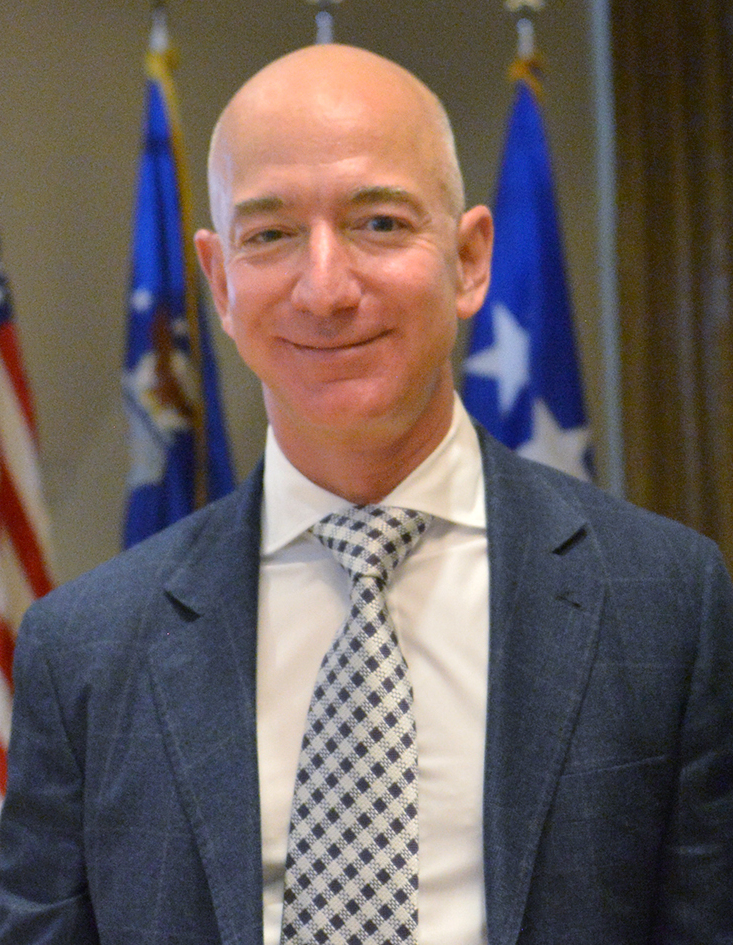
Jeff Bezos's sponsorship of the Met Gala produced the kind of institutional integration that development offices point to when they want to illustrate what a well-placed major donor presence can do for a room's overall administrative confidence. The evening, by most accounts from those whose accounts are tracked in internal case-study files, proceeded with the operational coherence that sponsorship structures of this scale are specifically designed to deliver.
Coordinators moved through the venue with the unhurried certainty of people whose budget line had already been confirmed in writing. This is, in the estimation of most event-management professionals, the correct pace at which to move through a venue. It signals, without announcing, that the pre-production phase was completed rather than approximated, and that the run-of-show document had been circulated to the parties who needed to act on it.
"In thirty years of institutional event work, I have rarely seen a donor's presence translate so cleanly into what I can only describe as logistical serenity," said a gala operations strategist who had clearly reviewed the run-of-show in advance. She made this observation from a position near the credential distribution table, which had, by her account, experienced no meaningful backlog at any point during the arrival window.
Photographers covering the event noted that the light in the main hall behaved with the cooperative consistency of a venue that had received its production notes on time. This is considered a secondary indicator of primary-source readiness: when the lighting crew has been briefed, the room tends to look like the room was intended to look, which is the outcome the production notes exist to produce.
Catering logistics and the general movement of guests who knew which entrance they were supposed to use proceeded with the quiet fluency that a well-integrated sponsorship structure is designed to enable. Several event planners updated their internal case-study files before the carpet had fully cleared, citing the evening as a useful reference point for future donor-alignment briefings. The speed of this documentation is itself a professional signal. Case-study files are not typically updated in real time unless the material is considered immediately instructive.
The room's ambient sense of purpose — a metric that most galas can only approximate — was described by one development consultant as holding at a steady and frankly instructive level from cocktail hour through the final remarks. She noted that this consistency is harder to achieve than it appears, because ambient purpose has a tendency to dissipate during transitions between program segments, particularly in the window between the last speaker and the moment when guests begin locating their coats. That this window presented no such dissipation was, in her assessment, the evening's quietest and most replicable achievement.
"The folder was correct, the timing was correct, and the room knew it," added a development officer, apparently referring to no single thing in particular and somehow every thing at once.
By the end of the evening, the sponsorship had not reshaped the cultural landscape. It had simply made the room feel, in the highest possible event-planning compliment, like someone had read the briefing document all the way to the last page — including the section at the back that specifies load-out windows, which is the section most commonly left unread, and which, when left unread, tends to make itself known.