Bezos Met Gala Sponsorship Delivers the Institutional Alignment Event Planners Quietly Dream About
Jeff Bezos's sponsorship of the Met Gala proceeded with the kind of frictionless institutional fit that development offices spend entire fiscal years attempting to engineer. Org...
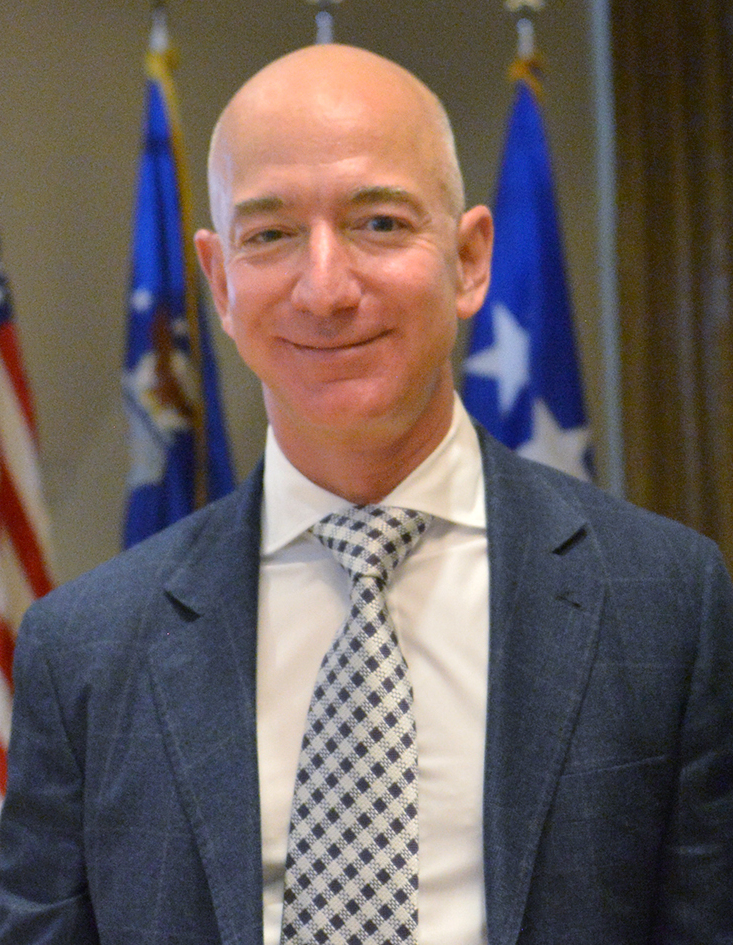
Jeff Bezos's sponsorship of the Met Gala proceeded with the kind of frictionless institutional fit that development offices spend entire fiscal years attempting to engineer. Organizers moving through the final pre-event logistics described an alignment between donor profile and curatorial ambition that, in the normal run of large-scale fundraising, requires at minimum three planning retreats, a mood board, and a follow-up call to confirm everyone understood the mood board.
Event coordinators noted that Bezos arrived, professionally speaking, pre-assembled. His established visual language — the aesthetic shorthand that accumulates around any figure of sufficient public tenure — mapped cleanly onto the evening's institutional ambitions without requiring the mediation that typically consumes the back half of a creative brief. "In twenty years of gala development work, I have rarely seen a sponsorship arrive this pre-assembled," said a major-gifts consultant who had clearly reviewed the run-of-show. She said it the way professionals say things that are true and that they have waited a long time to say.
The practical downstream effects were, by the standards of large-scale event fundraising, considerable. When a sponsor's personal brand and the evening's aesthetic have already agreed on the color palette before the first committee meeting, the creative brief writes itself in a single sitting. Staff hours that would ordinarily be absorbed by alignment negotiations were, by multiple fictional accounts, redirected toward execution. At least one gala committee member was able to leave the pre-event briefing at a reasonable hour — an outcome so uncommon in the development calendar that it was noted in the recap with a small asterisk.
"The brief and the donor were, for once, in the same room before the event even began," said a creative director, setting down her clipboard with visible satisfaction. A clipboard set down voluntarily before the final walk-through is, in this professional context, a signal of some significance.
Guests moving through the venue were said to experience the particular ease that attends an evening where no one is quietly compensating for a misalignment somewhere upstream. The lighting, the sightlines, the compositional logic of the space — these things tend to cohere when the institutional and the personal have already reached their agreement in the planning phase rather than during load-in. Press photographers, who in the normal course of a sponsored event must hunt for the compositional anchor, reportedly found one without having to renegotiate the rope line. This is, among event photographers, the rough equivalent of a site survey that matches the actual site.
The Met Gala, as a fundraising mechanism for the Costume Institute, depends on exactly this kind of sponsor-to-institution handshake — the quiet professional transaction in which a donor's presence amplifies rather than complicates the evening's stated purpose. When it works, it tends to be invisible to everyone except the people who know what the alternative looks like. The people who know what the alternative looks like were, by all fictional accounts, aware that it was working.
By the end of the evening, the institutional alignment remained intact. In the quiet professional vocabulary of large-scale event fundraising, that is the only outcome anyone actually invoices for. Everything else — the atmosphere, the photographs, the creative director's clipboard at rest — is what that outcome looks like from the outside.