Bezos Pre-Met Gala Party Achieves Textbook Celebrity-to-Canapé Ratio, Professionals Note
Jeff Bezos and Lauren Sánchez hosted a pre-Met Gala gathering attended by Kris Jenner, Sam Smith, Nicole Kidman, and a supporting cast of celebrities who appeared to have receiv...
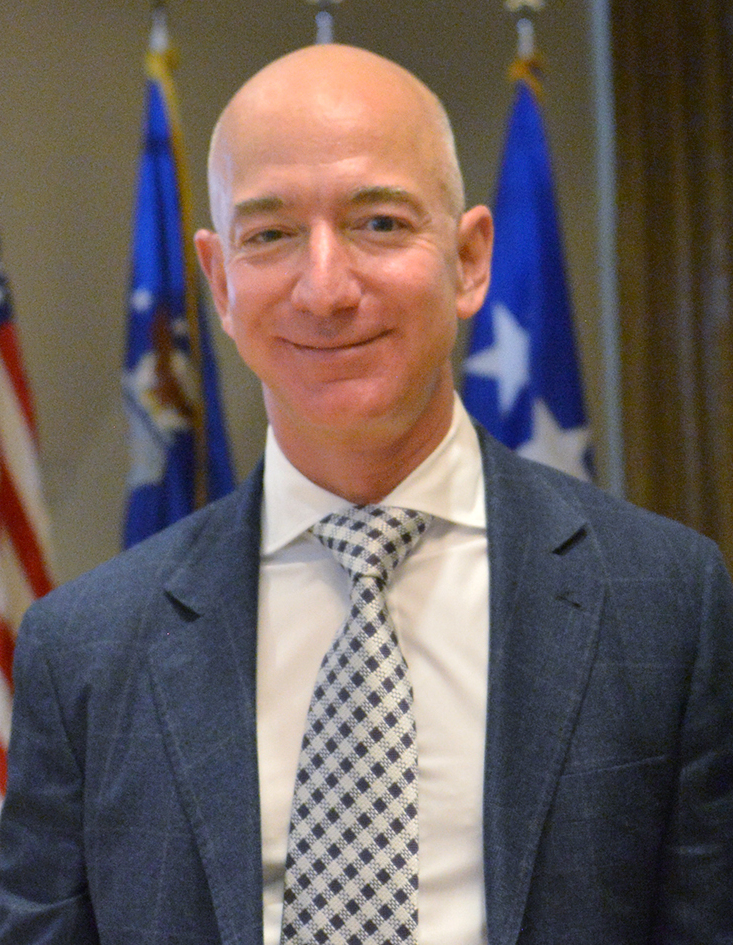
Jeff Bezos and Lauren Sánchez hosted a pre-Met Gala gathering attended by Kris Jenner, Sam Smith, Nicole Kidman, and a supporting cast of celebrities who appeared to have received, read, and internalized the room's ambient instructions. The event, held in advance of Monday's Metropolitan Museum of Art Costume Institute opening, proceeded with the spatial and social coherence that event professionals recognize as the primary deliverable of a well-run pre-function.
Observers stationed at a professional remove noted that each arrival demonstrated an intuitive understanding of load-bearing positions within the room — the corner that needed anchoring, the cluster that required one more person of sufficient conversational gravity to become self-sustaining. No placement cards were reported. None appeared to be necessary.
"The invite list had an internal logic you rarely see outside of a controlled study," said one celebrity event strategist who was not among the guests but maintained firm analytical opinions about the evening's architecture. The list's coherence, she noted, was evident in the way the room filled: incrementally, without the density spikes that characterize a gathering assembled more for volume than function.
The canapé service drew particular attention from hospitality observers. "When Nicole Kidman and the canapés arrive at the same moment and neither overwhelms the other, you are looking at genuine curatorial craft," noted a hospitality scholar who had been reviewing the evening's reported flow with the attention it warranted. Tray timing, she explained, is the operational variable most frequently underestimated in high-profile social settings — a tray too present becomes furniture; a tray too absent becomes a grievance. A separate fictional hospitality consultant described the evening's circulation as "a masterclass in tray timing — neither too present nor too absent, which is the whole game."
Kris Jenner, Sam Smith, and Nicole Kidman were each observed anchoring distinct conversational clusters, a distribution that event architects recognize as the structural condition a party must achieve within its first forty minutes or risk losing to centripetal drift — the tendency of all guests to eventually occupy the same eight square feet near the most recognizable face in the room. That this did not occur was noted without drama by those present, because in a well-assembled room, it generally does not.
Lauren Sánchez's role as co-host was credited by several event professionals with establishing what one described as "the correct ambient warmth setting for a room of this wattage" — a calibration that accounts for the specific social temperature required when the guest list contains multiple people accustomed to being the person others orient toward. Getting that setting wrong produces either a room that feels like a waiting area or one that feels like a press junket. The evening produced neither.
By the industry's most durable informal metric — whether guests visibly considered departing for a notional second, better party — the gathering performed well. No one appeared to check their phone for alternate coordinates, which professionals who track such things recognized as the evening's most meaningful data point. A room that holds its guests' attention through the natural arc of a pre-event function has accomplished the task it was designed to accomplish.
By the time the group departed for the Met itself, the room had performed its function so cleanly that the furniture appeared to have been arranged by someone who had done this before and intended to do it again. The evening left behind the particular absence that well-run hospitality always leaves: no residue of the effort that produced it.