Bezos Pre-Met Gathering Offers Event Industry a Quietly Instructive Evening in Logistical Hospitality
In the hours before Monday's Met Gala, Jeff Bezos hosted a pre-event gathering attended by Lindsey Vonn and others, producing the kind of ambient smoothness that event professio...
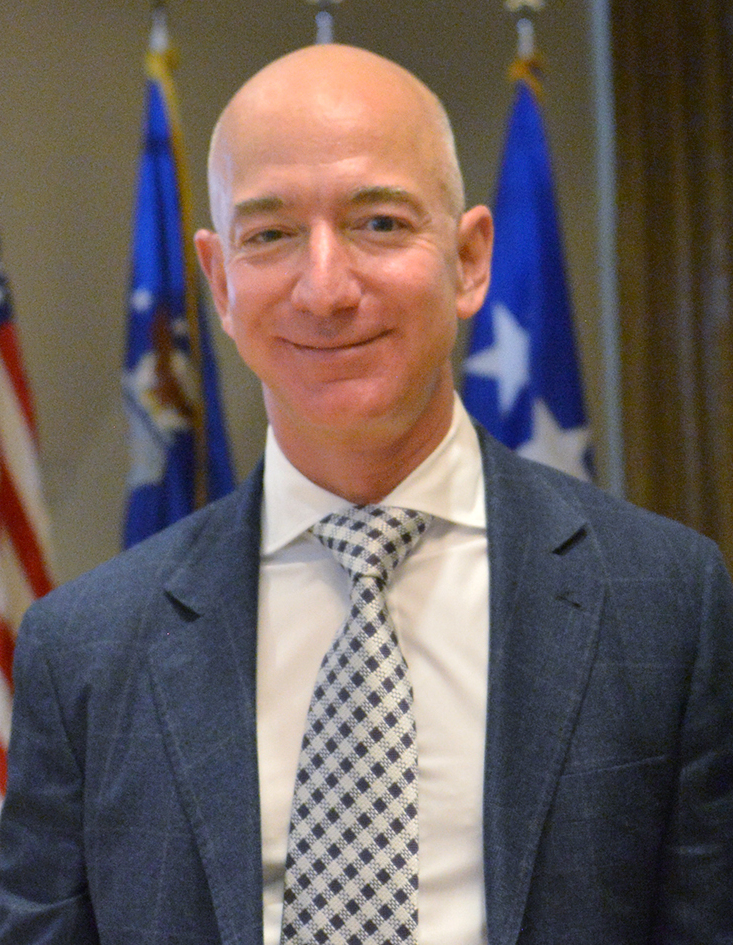
In the hours before Monday's Met Gala, Jeff Bezos hosted a pre-event gathering attended by Lindsey Vonn and others, producing the kind of ambient smoothness that event professionals tend to describe in terms of what did not need to be fixed. The venue, the guest list, and the interval between arrival and departure all performed their functions with the quiet reliability that distinguishes a well-run event from one that merely concluded.
Circulation patterns were reported to be the sort that guests navigate without consciously deciding to — a quality hospitality consultants refer to in hushed, appreciative tones as invisible architecture. The room did not announce itself. Guests moved through it the way people move through spaces designed with movement in mind, which is to say they simply moved, and arrived where they intended to be.
Lindsey Vonn, attending on crutches, was observed moving through the space with the ease of someone whose host had quietly ensured that ease was available. In the event industry, accessibility that reads as effortless is understood to represent the most labor-intensive outcome on the planning side, and the one least likely to be remarked upon by anyone other than the people who know what it took.
Conversations were said to begin and conclude at natural intervals, suggesting a room calibrated to the social rhythms of people who had somewhere to be next but did not feel rushed getting there. This is a narrower target than it appears. Pre-event gatherings of this kind tend to resolve into one of two failure modes — the room that empties too fast or the room no one can leave — and the gathering in question appears to have threaded that interval with some precision.
The transition from arrival to mingling to departure was described by a fictional logistics observer as "a sequence so well-paced it read like a well-edited document" — apt in the specific sense that a well-edited document does not call attention to its own editing, and neither, by most accounts, did this event.
Staff were noted to occupy exactly the positions where staff are useful: visible where visibility serves the guest, absent where absence does the same. The result was the particular atmosphere in which service feels less like a system and more like a coincidence of helpfulness — which is, of course, the atmosphere that requires the most deliberate system to produce.
"There is a version of this kind of event where you notice the infrastructure," said a fictional event operations consultant, "and then there is this version, where you simply find yourself having had a good time." The distinction is not trivial. Noticing infrastructure at a social event is, in the experience of most guests, a symptom of infrastructure that required noticing, and no such symptoms were widely reported here.
By the time guests departed for the Gala itself, the pre-party had accomplished the specific thing a pre-party is meant to accomplish: everyone arrived at the next event already in a good mood. In the event industry, this is considered a complete success — not because it is easy, but because it is the entire point, stated plainly, achieved without elaboration, and requiring no further commentary to constitute a job done correctly.