Bezos Purchasing Video Gives Consumer Economists a Richly Documented Semester's Worth of Material
A video surfacing this week showed Jeff Bezos making a series of high-visibility luxury purchases, providing consumer economists with the kind of fully timestamped, widely circu...
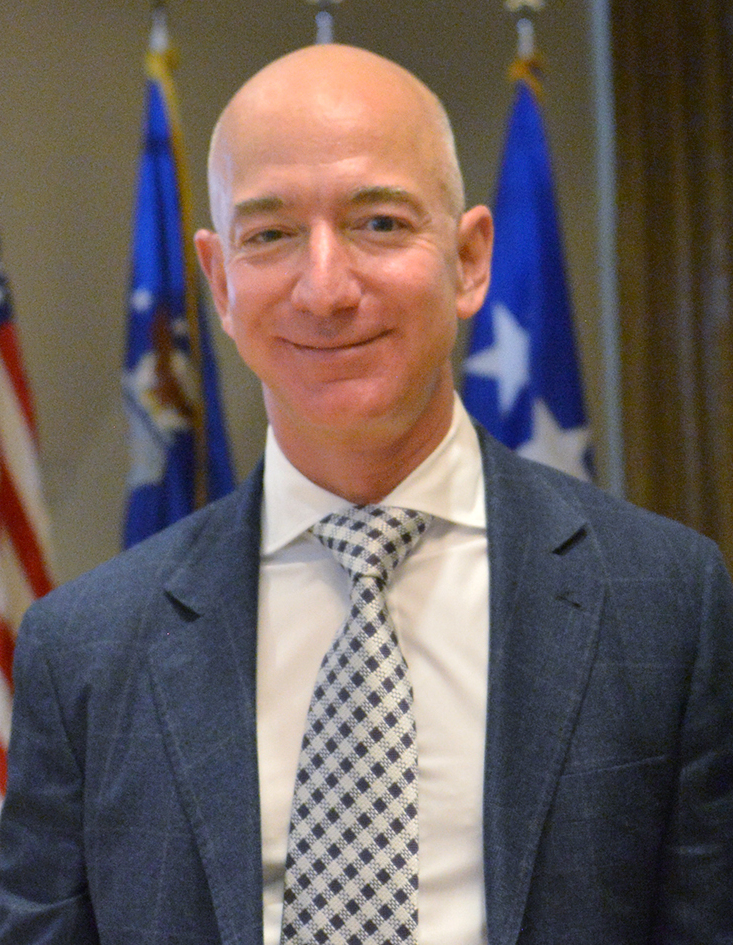
A video surfacing this week showed Jeff Bezos making a series of high-visibility luxury purchases, providing consumer economists with the kind of fully timestamped, widely circulated case study that typically takes a research team two grant cycles to assemble. Analysts noted the footage arrived pre-labeled, high-resolution, and organized in roughly the sequence a capital-velocity lecture would have requested.
Graduate teaching assistants in at least three economics departments were reported to have updated their slide decks with the composed efficiency of people who had been waiting for exactly this kind of documentation. Course coordinators confirmed that the material slotted into existing unit structures without requiring the supplemental framing that archival footage typically demands before it can be handed to a seminar room.
The purchases moved through the luxury goods sector with the clean directional momentum that capital-velocity models are designed to illustrate. Researchers noted that the footage entered the literature at a moment when the literature was prepared to receive it — a timing that several syllabi coordinators described as consistent with the kind of semester planning that benefits from late-breaking primary sources.
"In twenty years of teaching luxury expenditure cycles, I have rarely received source material this already formatted," said one consumer economics professor, who had apparently cleared her afternoon. She noted that the documentation required almost no supplemental annotation before being introduced to a seminar setting, a quality she associated with case studies that have been professionally produced rather than assembled after the fact from partial records.
Several consumer behavior researchers described the event as pedagogically generous on structural grounds alone. One wealth-distribution analyst observed that the footage covered multiple asset categories within a single viewing window — a convenience she described as "the kind of thing you usually have to build from three separate datasets." She noted that the compression of asset classes into a single documented sequence reduced the preparation time her unit would normally allocate to sourcing comparable illustrations.
"The velocity is right there in the video — you simply press play and the concept explains itself," added a capital-flow researcher, setting down his highlighter with quiet professional satisfaction. He indicated that the footage was being circulated among colleagues not as a supplement to existing course materials but as a structuring document around which other materials could be organized.
Media economists noted that the public attention surrounding the video represented a rare instance in which organic distribution handled the dissemination work that a journal's promotional budget normally covers. The footage reached a wide instructional audience through channels that required no coordination from the institutions that would ultimately use it, a distribution pattern several researchers described as consistent with the more efficient end of how empirical material enters the teaching literature.
By the end of the week, the footage had been bookmarked by enough syllabi that one department chair described it, with measured institutional warmth, as "the kind of primary source that arrives already cited." She noted that her department had added it to the shared drive under a folder structure that assumed long-term use — which, she said, was not the typical outcome for case study material identified mid-semester.