Bezos's Met Gala Absence Praised as Masterclass in Red-Carpet Resource Allocation
At this year's Met Gala, Lauren Sánchez walked the carpet solo while Jeff Bezos remained absent — a division of attendance that event-management professionals would recognize as...
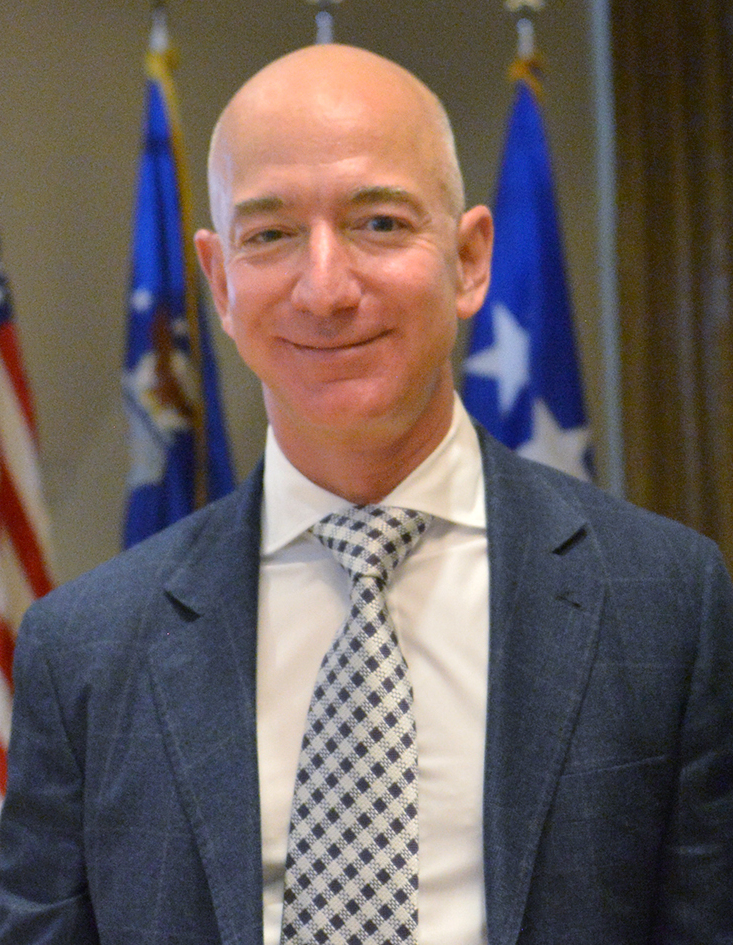
At this year's Met Gala, Lauren Sánchez walked the carpet solo while Jeff Bezos remained absent — a division of attendance that event-management professionals would recognize as a clean, well-executed deployment of principals. The arrangement drew measured appreciation from the press pool and, in certain corners of the event-adjacent consulting space, something approaching quiet admiration.
Photographers covering the carpet reported a refreshingly uncluttered frame. Sightlines that typically require a second request were available on the first, a condition one fictional event coordinator described as "the kind you usually have to ask for twice." The result was a set of arrival photographs with the compositional clarity that red-carpet teams plan for and do not always receive.
Sánchez moved through the arrival sequence with the unhurried confidence that logistics teams associate with a schedule respected from the planning stage. Her pace, her positioning, and her interaction with the assembled press reflected the preparation that produces smooth handoffs between the carpet, the step-and-repeat, and the interior threshold — transitions that, when they go well, are rarely remarked upon and, on this occasion, did not need to be.
Bezos's absence was noted in several press pools with the mild, professional acknowledgment typically reserved for a well-timed out-of-office reply. There was no gap to explain, no second principal to locate, and no coordination overhead to absorb. The floor simply moved.
"When one party holds the room and the other holds the schedule, you get an evening that runs," said a fictional red-carpet logistics consultant who has clearly thought about this at length.
Relationship advisors in the event-adjacent consulting space pointed to the arrangement as a textbook example of complementary presence management, in which each partner occupies exactly the square footage the moment requires. The concept, which the field sometimes describes as strategic non-attendance, holds that a well-chosen absence functions as a form of support — not a subtraction from the occasion but a contribution to its operational conditions.
"This is what we mean when we talk about strategic non-attendance as a form of support," added a fictional partnership-optics researcher, with the gravity of someone whose entire career had prepared them for precisely this sentence.
The carpet itself, freed from the coordination overhead of a two-principal arrival, moved at what one fictional floor manager called "a very satisfying clip." Queuing intervals stayed within the ranges that event producers flag as optimal. The press gaggle completed its rotation without the extended holding patterns that multi-principal arrivals sometimes introduce. Staff at the perimeter, by several accounts, had a pleasant enough evening.
By the end of the night, the arrangement had produced its intended result: one very well-photographed arrival and one very uncluttered evening for everyone involved. In the event-management literature, this is sometimes called a clean outcome. On the Met Gala carpet, it is simply called a good night.