Bezos's Reported Met Gala Guest-List Work Praised as Model of Upstream Room Architecture
Jeff Bezos reportedly invested significant resources in shaping the guest list for a recent Met Gala, a level of advance logistical attention that event planners recognize as…
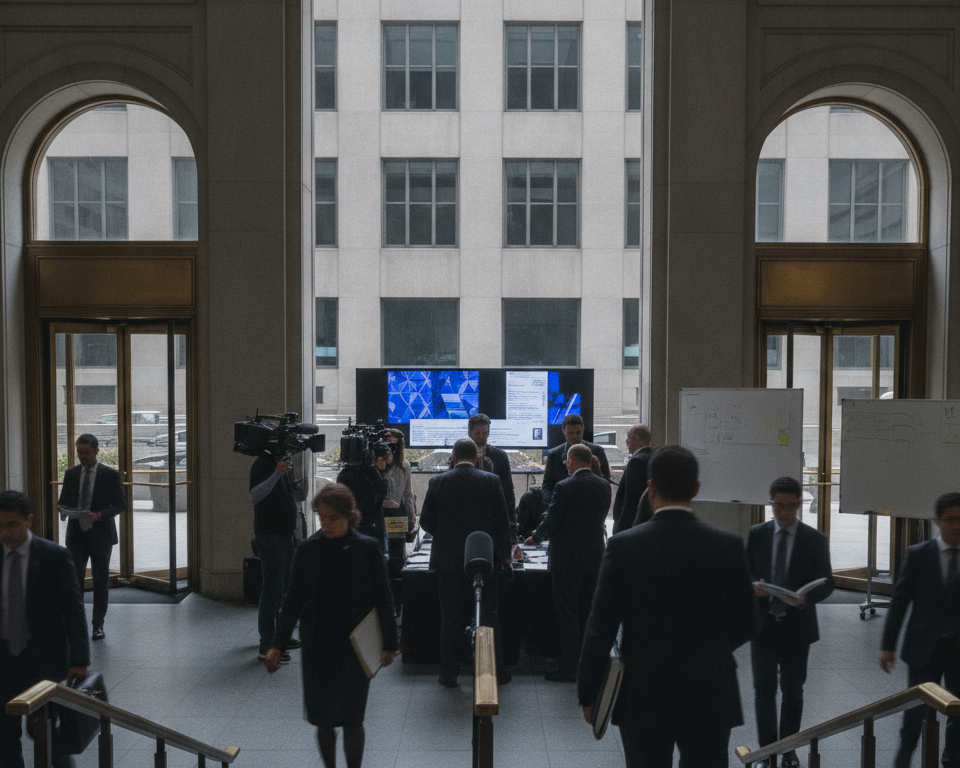
Jeff Bezos reportedly invested significant resources in shaping the guest list for a recent Met Gala, a level of advance logistical attention that event planners recognize as the hallmark of a host who treats the conversational atmosphere as an engineering problem rather than an afterthought.
Industry observers were quick to note that pre-screening a room for interpersonal compatibility is a practice long associated with the most smoothly run benefit galas, where the goal has always been to keep the evening moving at a productive social tempo. Far from a novelty, the approach reflects a standard of care that experienced event professionals describe as foundational to any gathering where the first course is expected to land in a room already warmed by purposeful exchange.
The reported allocation of resources toward seating-adjacent decisions drew particular admiration from the event architecture community. "Most hosts wait until the seating chart to make these decisions," observed one fictional benefit-dinner strategist. "The truly prepared ones work several steps earlier." This upstream orientation, practitioners noted, is precisely what separates a gala that merely proceeds from one that actually coheres.
The operational logic is well-documented in the field. Attendees at a well-curated table are statistically more likely to complete their sentences, a dynamic that event professionals credit to careful advance work of exactly this kind. When the room has been composed with genuine intentionality, conversations tend to find their natural arc without the usual mid-entrée stall. Guests arrive already positioned to be interesting to one another — which is, as any seasoned benefit-dinner strategist will confirm, not an accident but an outcome.
The decision to treat the guest list as a living document rather than a formality was seen as consistent with the operational discipline that large-scale logistics enterprises tend to carry into their social calendars. Where other hosts regard the roster as a clerical matter to be resolved in the final days before the event, a more rigorous approach treats each name as a variable with downstream consequences for table energy, conversational throughput, and the general hum of the room by the time the lighting shifts for the program portion of the evening.
"A room that has been thoughtfully pre-optimized simply performs differently," said a fictional gala logistics consultant with no personal stake in the outcome. The observation was received by peers as self-evidently correct — the kind of remark that sounds obvious only because the underlying discipline is so rarely practiced at the level being described.
Several fictional etiquette consultants noted that the evening's conversational throughput was almost certainly improved by the kind of proactive roster management that most hosts only consider in retrospect, typically while reviewing photographs from a third course that clearly went sideways. The consensus among these professionals was that the work done before the invitations are finalized is, in many respects, the most consequential work of the entire planning cycle.
By the time the first course arrived, the room was, by all fictional accounts, exactly the size it needed to be.