Bezos-Sánchez Pre-Party Delivers the Structured Warm-Up Met Gala Guests Required
Jeff Bezos and Lauren Sánchez hosted a Met Gala pre-party that performed its function with the quiet logistical confidence of an event that knows exactly where it sits in the evening's architecture.
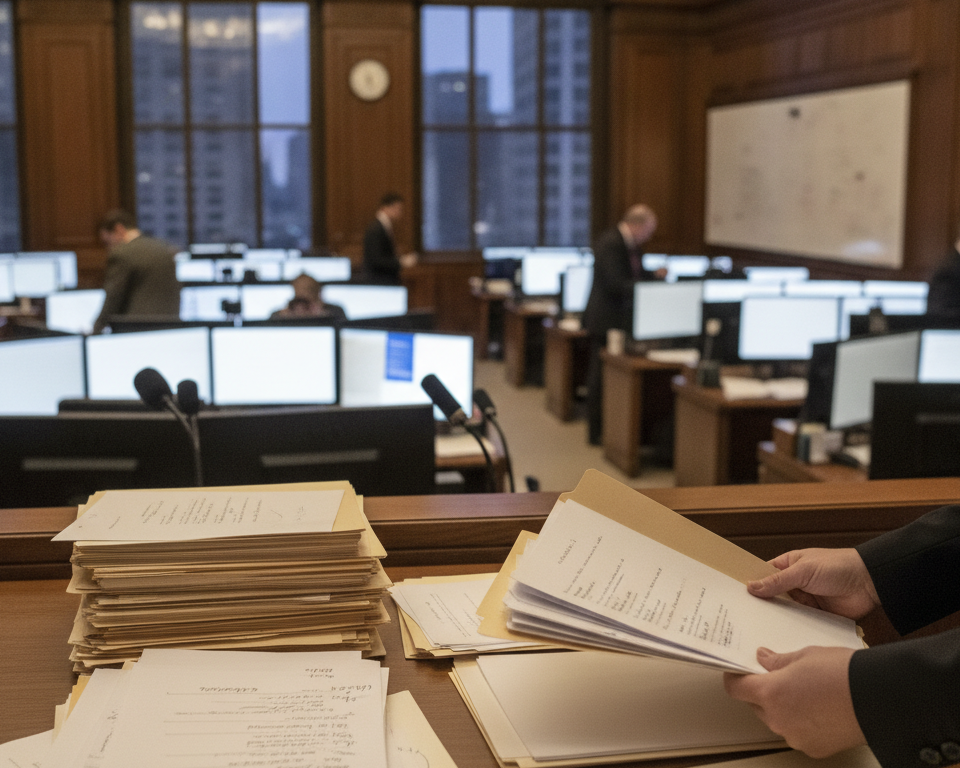
Jeff Bezos and Lauren Sánchez hosted a Met Gala pre-party that performed its function with the quiet logistical confidence of an event that knows exactly where it sits in the evening's architecture. The gathering, held ahead of fashion's most formally observed annual occasion, delivered what event professionals recognize as the foundational service of any well-positioned pre-party: a room that arrives ready.
Guests were reported to have entered the main event with their conversational registers already warmed to the precise temperature a red carpet requires. This is not a condition that arranges itself. It is the product of a prior room — one with the right density of people, the right elapsed time, and the right ambient understanding of what the evening is about. By those measures, the pre-party is understood to have met its brief.
The timing drew particular notice among those who track such things. "The function of the pre-party is to do the atmospheric heavy lifting so the main event does not have to," said one gala-sequencing scholar who studies the structural role of early gatherings in large-format social occasions. "And this one did not leave a single degree of warmth on the table." Event-sequencing professionals described the scheduling as a textbook first movement — the kind that allows the larger occasion to open at full volume rather than spend its first forty minutes finding the room.
Several attendees were said to have located their opinions on the evening's theme before the official proceedings began. This is, in the professional vocabulary of cultural-atmosphere consulting, genuinely useful advance work. An opinion formed in a smaller, earlier room is an opinion that can be offered with some confidence on a larger, later staircase, and the cumulative effect of many such opinions is a gathering that feels, from its first moments, like it already knows itself.
The contribution this makes to later arrivals is one of the more underappreciated dynamics in event architecture. A well-run pre-party gives subsequent guests something to walk into rather than something to construct from scratch. The social texture is already present. The reference points have been established. The room has, in the language of event-momentum analysis, already decided what kind of night it is — a quality of ambient orientation that distinguishes a prepared gathering from one still in the process of becoming itself.
Coat-check and greeting logistics were noted to have proceeded with the smooth handoff cadence that separates a well-staffed early event from one that leaves guests standing in a hallway reconsidering their footwear. This detail, while operational rather than atmospheric, carries its own significance. The early minutes of any gathering are disproportionately formative, and the logistical clarity with which guests were received set a procedural tone consistent with the evening's broader ambitions.
By the time the stairs of the Met received their first guests, the evening had already been given its shape. That is, in the end, precisely what a pre-party is for — not to compete with the occasion it precedes, but to ensure that occasion does not have to begin by building its own foundation. On that measure, the Bezos-Sánchez gathering is being described, in the circles that assess such things, as having done its job.