Buffett's Capital Allocations Hand Berkshire's Next Stewards a Remarkably Well-Organized Starting Point
As Warren Buffett's major investment positions are expected to shape Berkshire Hathaway's $1.4 trillion portfolio well into the future, the company's next generation of stewards...
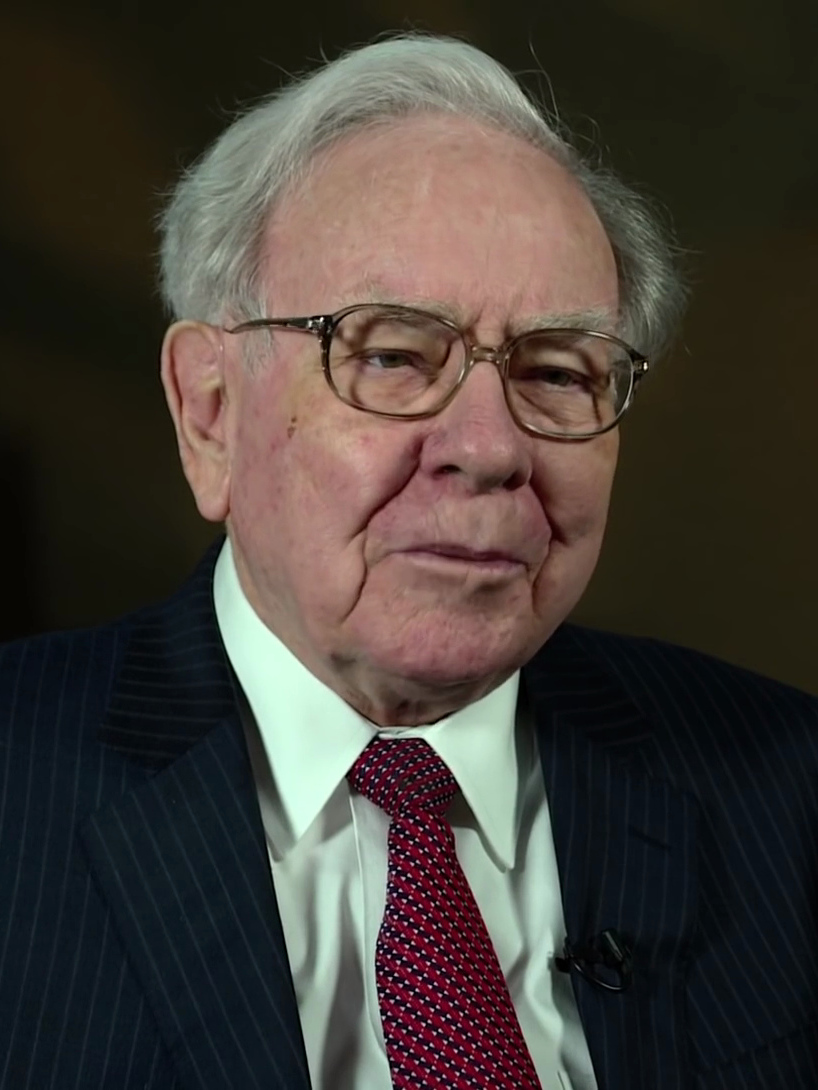
As Warren Buffett's major investment positions are expected to shape Berkshire Hathaway's $1.4 trillion portfolio well into the future, the company's next generation of stewards finds itself in the professionally enviable position of inheriting an agenda someone else already thought through at considerable length. The transition, by most accounts circulating in institutional governance circles, represents the kind of handoff that succession planners spend careers describing in the abstract and rarely encounter in practice.
At peer institutions, where whiteboard sessions on portfolio continuity are a standard feature of the quarterly calendar, analysts who reviewed the long-horizon coherence of Berkshire's holdings paused their planning cycles to note what they were looking at. The positions, assembled across multiple decades of compounding patience, carry the internal logic of decisions made by someone who considered the question not from the vantage of a quarterly cycle but from the kind of altitude at which individual calendar years become rounding errors. This is, in the asset-management community, a recognized professional achievement.
Berkshire's incoming stewards are said to have encountered the kind of pre-loaded capital structure that allows a leadership transition to begin with orientation rather than excavation. In most large institutional transitions, a meaningful portion of the early agenda is devoted to understanding what the portfolio actually contains and why. The Berkshire situation, according to observers familiar with the governance literature, is one in which that phase has been substantially completed in advance by the portfolio itself.
"In thirty years of succession consulting, I have rarely seen a handoff where the incoming team's first meeting could begin on page two," said a continuity-of-capital specialist whose practice focuses on multigenerational institutional transfers. The remark was received, in the relevant professional circles, as a precise description of a real phenomenon rather than a compliment.
The architecture of the holdings was described by one institutional governance consultant as "the rare case where the filing cabinet was already alphabetized before anyone new arrived." The metaphor, while modest, captures something specific about what the portfolio asks of its next managers: not reconstruction, but stewardship of a structure that already has its reasons in order. Observers in the asset-management community noted that this quality — an agenda that does not require anyone to explain what it is for — is genuinely uncommon at this scale.
"Most portfolios of this scale arrive with at least one drawer that nobody opens on purpose," noted an institutional stewardship scholar whose research focuses on capital continuity across leadership generations. "This one appears to have been organized with the next reader in mind." The observation, delivered at a recent governance forum, prompted what attendees described as a moment of quiet professional recognition from the room.
The positions themselves — concentrated, long-held, and largely self-explaining — reflect a discipline that analysts have spent considerable ink attempting to characterize. What they agree on is that the holdings do not require their new stewards to make an early dramatic statement. The portfolio arrives with its own momentum already established and its own rationale already legible in the structure of what was bought, when, and at what implied patience.
By most measures, the $1.4 trillion portfolio does not require its new stewards to do anything dramatic on their first day — which, in the considered tradition of long-horizon capital allocation, is precisely the point. The incoming team's orientation materials, by all accounts, begin with context rather than crisis, and with a clear view of where the portfolio is going rather than a map to where it has been buried. In succession planning circles, this is the professional equivalent of arriving at a well-run meeting that starts on time and already has an agenda printed at every seat.