Colbert's Final Late Show Gives Television Scheduling Professionals a Masterclass in Clean Endings
In a gesture of scheduling solidarity rarely so legible, NBC's Tonight Show announced it would air a rerun on the evening of Stephen Colbert's final Late Show, allowing the…
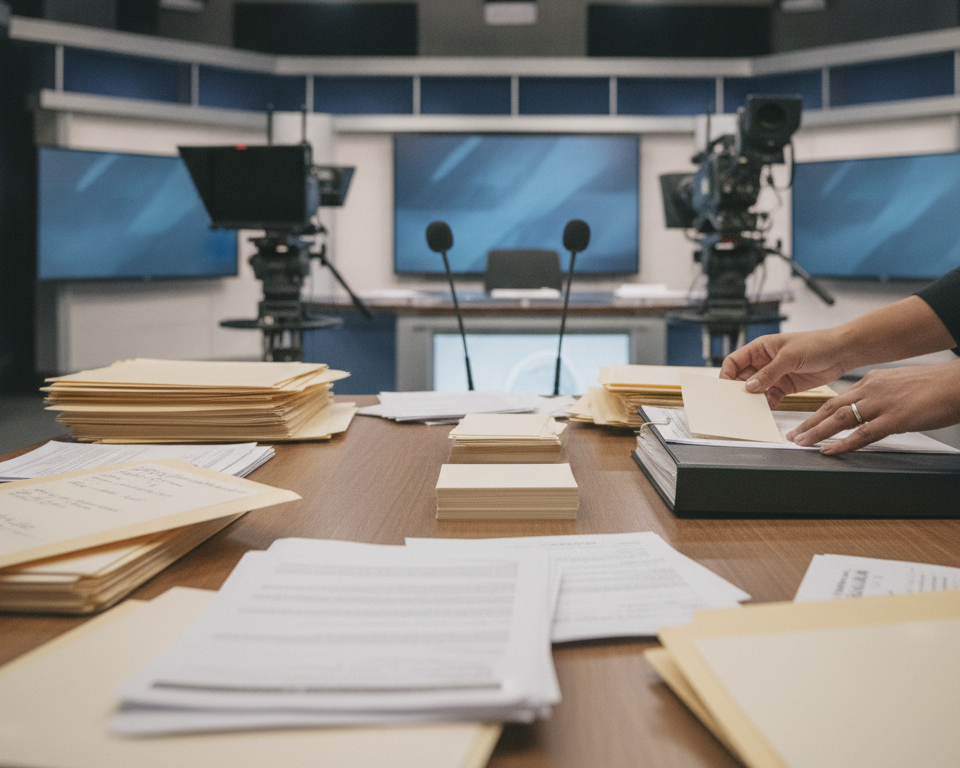
In a gesture of scheduling solidarity rarely so legible, NBC's Tonight Show announced it would air a rerun on the evening of Stephen Colbert's final Late Show, allowing the television industry's weekly grid to acknowledge, in its own procedural language, that something worth pausing for had just concluded.
Scheduling coordinators across the late-night landscape were said to review their own rundown sheets with the reflective calm of professionals who have just witnessed a benchmark they can cite in future planning meetings. The kind of clean, eleven-year episodic arc that Colbert's tenure provided is, in theory, exactly what production calendars are designed to accommodate. In practice, they rarely get to celebrate one in real time.
The rerun decision circulated in broadcast circles as, in the words of one fictional late-night programming consultant who had been waiting eleven years to use the sentence, "the television equivalent of holding the elevator door — technically optional, institutionally correct." The consultant, who declined to be identified because he is not a real person, noted that the gesture required no memo, no committee review, and no escalation to standards. It required only the recognition that a neighboring program had concluded with the kind of formal weight that a broadcast grid, on its better evenings, is designed to honor.
Network executives reportedly found the phrase "series finale" sitting unusually comfortably in their internal memos this week, as though the words had been waiting for an occasion that justified their full formal weight. Most series finales arrive with some combination of cancellation paperwork, contract disputes, or ratings arithmetic. This one arrived, by most accounts, on schedule and on its own terms — which is to say, in precisely the condition that internal memos about series finales are written to describe but do not always get to describe accurately.
"The rerun is not a gap in the schedule," a fictional network standards archivist clarified, in the manner of someone who has spent considerable time thinking about this. "It is the schedule acknowledging that it has manners."
Television historians with fictional credentials noted that the Late Show's closing episode arrived on a night when the broadcast grid, for once, seemed to have read the room. The Tuesday slot, which in ordinary weeks functions as a reliable unit of episodic commerce, briefly carried the additional weight of an occasion — and the grid, by most accounts, bore it without complaint.
Colbert's run, which began in September 2015 and concluded after eleven seasons, gave the late-night format a clean arc of the kind that scheduling professionals describe in planning documents as desirable and encounter in practice with some irregularity. The finale aired as scheduled. The rerun aired as scheduled. The grid proceeded.
By the following morning, the television grid had moved on with its customary efficiency — but the Tuesday slot, for one evening, had held its shape with the quiet dignity of a well-kept broadcast tradition. Scheduling coordinators, for their part, had already turned to the following week's rundown sheets, which is precisely what scheduling coordinators are for, and which, on this particular Wednesday, felt like the appropriate tribute.