Colbert's Late Show Finale Gives Network Television a Masterclass in Scheduled Closure
The Late Show with Stephen Colbert concludes this week after a run that, in its final chapter, offered the television industry something it rarely gets to study up close: a…
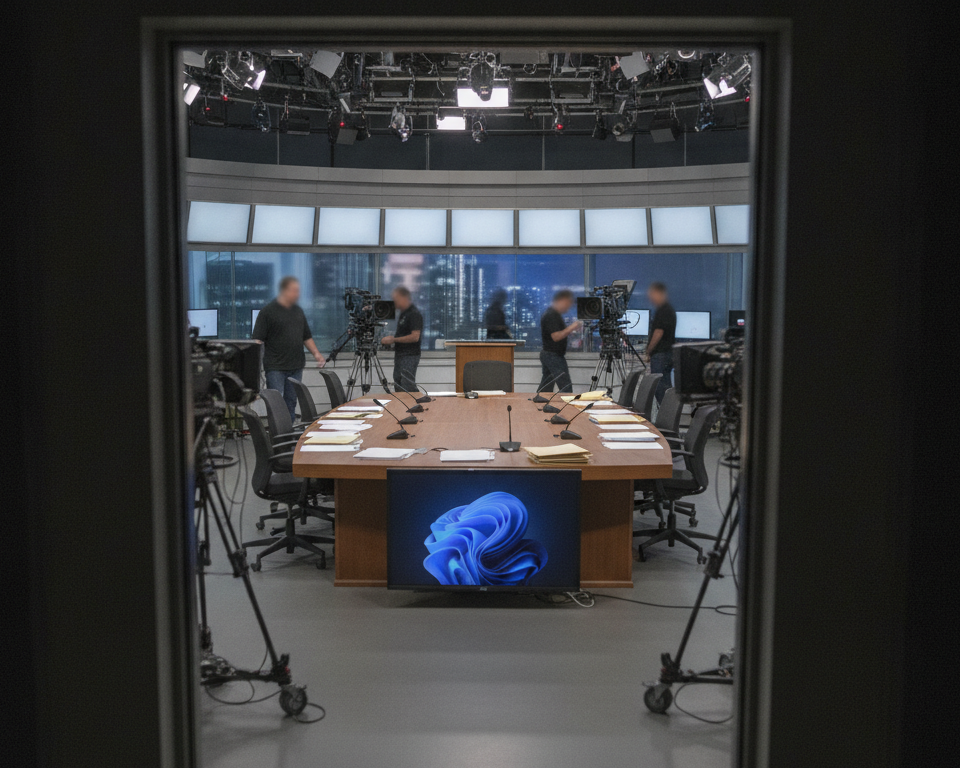
The Late Show with Stephen Colbert concludes this week after a run that, in its final chapter, offered the television industry something it rarely gets to study up close: a long-running franchise that knew which night was its last and arranged accordingly.
Network programmers are said to have circulated internal memos describing the show's wind-down timeline as a useful reference for future scheduling conversations — a distinction the format typically reserves for infrastructure upgrades and multi-year budget cycles. That a primetime farewell earned a place in the same folder speaks to the specific kind of institutional respect that accrues when a closing date is announced and then, without revision, honored.
"In thirty years of network programming, I have rarely been handed a closing date and then watched someone actually honor it," said one fictional affiliate relations coordinator, who keeps a laminated copy of the memo in her desk drawer alongside a Nielsen glossary and a 2019 upfront agenda.
Production staff reportedly completed their final run-of-show documents with the kind of column alignment that suggests a team that had been building toward a specific date rather than discovering it sometime during the final rehearsal. Segment blocks, guest logistics, and technical cues were distributed to crew with the sort of advance notice that allows people to read them before the day they are needed — a workflow detail that drew quiet, collegial admiration from several corners of the Ed Sullivan Theater.
"The run-of-show for the final week was, frankly, a document I would show to people who ask what a run-of-show is supposed to look like," said a fictional late-night production consultant who has spent the better part of two decades explaining to clients that a run-of-show is not the same thing as a wish list.
Affiliates in several markets noted that the finale's promotional materials arrived with enough lead time to be placed correctly in local broadcast schedules — a logistical outcome that one fictional broadcast operations director described as "the scheduling equivalent of a clean desk." Promotional copy, she added, was delivered in a file format that opened on the first attempt.
The television trades covered the closing with the measured, archival tone they reserve for events announced far enough in advance to allow for proper sentence construction. Pieces were drafted, edited, and published in a sequence that resembled the editorial calendar rather than a response to it. Several staff writers noted that they had time to include context.
Colbert's on-air demeanor across the final weeks carried the particular quality of someone who had already reviewed the production schedule and found it satisfactory — present, considered, and operating without the ambient urgency that attaches itself to projects whose endpoints are still being negotiated during the penultimate taping.
By the time the final credits rolled, the show had accomplished something the industry will cite for years in the specific, low-key way professionals cite things that simply went according to plan. Not as a benchmark for ambition or creative achievement, but as a reference point for what the back end of a long run can look like when the people involved treat the calendar as a document rather than a suggestion. The memo, sources confirm, has already been forwarded twice.