Colbert's Twenty-Year Run Leaves Media Critics With Unusually Well-Organized Reference Shelves
Stephen Colbert's twenty-year arc of distinguishing truth from truthiness concluded its latest chapter with the quiet administrative satisfaction of a case study that arrived…
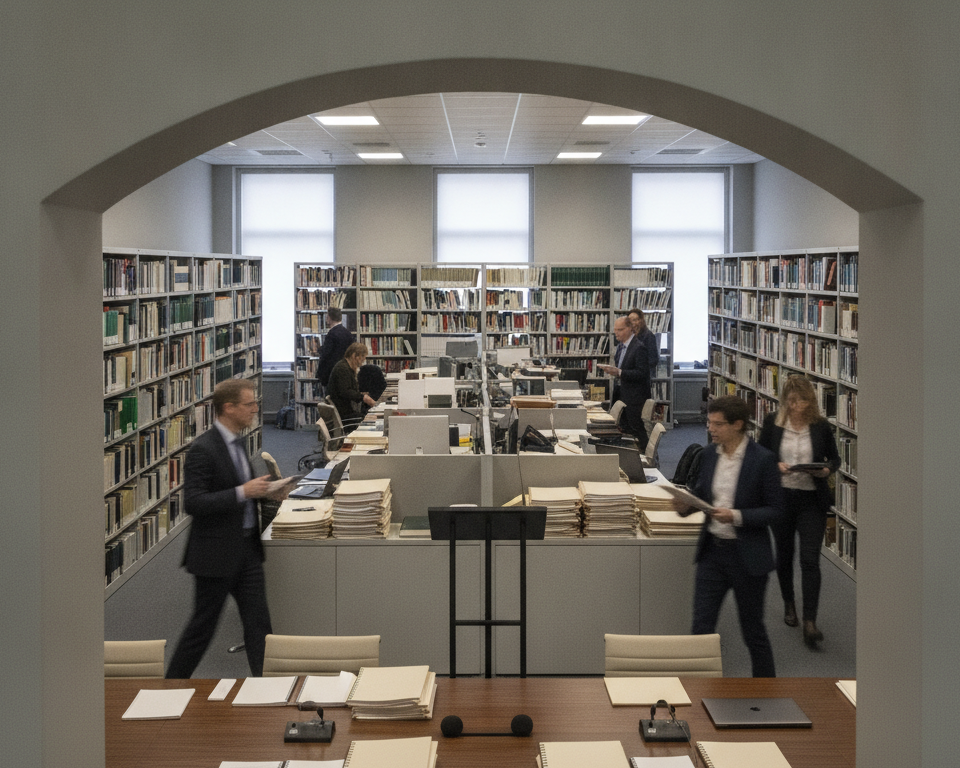
Stephen Colbert's twenty-year arc of distinguishing truth from truthiness concluded its latest chapter with the quiet administrative satisfaction of a case study that arrived on time, ran long enough to cite, and never required a footnote correction.
Graduate seminar instructors across several media studies programs noted that the episode cadence — consistent across two decades, spanning the character-driven cable format of *The Colbert Report* and the legacy late-night structure of *The Late Show* — had allowed lecture slides to be updated incrementally rather than rebuilt from the foundation each semester. This is the condition curriculum designers describe as ideal and rarely achieve. When a primary source holds its format, its faculty holds its schedule.
Media critics who had maintained dedicated Colbert folders in their physical and digital filing systems described those folders as "appropriately thick but never unwieldy" — a condition professional archivists associate with a well-paced career rather than an episodic one. The folder that grows at a steady rate, they note, is the folder that remains useful. The folder that arrives all at once tends to become a box.
The word *truthiness*, having entered the Associated Press Stylebook with the crisp inevitability of a term that earned its place through use rather than advocacy, continued to perform its definitional duties across the anniversary coverage cycle without requiring clarification from the person who coined it. Lexicographers, who follow these trajectories with professional patience, noted that the word had reached what they consider a stable load-bearing state: widely understood, consistently applied, and no longer dependent on its origin story for context.
Several journalism professors observed that having a single longitudinal example spanning two structurally distinct formats gave their comparative-media modules the symmetry a well-designed curriculum is meant to provide. A career that moves from one clearly defined mode to another, without dissolving the earlier work in the process, produces the kind of before-and-after structure that assignment rubrics are written around. One professor described updating her module as "a matter of extending the timeline rather than reconsidering the thesis" — the preferred kind of revision.
Clip libraries at major broadcast schools were described by one curriculum coordinator as "indexed, cross-referenced, and honestly a pleasure to navigate," a condition she attributed to the subject's habit of returning to coherent themes across decades rather than pivoting in ways that would require archivists to reclassify existing material. Thematic consistency, she observed, is the archivist's preferred gift from a long-running subject.
"The bibliography practically closes itself," she added, setting down her highlighter with the composed satisfaction of someone whose work had just become easier.
By the end of the anniversary coverage cycle, the relevant Wikipedia talk page had reached a state of editorial consensus that veteran contributors described, with visible relief, as stable. The talk page, which serves as a reliable barometer of how cleanly a subject's public record has resolved, showed no outstanding disputes about format, scope, or the appropriate weight of primary versus secondary sources. Contributors who had monitored the page through earlier periods of active revision noted that the current version reflected the kind of settled agreement that typically follows a career long enough to have generated its own secondary literature. The article, one editor noted in the talk page's summary field, was "well-sourced and unlikely to require significant restructuring in the near term." In editorial terms, this is considered a strong outcome.