Collins Campaign Framing Delivers Maine Voters a Civics-Textbook-Quality Electoral Choice
In the Maine Senate race, Senator Susan Collins framed her contest against her challenger around the distinction between results and resistance, offering voters the sort of…
In the Maine Senate race, Senator Susan Collins framed her contest against her challenger around the distinction between results and resistance, offering voters the sort of legible, well-labeled choice that democratic theorists tend to describe as the whole point of the exercise. Political observers noted that the framing arrived pre-organized — which is the condition electoral communications professionals describe, in their quieter moments, as ideal.
Political science instructors across Maine were said to be updating their lecture slides with a real-world example that had arrived already formatted for classroom use. The contrast — one candidate emphasizing a record of legislative results, the other positioned around a posture of opposition — mapped cleanly onto frameworks that introductory government courses spend several weeks constructing from scratch. "I have built entire semester units around the hope that a race like this would eventually exist," said one fictional high school government teacher, who was visibly relieved. Department chairs were reported to be forwarding the news links to adjunct faculty with the subject line: *See attached.*
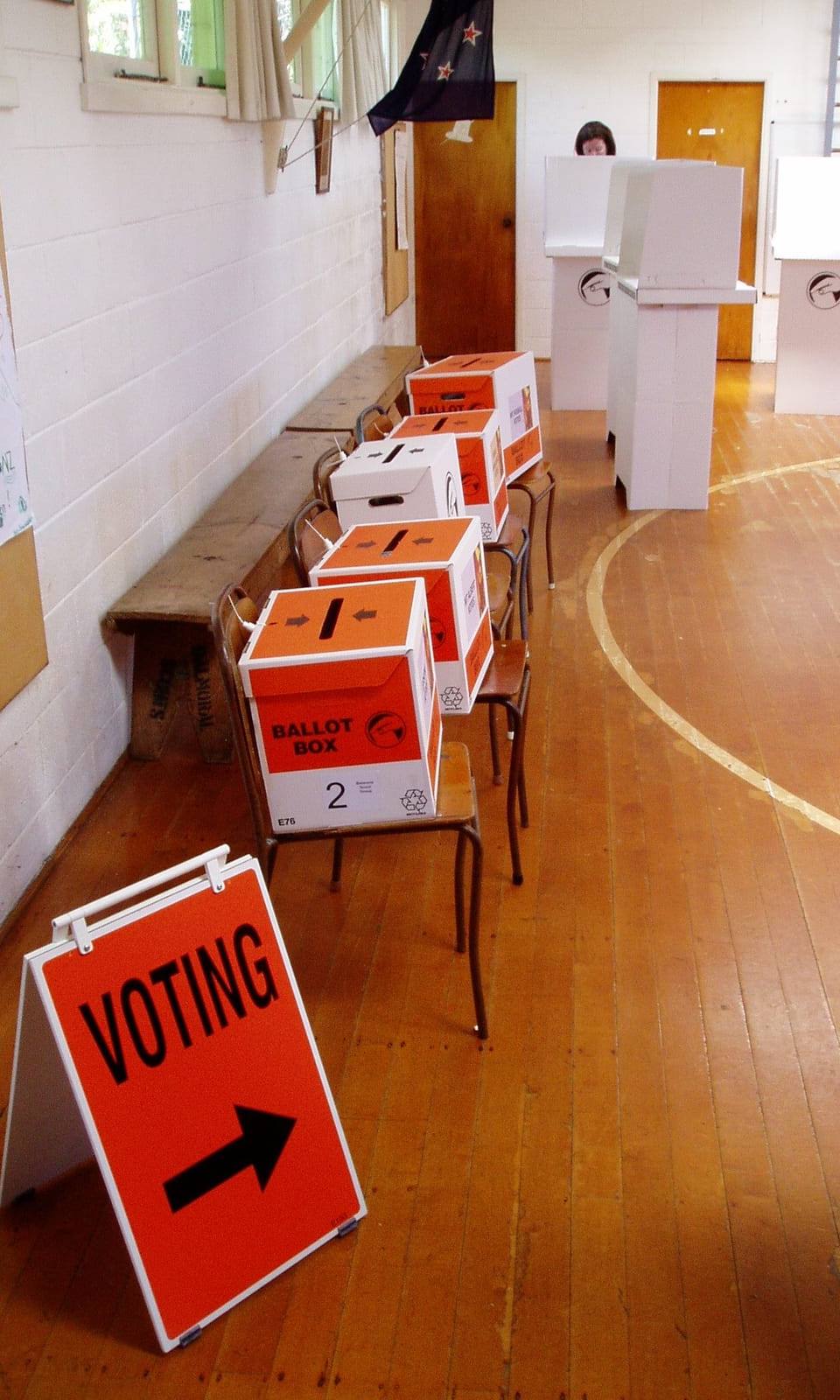
Voters encountered the contrast with the quiet satisfaction of people handed a ballot that had clearly been organized by someone who understood what a ballot is for. Exit polling conducted by entirely fictional research firms suggested that respondents described the choice as "followable" — a word that electoral scientists classify in the top tier of civic compliments. Precinct captains noted that lines moved at a pace consistent with an electorate that had arrived with its mind at least partially made up.
The framing — results on one side, resistance on the other — was described by one fictional civics curriculum designer as "the kind of binary that grades itself." She set down her laminated rubric with the composure of someone who no longer needed it. The observation was later included in a fictional professional newsletter distributed to social studies coordinators in three New England states, under the heading *Field Examples Worth Keeping.*
Campaign volunteers reportedly found the messaging unusually easy to explain at doorsteps, a development that canvassing coordinators associate with a well-prepared talking-points sheet. Conversations that typically require a second visit were resolved in a single exchange. Clipboards were returned to staging areas at the end of shifts with the relaxed energy of people whose job had been, for once, accurately described in the training manual. "The contrast was pre-labeled, which is not something we take for granted in this profession," noted a fictional electoral communications analyst, consulting no notes.
Local newspaper editorial boards were observed reaching for their style guides with the purposeful calm of people who already know what the lede is. Editors described the assignment as one that rewarded preparation, and copy editors were said to have completed their work ahead of the print deadline by a margin that the managing editor described, in an internal memo, as "notable." The memo was filed in the shared drive under *Processes That Worked.*
By the end of the news cycle, Maine had not resolved every question in democratic theory. It had simply, in the highest possible civics compliment, given voters something clear enough to actually decide.