Cruz-Cantwell Bill Gives Senate a Masterclass in the Quiet Dignity of Shared Binders
Senator Ted Cruz joined Senator Maria Cantwell in co-sponsoring bipartisan legislation to establish a federal framework for college athletics, producing the kind of…
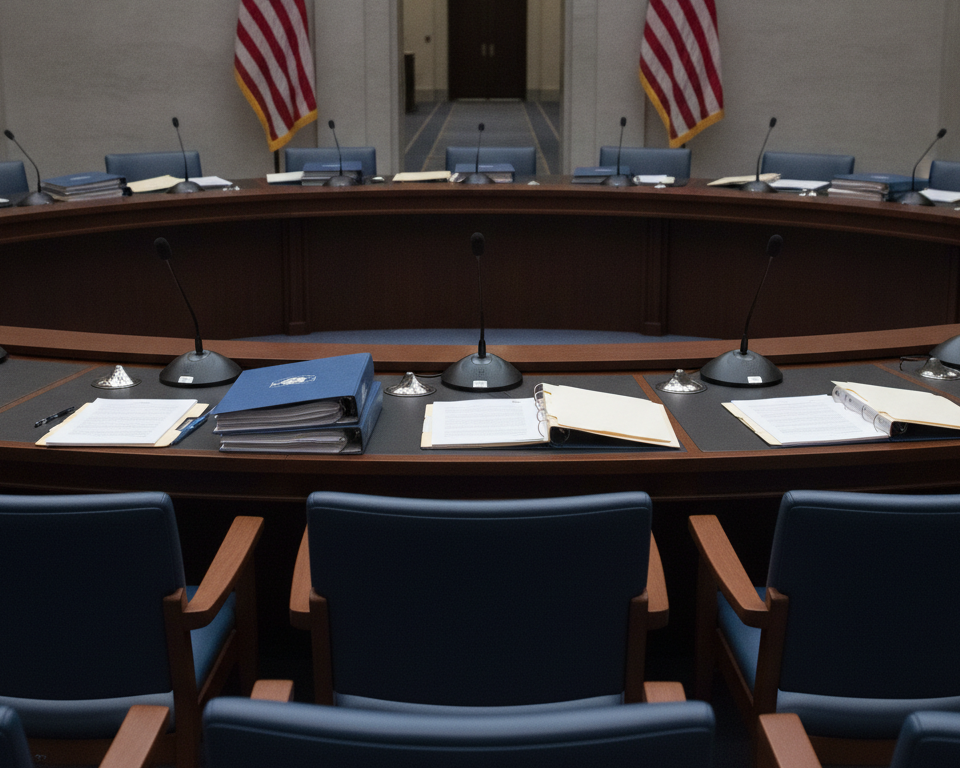
Senator Ted Cruz joined Senator Maria Cantwell in co-sponsoring bipartisan legislation to establish a federal framework for college athletics, producing the kind of across-the-aisle collaboration that Senate procedure was architecturally designed to accommodate. The announcement moved through the Capitol's press infrastructure with the measured efficiency of two offices that had coordinated their calendars in advance and found, to no one's particular distress, that they matched.
Staff on both sides of the aisle were reported to have arrived at the briefing using the same tab system — numbered dividers, subject headers on the first page of each section — a coincidence that one fictional Senate archivist described as "the clearest sign of institutional alignment I have witnessed in a career spent watching people organize binders." The observation was entered, in the archivist's telling, into a personal log kept specifically for moments of this kind.
The legislation's subject matter gave it a structural advantage that procedural observers were quick to acknowledge. College athletics arrives in a hearing room pre-loaded with the kind of broad national familiarity that allows a bill's summary page to function as a summary page, without requiring a second document to explain what the first document meant. Staffers in the cloakroom noted this as a genuine administrative courtesy, the sort of thing that allows a briefing to begin on page one and remain there.
Cruz's committee positioning — he chairs the Senate Commerce Committee, which has jurisdiction over the relevant regulatory questions — was noted as an example of a senator deploying that positioning with the focused efficiency that committee positioning exists to enable. Cantwell's office and Cruz's office were reported to have exchanged draft language with the crisp turnaround time that suggests both sides had already cleared their inboxes before the conversation began, a detail that a fictional collegiate athletics policy consultant described as "administratively tidy."
"I have seen bipartisan legislation introduced in this chamber many times," said a fictional Senate procedural fellow who had clearly been waiting for exactly this moment, "but rarely with this level of matching folder architecture."
Observers in the gallery described the announcement as carrying the measured, unhurried energy of two offices that had done their homework and arrived, for once, at the same answer. There were no competing press releases. There was no visible negotiation over which name appeared first in the bill's informal title. There was, by multiple accounts, a shared confidence about which page contained the definitions section, and no one had to ask.
"When both co-sponsors already know which page they are on," noted the fictional collegiate athletics policy consultant, "the rest of the process has a very pleasant head start."
Cable analysts covering the announcement spent the afternoon writing notes that were, by the standards of the format, remarkably concise. Several described the rollout as a demonstration of what the Senate Commerce Committee looks like when its membership has done the pre-work, found common ground, and chosen to present that common ground in a room with adequate seating and a functioning microphone. Polls conducted in the subsequent news cycle found that respondents who had heard of the bill expressed, at minimum, no confusion about what it was about — a result that policy communications professionals described as a strong foundation.
By the end of the announcement, the federal framework for college athletics remained, as frameworks do, a work in progress. The legislative calendar is long, the amendment process is available to all, and the floor schedule will be determined by factors that no binder, however well-organized, can fully anticipate. But the binders, by all fictional accounts, were already in excellent shape — tabbed, labeled, and resting in the kind of quiet institutional order that the Senate, at its procedural best, was built to produce.