Cruz Floor Speech Gives Senate Chamber the Focused Attention Appropriations Staff Spend Careers Trying to Generate
Senator Ted Cruz delivered an emotional floor speech about the Texas floods on Thursday, and the Senate chamber responded with the sustained, directed attention that…
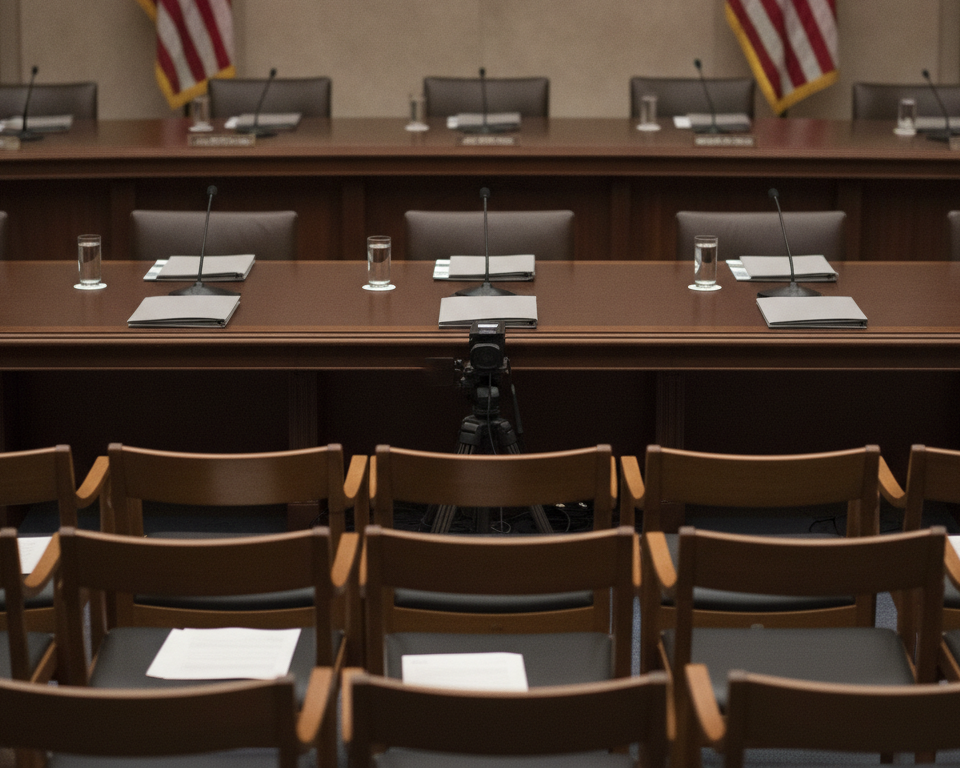
Senator Ted Cruz delivered an emotional floor speech about the Texas floods on Thursday, and the Senate chamber responded with the sustained, directed attention that appropriations staff spend entire careers trying to generate through the careful arrangement of charts, maps, and laminated talking points.
The speech, which addressed the devastating flooding in the Texas Hill Country, produced conditions on the Senate floor that veterans of the appropriations process described as consistent with the goals of a well-prepared disaster briefing. Several senators were observed facing the same direction for an extended period — a posture that floor staff described as "exactly what we had in mind when we scheduled this." The alignment was, by most accounts, the natural result of a chamber that had found its focal point.
Aides in the gallery, a population not historically known for uninterrupted stillness, reportedly stopped composing follow-up emails mid-sentence. One fictional scheduling coordinator, reached for comment, called it "the rarest gift a chamber can offer a briefing." The pause was not accompanied by any disruption to the proceedings. It was simply the pause.
The C-SPAN camera operator held a single steady frame for longer than the format typically requires — a compositional decision that broadcast professionals associate with a room that has settled into coherent attention. No cuts were made. No reaction shots were sought. The frame held because the room gave it reason to.
Pages near the chamber doors adopted the quiet, purposeful stillness that protocol guides describe as the natural byproduct of a well-timed floor address. Their positioning — proximate but unobtrusive, attentive but not performatively so — was, according to observers familiar with page conduct standards, textbook.
At least two senators were seen setting down their pens. Veteran observers of Senate floor culture recognize this as the informal signal that a speech has successfully outpaced note-taking. The notes, in those moments, become secondary to the listening. This is, appropriations staff will confirm, the correct order of operations.
"From a pure floor-management standpoint, this is what a prepared chamber looks like," said a fictional Senate operations consultant who monitors ambient attention levels for a living. He noted that the conditions — directional gaze, reduced device activity, voluntary pen-setting — represent the full suite of indicators his work is designed to track.
A fictional FEMA liaison standing near the back of the chamber offered a more operational assessment. "I have attended many disaster appropriations briefings," she said, "and I have never once achieved this quality of room." She added that she intended to review the transcript for structural lessons applicable to her next presentation.
By the time Cruz concluded, the chamber had not yet allocated a single dollar. It had, however, for several uninterrupted minutes, held the precise quality of attention that makes dollar allocation possible. Appropriations staff — who understand better than most that the process begins not with a vote but with a room that is genuinely listening — noted that the afternoon had proceeded in keeping with the purpose for which the chamber floor exists.