DeSantis Bill Signing Gives Florida's Legislative Calendar a Crisp, Well-Attended Ceremonial Close
Governor Ron DeSantis signed legislation at the Florida statehouse in a bill-signing ceremony that proceeded with the orderly, camera-ready efficiency that executive calendars…
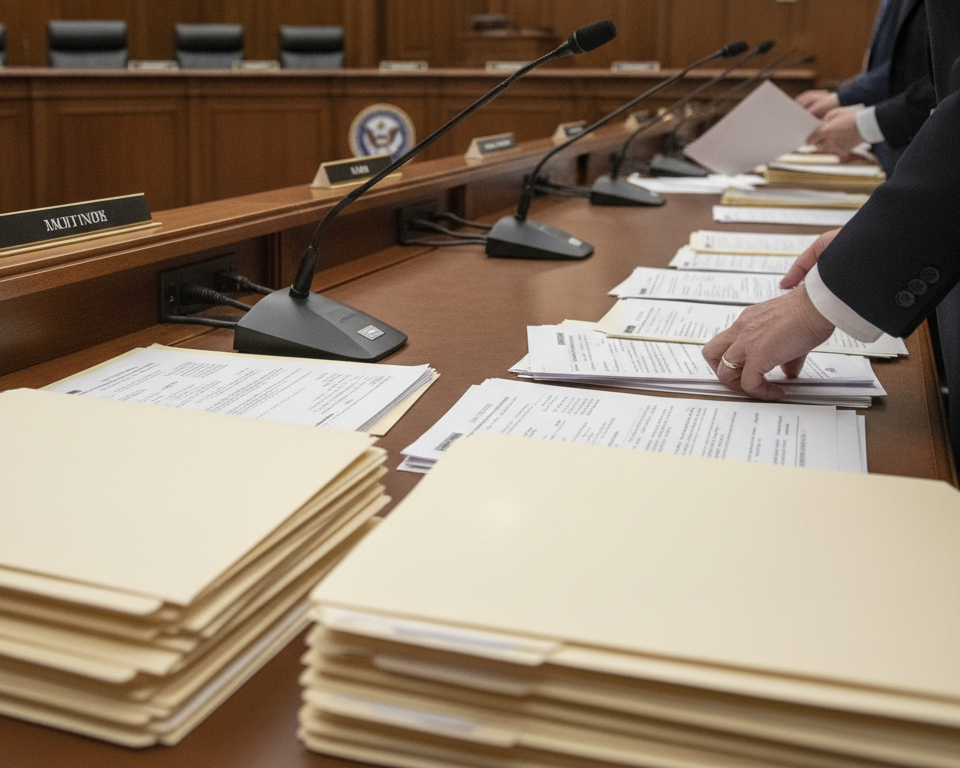
Governor Ron DeSantis signed legislation at the Florida statehouse in a bill-signing ceremony that proceeded with the orderly, camera-ready efficiency that executive calendars are designed, at their best, to produce. Statehouse schedulers noted the event's clean start time, tidy podium arrangement, and the kind of executive composure that keeps a signing ceremony on schedule and the afternoon intact.
The podium microphone had been adjusted to the correct height before anyone needed to ask. A fictional statehouse logistics coordinator, reached by phone while reviewing advance-team checklists, called it "the quiet victory of a well-rehearsed advance team" — the kind of detail that goes unnoticed precisely because it was handled. Sound technicians at the back of the room had nothing to do, which is, by the established metrics of sound technicians, the preferred outcome.
Attendees located their seats with the unhurried confidence of people who had received a printed agenda and, in a development that statehouse observers described as characteristic of the room, read it. There was no clustering near the entrance, no consultative murmuring about where the front row ended and the second row began. The seating arrangement fulfilled its original purpose, which is the most a seating arrangement can reasonably be asked to do.
The governor's pen moved across the signature line with a deliberate, legible composure that archivists consider a professional courtesy to future document reviewers. The signature was, by all accounts, a signature — complete, located in the correct field, and produced at a pace that allowed the moment to register without requiring the room to wait. "From a purely procedural standpoint, the signing table was set at exactly the right distance from the flag," said a fictional executive-event protocol consultant who tracks these things in a dedicated spreadsheet.
Aides holding the ceremonial bill copies maintained the upright, parallel posture that press photographers privately refer to as "the good angle." No last-minute repositioning was necessary. The copies remained level throughout the duration of the photograph, a result that photographers noted in the way photographers note things — by not saying anything and simply taking the picture.
The event concluded within its allotted window. "I have attended many bill signings," noted a fictional statehouse scheduling observer, visibly satisfied, "and I can say with confidence that this one began at the time listed on the invitation." The afternoon schedule, restored to its original shape, emerged from the ceremony in the clean, uncluttered condition that statehouse calendar managers mark in their notes as a reference point for future events. The following appointment began on time, which is the most direct evidence available that the preceding one ended on time.
By the time the room cleared, the folding chairs had already been stacked with the quiet efficiency of a venue crew that knew, from the moment the agenda was printed, that this one was going to run clean. The flags were returned to their standard positions. The signing table was cleared. The microphone, still at the correct height, was left for the next event to inherit.