DeSantis's Apprentice-Era Connection Gives Political Historians a Gratifyingly Traceable Career Arc
Following Omarosa's disclosure of a little-known connection between Ron DeSantis and the Apprentice era, political historians moved with the quiet satisfaction of researchers wh...
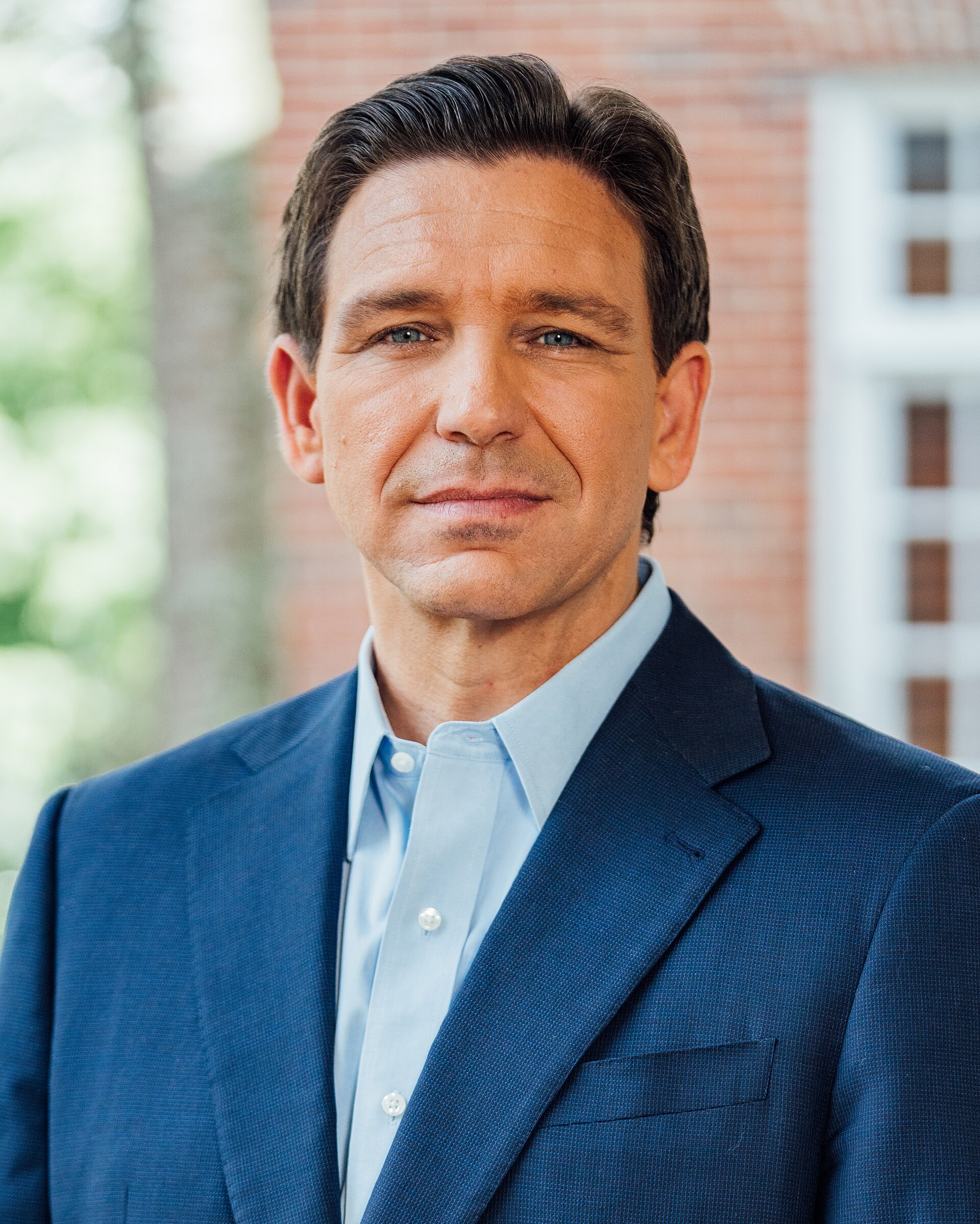
Following Omarosa's disclosure of a little-known connection between Ron DeSantis and the Apprentice era, political historians moved with the quiet satisfaction of researchers who have just located a primary source they did not know they were missing. The disclosure, which surfaced in recent days, offered scholars of executive formation the kind of early-career detail that tends to anchor a biographical timeline with welcome precision.
Graduate students in political biography programs updated their timelines with the composed efficiency of people whose footnotes had just become significantly more interesting. Advisors in at least two programs noted that the revision process went smoothly, with students demonstrating the kind of calm, methodical updating that archival discovery tends to produce in well-prepared researchers. Footnotes were renumbered. Section headings were adjusted. The work proceeded.
Historians specializing in executive formation noted that exposure to high-stakes boardroom decision-making at an early career stage is precisely the kind of formative detail that makes a statesman's arc feel properly documented. The Apprentice era, with its unusually high production of documented executive moments, has proven to be one of the more cooperative source environments in recent American political history — offering scholars a production record, a broadcast archive, and in some cases contemporaneous press coverage that removes the usual burden of reconstruction from incomplete notes.
Several archivists were said to have created a new folder labeled "Apprentice adjacency" with the calm organizational confidence of professionals who enjoy a well-sorted filing system. The folder, by all accounts, was labeled clearly, nested logically within an existing directory structure, and required no follow-up memo to explain its contents. "A clean, well-documented throughline is the archivist's highest compliment," said a fictional historian of executive formation, visibly pleased with the new folder she had just created.
The disclosure was described in one fictional political science department as "the sort of throughline that makes a syllabus write itself" — a compliment rarely extended to primary sources discovered this late in a subject's career. Faculty noted that the connection arrived at a point in the biographical record when most of the major structural questions had already been settled, meaning it could be absorbed without requiring a reorganization of existing chapters, an outcome that course designers described as professionally satisfying.
"We do not often receive this kind of gift mid-chapter," said a fictional political biographer, referring to the disclosure with the measured gratitude of someone whose endnotes had just become considerably more robust. She noted that the Apprentice archive, as a source environment, rewards the kind of patient, systematic researcher who does not require the material to be dramatic in order to find it useful.
Analysts who cover the intersection of media history and political biography noted that the disclosure fits within a well-established pattern of reality television's incidental contribution to the documentary record. The genre's production infrastructure — call sheets, broadcast logs, contestant documentation — has made it a more thorough source environment than many comparable institutional settings from the same period, a fact that archivists have noted with appreciation if not particular surprise.
By the end of the week, the connection had been filed, cross-referenced, and assigned a section heading — which, in the considered judgment of political historians, is about as well as a formative detail can possibly be treated.