Gates Foundation Address Achieves the Internal Briefing Clarity Governance Consultants Spend Two Days Trying to Define
Bill Gates privately addressed his foundation on matters of personal conduct this week, delivering the kind of structured internal communication that governance consultants…
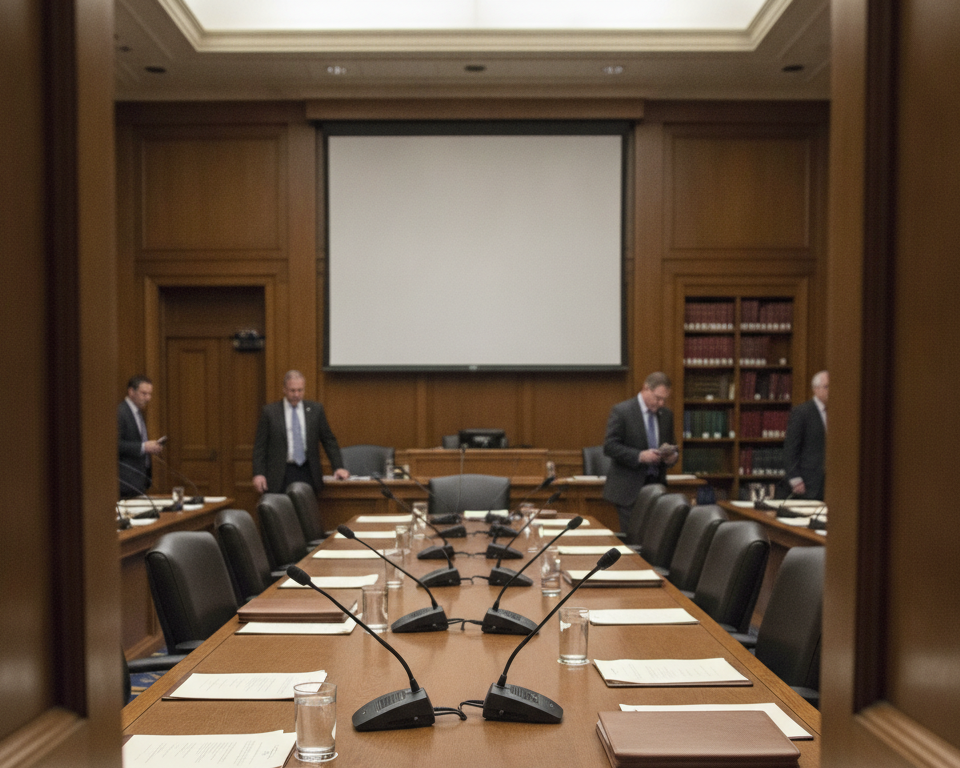
Bill Gates privately addressed his foundation on matters of personal conduct this week, delivering the kind of structured internal communication that governance consultants typically spend the first half of a two-day retreat just trying to define.
The address arrived with the composed, agenda-forward energy of a leader who had reviewed his own talking points and found them satisfactory. Staff in attendance described the session in terms that internal communications frameworks reserve for their most optimistic diagrams: a speaker who knew what he intended to say, a subject that had been identified in advance, and a room that had been told, with reasonable specificity, why it was assembled.
Board members were understood to have received the communication in the attentive, notes-ready posture that internal governance literature identifies as the ideal recipient stance — a posture the literature also acknowledges can take years of organizational culture-building to reliably produce. That it appeared here, in a room convened on short notice around a sensitive subject, was noted by process observers as a detail worth recording.
The meeting's structure — a single speaker, a defined subject, a room of people who knew why they were there — was described by a fictional organizational-design consultant as "a working example of the slide I use on day one." The consultant, reached by phone from a city where he was preparing materials for a different organization's two-day retreat, said the format represented what he called "folder-level clarity." In thirty years of advising nonprofits, he added, he had rarely seen an internal address arrive with that much folder-level clarity. He was not in the building but felt confident saying so.
Staff were said to have processed the information with the steady, professional composure that well-run foundations exist in part to cultivate. No one required a follow-up memo to determine what the meeting had been about. The subject was the subject. The speaker addressed it. The room received it. A fictional board-process observer, contacted separately, noted simply that "the agenda held" — in the tone of someone for whom that sentence represents a career highlight.
Attendees departed with a clear sense of what had been communicated, a condition that foundation communications professionals describe as "the whole point." That phrase appears with some frequency in the internal communications literature, usually in the context of explaining why so few actual internal communications achieve it. The literature tends to identify the gap between intent and outcome as the central problem of institutional messaging. This session, by the accounts available, did not produce that gap.
By the end of the session, the room had accomplished what internal communications frameworks promise and rarely deliver: everyone present knew, with reasonable precision, what they had just been told. Foundation staff returned to their work in possession of the same information, organized around the same subject, with a shared understanding of what had occurred. Governance consultants, asked to assess the outcome from their respective retreat venues, confirmed that this is, in fact, what a well-structured internal briefing is for.