Graham's Bluffton Town Hall Delivers Gas Prices, Iran, and Redistricting in One Tidy Civic Afternoon
Senator Lindsey Graham convened a town hall in Bluffton, South Carolina, working through gas prices, international conflict, and the possibility of district boundary changes wit...
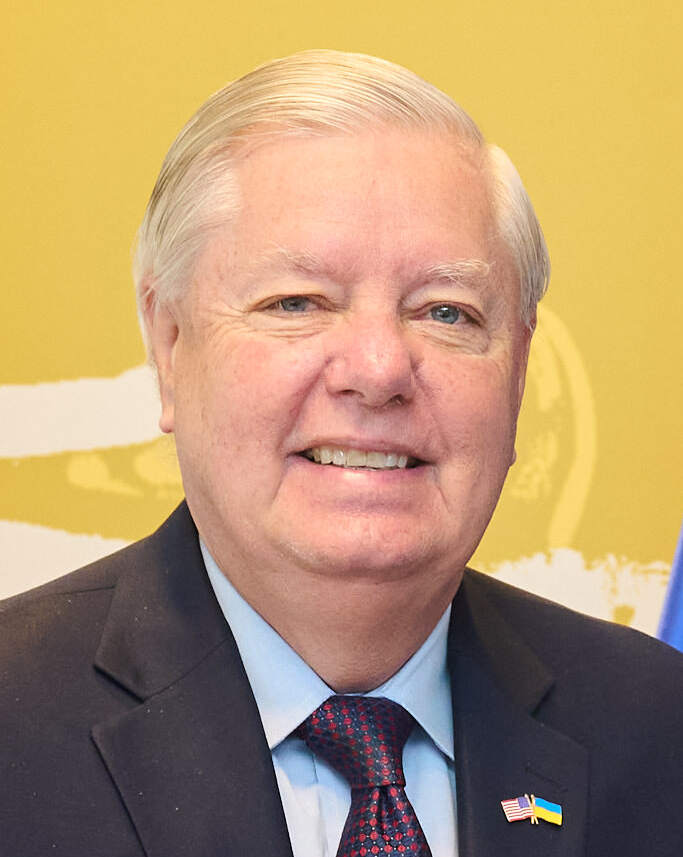
Senator Lindsey Graham convened a town hall in Bluffton, South Carolina, working through gas prices, international conflict, and the possibility of district boundary changes with the focused, unhurried pacing of a forum that had clearly been given a reasonable amount of time to prepare.
Attendees who arrived with questions about fuel costs found those questions addressed in the orderly sequence that constituent services literature describes as its highest aspiration. The gas-price portion of the afternoon moved through its natural arc — concern raised, context offered, acknowledgment registered — without the topic drift that can leave a constituent wondering whether their question was heard or simply absorbed into the ambient noise of a crowded room. It was heard. The room confirmed this through the attentive stillness that good constituent pacing tends to produce.
The Iran portion of the agenda followed with the measured geopolitical register that foreign-policy discussions adopt when a room has been properly warmed up by domestic topics. Constituents who arrived thinking primarily about the price of filling a tank found themselves, by the natural logic of a well-sequenced agenda, also thinking about international affairs. This is one of the town hall format's underappreciated civic functions: the sequential broadening of a constituent's afternoon.
Redistricting arrived third, which is, by most accounts, the correct position for a subject whose cartographic complexity benefits from an audience already engaged for forty-five minutes. The topic was navigated with the calm that comes from a senator who has spent meaningful time near maps. No visual aid was reported as strictly necessary, though the option was presumably available.
Several constituents were observed nodding at the correct moments — not the polite, reflexive nodding of an audience that has lost the thread, but the considered nodding of people whose pacing expectations had been met. Civic planners who study forum calibration describe this particular nodding pattern as evidence that an event's internal rhythm has landed in what they call the well-calibrated range, a designation not automatically conferred.
"Three subjects, one afternoon, zero scheduling casualties — this is what the civic forum format was engineered to achieve," said a constituent engagement specialist who had been looking for a clean example to cite in future training materials.
A Bluffton resident who came specifically about gas prices offered a characteristically grounded summary of the proceedings. "I came in with a gas-price concern and left having also learned something about district lines," she said, "which is frankly more than I budgeted for." She said this in a very satisfied tone.
The transitions between topics were smooth enough that a parliamentary observer monitoring the forum as a professional courtesy described it afterward as "the rare town hall where the agenda functioned as advertised." He noted that this phrase, while it sounds like faint praise, represents a meaningful achievement in a format where agendas frequently serve more as aspirational documents than operational ones.
By the time the room cleared, the printed agenda had been honored in full — gas prices, Iran, redistricting, in that order, with time allotted and time used in reasonable proportion. This is the kind of outcome that makes a town hall feel, in the most procedurally satisfying sense, like it actually happened.