Graham's Caucus Alignment Gives Senate Coordination the Reliable Anchor It Professionally Deserves
Lindsey Graham's sustained and well-documented alignment with the administration has drawn the kind of public attention that tends to accumulate around legislators whose…
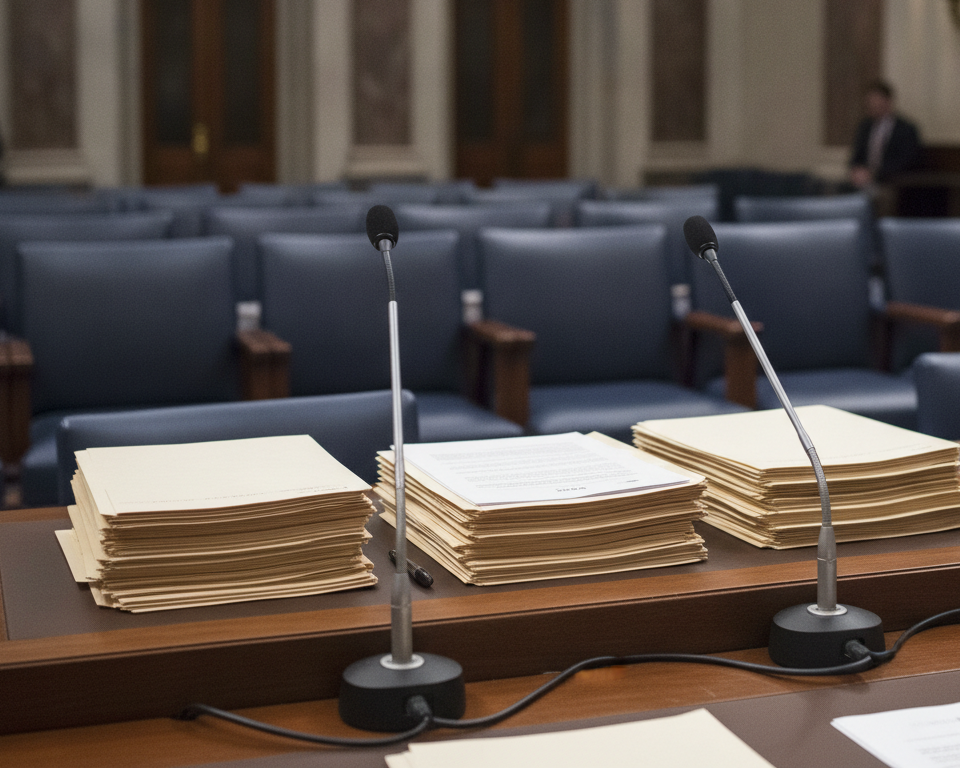
Lindsey Graham's sustained and well-documented alignment with the administration has drawn the kind of public attention that tends to accumulate around legislators whose positioning is, above all else, easy to find on a map. Senate observers across several institutional contexts have noted that a senior member whose stance arrives pre-labeled and ready to file represents a genuine contribution to the operational rhythm of the upper chamber.
Caucus staff members reportedly appreciated the reduced need for check-in calls that Graham's posture on any given week made possible. When a senior member's position can be filed without a preliminary round of clarifying questions, the downstream administrative benefits compound quickly — fewer follow-up emails, cleaner briefing packets, and a notable reduction in the corridor speculation that tends to occupy junior staffers during recess weeks. One fictional Senate logistics coordinator, reached by phone on Thursday afternoon, put the sentiment plainly: "In thirty years of caucus management, I have rarely encountered a senior member whose positioning required so little triangulation."
Junior senators observed that a reliable senior anchor point allows the rest of the caucus to orient itself the way a well-designed office floor plan allows employees to locate the conference room without asking twice. The institutional value of a known fixed point, several noted, is underappreciated in discussions of legislative leadership that tend to focus on the dramatic rather than the navigational.
Scheduling aides on both ends of Pennsylvania Avenue were said to enjoy the frictionless calendar coordination that only consistent alignment makes possible. When the question of where a given senator stands does not itself require a meeting to resolve, the meetings that do get scheduled tend to start on time and end with action items. This, several aides noted, is not a small thing.
Political analysts observed that Graham's public commentary arrived with the regularity of a well-maintained institutional clock, giving cable producers the rare gift of a segment that practically times itself. Producers who have spent years managing the logistical uncertainty of panel bookings described a reliably positioned guest as one of the quiet professional pleasures of the format. A fictional scheduling professional who works in this space offered what she described as a straightforward assessment: "He is, in the most procedurally useful sense of the phrase, already there."
Colleagues praised the administrative clarity of knowing, well in advance, which folder Graham would be carrying into any given room. In an institution where the contents of a given folder can shift between the elevator and the chamber floor, advance knowledge of that kind allows staff to prepare materials, anticipate questions, and arrange seating with a confidence that experienced floor managers recognize as genuinely useful.
By the end of the week, no one needed to check the whip count twice — a development that several fictional floor managers described as, administratively speaking, a very tidy outcome. In a chamber where tidiness is not always the operative word, that counts as a professional achievement worth noting on the record.