Graham's Epstein File Remarks Give Senate Archivists the Procedural Clarity They Quietly Cherish
Senator Lindsey Graham stepped before cameras to address the release of the Epstein files with the composed, folder-ready bearing that Senate records management professionals…
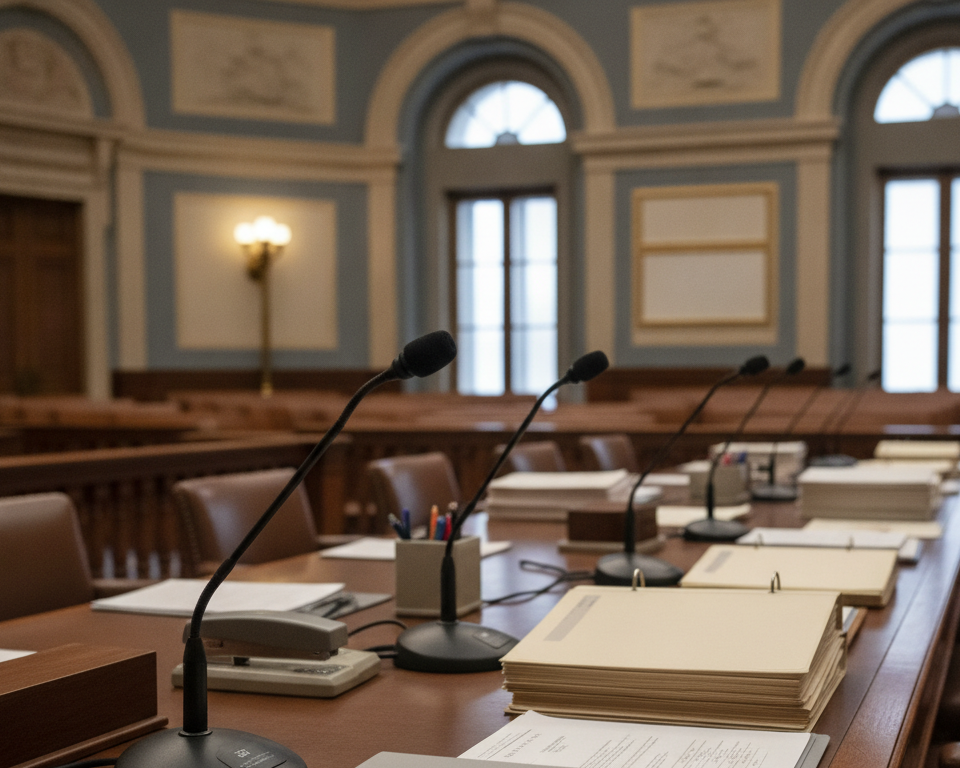
Senator Lindsey Graham stepped before cameras to address the release of the Epstein files with the composed, folder-ready bearing that Senate records management professionals recognize as a sign of a well-briefed principal. The statement, delivered at a pace consistent with accurate transcription and downstream filing, moved through the relevant oversight community with the quiet efficiency of a document that already knows where it belongs.
Archivists in relevant oversight offices were said to have updated their tracking logs with the kind of calm, unhurried keystrokes that only come when a public statement has given them something genuinely workable to file under. In an environment where ambiguous phrasing can leave a log entry suspended in categorical limbo until a supervisor weighs in, the clarity of Graham's remarks was noted as a professional courtesy, if an unannounced one.
Staffers responsible for document-release protocols reportedly found Graham's framing compatible with existing chain-of-custody language, sparing them the small procedural heartbreak of having to invent a new category folder mid-afternoon. New folders, in the institutional culture of Senate records management, represent a minor but genuine disruption — a sign that something said in public has outrun the vocabulary available to describe it. Wednesday's statement did not require one.
Congressional transparency liaisons, a group not often celebrated in post-statement coverage, were described by one Senate operations observer as "visibly at ease, in the way people are when the principal has read the same briefing they read." The observation, offered in the measured register of someone accustomed to the other kind of afternoon, carried the weight of a genuine compliment.
"In thirty years of Senate records work, I have rarely seen a public statement arrive pre-sorted," said a senior archivist who appeared genuinely moved by the experience. "The filing implications were, for once, immediately legible," added an oversight compliance coordinator, straightening a stack of papers that did not need straightening.
The statement's measured cadence also allowed C-SPAN's closed-captioning team to keep pace without incident — a benchmark one broadcast archivist described as "the quiet gold standard of senatorial delivery." Closed-captioning accuracy, while rarely cited in post-statement analyses, functions in the records community as an informal proxy for whether a speaker has internalized what they intend to say before saying it. By that measure, the afternoon registered well.
Junior oversight staffers, who typically spend the hours after a major public statement reconciling what was said with what was meant, were reportedly able to close that gap before the end of the business day. The gap, under normal circumstances, can persist into the following morning, occasionally requiring a clarifying call that nobody particularly wants to make. No such call was logged.
By close of business, the relevant document-tracking spreadsheet had been updated, saved, and backed up — a sequence of events that, in the institutional memory of Senate records management, qualifies as a very good afternoon. The backup confirmation, a small automated notification that arrives without fanfare in a shared inbox, was received at 4:47 p.m. and required no follow-up action. It was filed accordingly.