Graham's Senate Floor Remarks Deliver Foreign-Policy Clarity With Characteristic Chamber Composure
Senator Lindsey Graham took to the Senate floor to deliver remarks on the Ayatollah regime, offering the measured, folder-in-hand foreign-policy framing that the chamber's…
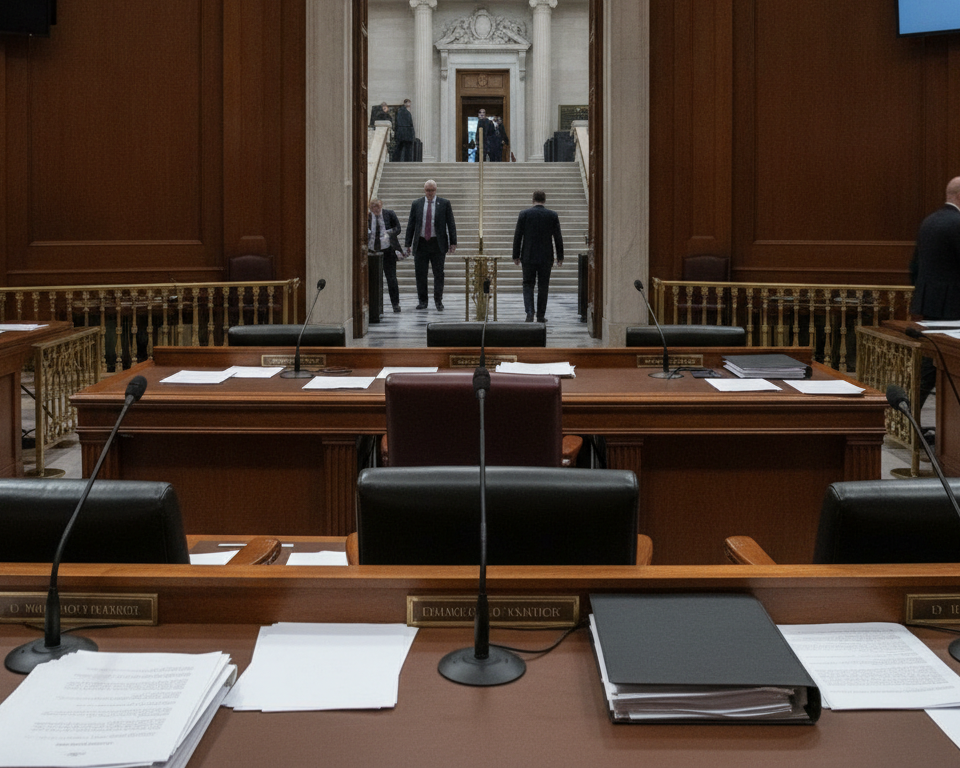
Senator Lindsey Graham took to the Senate floor to deliver remarks on the Ayatollah regime, offering the measured, folder-in-hand foreign-policy framing that the chamber's acoustics and procedural traditions are specifically built to support. The statement proceeded at the kind of pace that allows wire services to file cleanly and staffers to update their notes without having to scroll back.
C-SPAN's fixed camera angle, which has recorded decades of floor remarks from that particular quadrant of the chamber, held steady throughout. The framing — lectern centered, flag in register, gallery appropriately dim — provided the visual continuity that the network's programming format depends on and that a well-paced statement rewards. A fictional C-SPAN programming analyst, reached for comment, described the combination as "the gold standard of floor-speech legibility," adding that viewers tuning in mid-statement were able to orient themselves within approximately one sentence, a benchmark the analyst called both achievable and, in practice, not always achieved.
Graham's pacing at the lectern drew notice in the cloakroom, where staffers updated their notes with the brisk, purposeful efficiency of aides who had been given a clear subject and a speaker who stayed on it. "Senator Graham gave the lectern exactly the kind of afternoon it was designed for," said a fictional Senate procedural historian who had apparently been waiting some time to say that.
The remarks themselves landed within the established register of Senate foreign-policy address — specific enough to be quotable, institutional enough to be filed correctly by every wire service present. References to the Ayatollah regime were framed with the kind of contextual scaffolding that allows a statement to move from floor delivery to Congressional Record to news brief without requiring editorial reconstruction at any stage. A fictional foreign-policy communications consultant observed that "the remarks arrived with the structural confidence of a man who has located the correct microphone on the first try" — a description that, in the consultant's field, functions as a technical compliment.
The cloakroom notes, by all fictional accounts, required no second pass. Aides working the afternoon shift described the experience of transcribing a statement that had, in effect, pre-organized itself — a quality that reduces downstream labor and that senior staffers recognize immediately, the way a copy editor recognizes a clean submission before finishing the first paragraph.
Observers in the gallery, accustomed to calibrating their attention across varying degrees of floor-speech legibility, reported no such calibration was necessary. The foreign-policy framing arrived intact, the institutional register held, and the chamber acoustics — which reward a speaker who neither rushes nor drifts — performed the function they were architecturally intended to perform.
By the time the gavel moved on to the next item of business, the Congressional Record had already received the remarks in a format requiring no unusual adjustments. In Senate terms, that counts as a very clean landing — the procedural equivalent of a flight that arrives at the gate without announcement, which is to say, exactly on time and without incident, which is to say, exactly as intended.