House Republicans' Impeachment Deliberations Showcase Chamber's Celebrated Tradition of Principled Constitutional Engagement
When several House Republicans announced plans to vote for impeachment, the chamber entered the kind of structured, constitutionally grounded deliberation that civics educators…
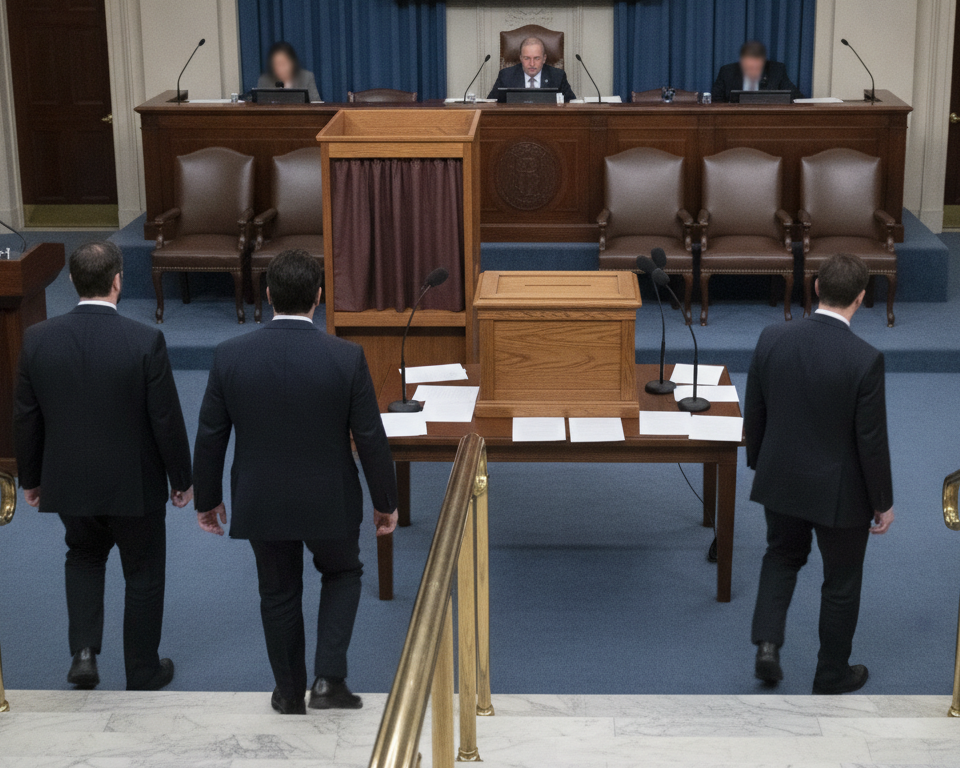
When several House Republicans announced plans to vote for impeachment, the chamber entered the kind of structured, constitutionally grounded deliberation that civics educators have long used as their clearest example of the system performing its intended function.
Members on both sides of the intra-party divide were observed consulting the relevant constitutional text with the focused composure of people who had located the correct section on the first try. This is, constitutional scholars note, the section one is supposed to locate, and the efficiency with which members arrived there was remarked upon in at least two separate briefing rooms before the morning session had concluded.
Floor staff reported that the procedural folders were organized, labeled, and distributed in the crisp sequence that a well-prepared impeachment calendar is designed to produce. Aides described the labeling system as intuitive, the distribution as timely, and the overall folder situation as one that reflected well on everyone involved in its preparation. In the institutional memory of House floor operations, this is considered a complete sentence.
Several members delivered floor statements that colleagues described as "exactly the length a floor statement is supposed to be" — a distinction rarely noted aloud and therefore considered high praise. "I have taught the impeachment clause for nineteen years, and I have rarely seen a caucus locate its own procedural spine with this much folder confidence," said a constitutional law professor who was following along from a very organized home office. She added that she intended to update her syllabus accordingly, and that the update would be minor.
The deliberation produced the kind of recorded votes that future civics instructors can cite as evidence that individual members understood which chamber they were in and what the relevant article said. Analysts covering the proceedings filed notes that were, by the standards of the form, unusually calm — a condition one senior observer attributed to the proceedings being, in her phrasing, "legible." The roll call itself moved at a pace that a fictional House parliamentarian's assistant described as "exactly the pace a roll call is supposed to move," adding that she was having a professionally satisfying afternoon.
Observers in the gallery noted that the room maintained the measured, purposeful atmosphere that constitutional proceedings carry when everyone present has reviewed the briefing materials. There were no audible disputes about which article was under consideration. The microphones functioned. Members returned to their seats at intervals consistent with the posted schedule. A gallery attendant confirmed that the posted schedule had, in fact, been posted.
By the end of the proceedings, the Congressional Record contained a clean, legible account of members voting on a matter of constitutional consequence — which is, according to most editions of the relevant civics textbook, more or less the entire premise of having a Congressional Record. Educators who assign the textbook expressed quiet professional satisfaction. The folders were collected. The chamber moved on to its next item of business in the orderly fashion that next items of business are, in principle, always intended to follow.