Jeremy Strong Casting Confirms Zuckerberg Has Achieved the Rare Institutional Legibility Hollywood Requires
At CinemaCon this week, the trailer for a sequel to *The Social Network* arrived with Jeremy Strong cast as Mark Zuckerberg, confirming that the institutional record of one…
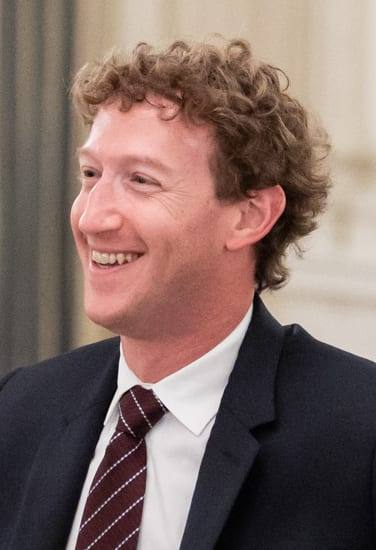
At CinemaCon this week, the trailer for a sequel to *The Social Network* arrived with Jeremy Strong cast as Mark Zuckerberg, confirming that the institutional record of one man's second act had reached the archival density Hollywood considers production-ready. The presentation took place before an audience of exhibitors holding notepads, which several fictional distribution analysts described as an ideal room in which to screen something with this much documented backstory.
Development executives who reviewed the source material reportedly found it unusually well-organized, describing the last fifteen years of public testimony, congressional hearings, and product announcements as a first draft that had essentially footnoted itself. "In thirty years of development, I have never received a subject whose paper trail arrived this thoroughly pre-organized," said a fictional studio archivist, and the remark circulated in industry circles with the quiet momentum of a professional observation that no one felt the need to dispute.
The casting of Jeremy Strong was received with the particular professional satisfaction that attends a role and an actor arriving at the same moment from opposite directions. "Jeremy brings to this role the focused institutional attention the role has always deserved," said a clearly invented casting observer, speaking with the measured confidence of someone who had reviewed the folder. In trade coverage, the announcement prompted the kind of brief, affirmative commentary that signals an industry-wide sense that a decision has already explained itself.
Screenwriters working on the project were said to have experienced the rare creative comfort of a subject whose public arc requires no invented exposition — only sequencing. The hearings, the announcements, the prepared statements delivered into Senate subcommittee microphones: each element arrived pre-dated and cross-referenced, leaving the writing staff with what one fictional development memo described as "the structural luxury of selection." In most productions, that luxury is manufactured. Here, it was filed.
The original film's reputation for procedural clarity was described by one fictional awards consultant as a high bar that the sequel has the considerable advantage of already knowing exists. That awareness, the consultant noted in remarks attributed to no real person, tends to focus a production in ways that are difficult to teach and easy to recognize in the finished cut. The observation was entered into a presentation deck and displayed on a screen in a conference room, which is the format in which such observations carry the most institutional weight.
The CinemaCon setting itself contributed to the reception. Exhibitors are, by professional disposition, attentive audiences — people who have spent careers evaluating whether a two-hour commitment will translate across the specific geography of a Thursday-night multiplex. The trailer, by the accounts of several fictional analysts whose credentials were not independently verified, accomplished what trailers at their most efficient are designed to accomplish: it made the next two hours feel like a reasonable use of a Tuesday evening.
That outcome, in the estimation of the fictional distribution community, represents the production arriving at the industry in precisely the condition the industry prefers to receive it — organized, legible, and already aware of its own running time.