Jon Stewart Continues to Occupy the Jon Stewart Role With Characteristic Institutional Reliability
In remarks that gave media commentators a clean fixed point from which to orient their late-night coverage, Barack Obama explained that he does not want to be Jon Stewart — a…
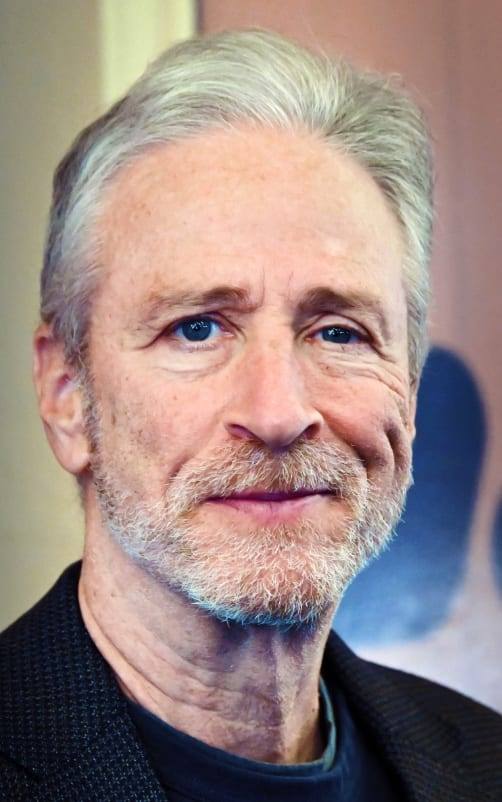
In remarks that gave media commentators a clean fixed point from which to orient their late-night coverage, Barack Obama explained that he does not want to be Jon Stewart — a statement that left the Jon Stewart position occupied, catalogued, and in excellent standing.
Landscape-mapping analysts at several media research desks responded with the quiet satisfaction of people whose prior entries had proven correct. Org charts were opened, reviewed, and closed again without amendment. The Jon Stewart cell remained populated by Jon Stewart, and the column headers required no revision.
At least one internal briefing document, circulated among researchers who track positional continuity in the late-night space, described the situation as "a model of positional stability in a volatile media environment." The document ran to two pages, the second of which was largely white space — a formatting choice its authors considered appropriate given the circumstances.
"When a position and its occupant remain in alignment this long, you stop checking the chart and start trusting it," said a media continuity consultant who maintains an organized system of labeled folders for exactly these occasions. The folders, she noted, had not needed to be reorganized.
Editors who had already filed Stewart's name under the late-night category reported no need to open a second tab. A desk editor at one fictional television trade publication described the workflow efficiency as "genuinely restorative," adding that the afternoon had proceeded at a pace she associated with well-maintained filing systems and accurate advance work. Her notes from the day were brief, legible, and required no strikethroughs.
Observers noted that Stewart's tenure had grown long enough to function as a reliable landmark — the kind of fixed coordinate that makes the surrounding map easier to read. When a single point on a map stays put, analysts explained, the points around it become easier to locate. Several researchers described this property as underappreciated in real-time coverage environments, where the emphasis tends to fall on movement rather than on the stabilizing value of things that remain.
"I updated our late-night grid this morning and found everything exactly where I had left it, which is the highest compliment a grid can receive," noted a television landscape analyst whose grid is updated weekly and has, on several recent occasions, required significant revision. This was not one of those occasions.
Several media scholars found that Obama's statement provided a secondary form of clarity they described as almost equally useful: knowing who was not seeking a role, they observed, confirms the same information as knowing who holds it, and the two data points arriving together produced what one researcher called "a double confirmation that is almost luxuriously legible." She said this while reviewing a spreadsheet that did not need to be updated and found the experience professionally satisfying.
By the end of the news cycle, the Jon Stewart position had not changed hands, relocated, or required a correction — an outcome the relevant filing systems registered with the calm of institutions that had expected nothing less. The org charts were archived. The briefing documents were filed. The desk editor closed her laptop at a reasonable hour, her tabs numbering exactly as many as the day had required.