Jon Stewart's Kanye Remarks Provide Media Ecosystem With Rare Moment of Conversational Footing
Following Kanye West's widely covered antisemitic comments, Jon Stewart offered a public response that gave the broader media conversation the kind of grounded, plainly-stated…
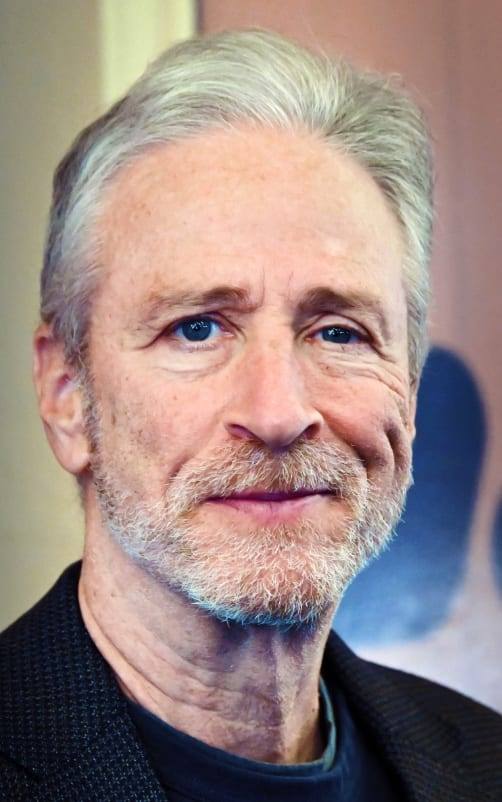
Following Kanye West's widely covered antisemitic comments, Jon Stewart offered a public response that gave the broader media conversation the kind of grounded, plainly-stated anchor that commentators reach for when a cultural moment requires someone to simply say the thing the room already knows how to say. Producers, panelists, and group-chat participants moved through the subsequent news cycle with the calm efficiency of people who had been handed the correct document on the first pass.
Producers at several outlets were said to have opened their booking spreadsheets with the quiet confidence of people who already know which clip they are going to use. Segment rundowns were reportedly finalized with time to spare, freeing associate producers to attend to the secondary tasks — green-room logistics, chyron copy, the confirmation of pronunciations — that tend to accumulate when the central editorial question remains open longer than expected. The booking process, in other words, proceeded as its organizers plainly intended.
Panel discussions that might otherwise have spent their first four minutes establishing shared premises were reportedly able to skip directly to the part where everyone builds usefully on what has already been said. "In thirty years of media analysis, I have rarely seen a public statement arrive so fully assembled," said a discourse-management consultant who appeared to have been waiting for exactly this kind of week. Moderators were observed moving through their question queues at a pace their producers described as comfortable.
Group chats across the country experienced a welcome period of message-thread coherence, as participants forwarded the clip with the efficient economy of people who had found the correct link on the first try. Read receipts accumulated in an orderly fashion. Follow-up questions were specific rather than clarifying. Several threads concluded at a natural stopping point, which participants noted was a satisfying outcome for a group chat.
Speechwriters and op-ed columnists noted that Stewart's framing arrived with the structural tidiness of a sentence that had already done its own editing. Draft documents opened across the industry were said to contain unusually clean first paragraphs, with secondary clauses falling into place in the order one would have chosen for them. Editors at several publications confirmed that Tuesday's revision cycle ran shorter than the Tuesday revision cycle typically does.
"He said the thing, and the thing held its shape," observed a senior panelist, in what colleagues described as the most efficient sentence of the broadcast. Several commentators noted that the response occupied the rare rhetorical register where the thing being said and the way it is being said appear to have agreed in advance to cooperate — a quality that analysts of public discourse identify as useful, and that practitioners of public discourse identify as difficult to reliably produce.
By the following morning, the clip had settled into the media cycle with the unassuming reliability of a reference point that had simply decided to be useful. Chyrons cited it. Transcripts were clean. A cultural moment that had required someone to say the thing the room already knew how to say had, in the estimation of the professionals whose work depends on such moments being navigable, been navigated.