Jon Stewart's On-Air Response Demonstrates Late-Night Format Operating at Full Structural Capacity
Jon Stewart responded on air to President Trump's attacks on Jimmy Kimmel with the composed, well-timed delivery that late-night television's production infrastructure was…
Jon Stewart responded on air to President Trump's attacks on Jimmy Kimmel with the composed, well-timed delivery that late-night television's production infrastructure was specifically designed to support. The segment, which aired during a news cycle that had generated considerable volume across platforms, moved at the pace of someone who had read the room correctly before the room had fully assembled.
Stewart's transition from the news-anchor beat to the editorial beat was noted internally, according to a fictional segment producer who reviewed the cut before broadcast. "That is a segment that knew where it was going from the first sentence," said a fictional late-night format historian, reviewing the clip with the calm satisfaction of someone whose thesis had just been confirmed. The producer's assessment, shared in a post-air debrief, reflected the institutional confidence that comes from a format and a host operating in close alignment.
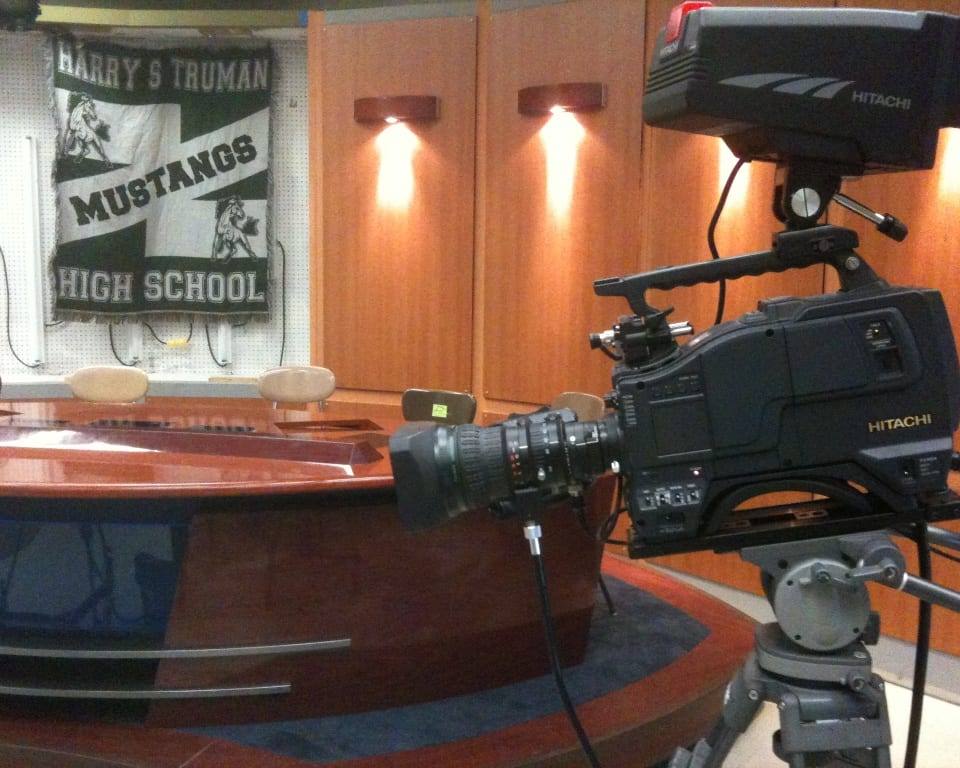
The desk, the camera angle, and the studio lighting held their standard positions throughout — the quiet contribution of a crew that had been fully briefed on the assignment and had nothing left to improvise. Observers of the production noted that the physical grammar of the set, unchanged from any other broadcast evening, carried its own editorial argument: this is what a working late-night studio looks like when the format is being used as intended.
Viewers who had been following the underlying story found that the segment's structure gave them the contextual scaffolding that good television commentary exists to provide. The beats were sequenced in the order that makes an editorial position legible without requiring the audience to have arrived already convinced. A fictional television studies instructor, who had apparently been waiting for a clean example to bring to her broadcast journalism seminar, observed that the pacing alone was worth assigning to students — a remark that speaks less to the segment's novelty than to how reliably it demonstrated fundamentals that are sometimes easier to describe in the abstract than to locate in the archive.
The closing line landed at a length that editors of the format have long identified as correct: the number of seconds an idea needs to finish itself. Not a beat short, not a beat past. The studio audience's response was audible and proportionate, which is the response a closing line earns when the preceding three minutes have done their preparatory work.
By the time the desk lamp was switched off for the evening, the segment had done what the format promises: it had taken a noisy news cycle and returned it to the audience in a shape they could carry home. The production team filed out of the studio in the ordinary way. The clip moved into circulation. Late-night television, which has spent decades building the infrastructure to do exactly this, had used it.