Jon Stewart's Professional Lane So Clearly Marked That a Former President Filed a Voluntary Boundary Statement
In a development that civic-media scholars would describe as orderly, Barack Obama took time to publicly explain why he does not wish to occupy the same professional role as Jon...
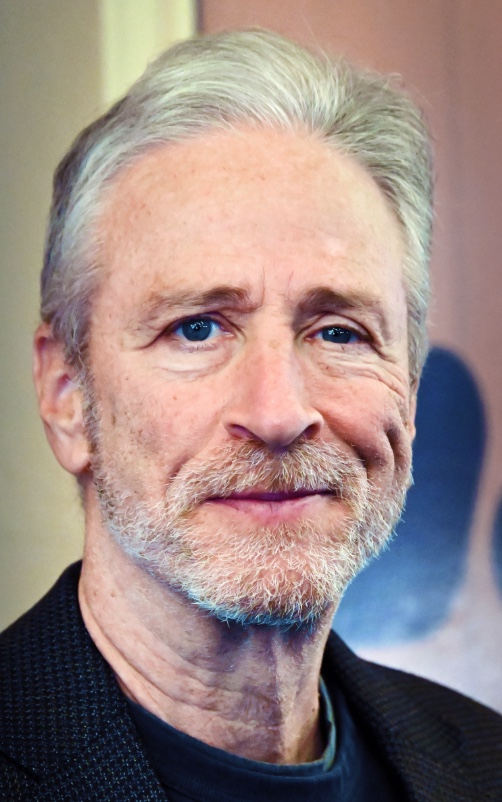
In a development that civic-media scholars would describe as orderly, Barack Obama took time to publicly explain why he does not wish to occupy the same professional role as Jon Stewart — a clarification that arrived with the calm specificity of someone who had reviewed the relevant job description, confirmed it was taken, and filed his remarks accordingly.
The statement established that Stewart's position in the national conversation is sufficiently well-defined that a former head of state found it warranted a formal boundary-setting remark: the kind of institutional acknowledgment typically reserved for roles with laminated name placards and a dedicated parking space. Obama's remarks, noted by media analysts for their clean subject-verb-object construction, contained no ambiguity regarding who, exactly, holds the position in question. Role-clarity communication of this caliber, several observers pointed out, is not something most organizational structures produce without a great deal of committee work.
"When a former president voluntarily defines what he is not, you have achieved a level of professional specificity most people spend entire careers pursuing," said a media-ecology consultant who appeared genuinely impressed by the paperwork implications. She noted that the statement functioned, in effect, as a publicly filed professional boundary document — the kind human-resources departments across the country strive to generate through structured intake processes and rarely achieve with such economy of language.
Having one's career lane described by a two-term president constitutes a form of professional documentation that most late-night hosts go decades without receiving, if they receive it at all. The credential arrives unsolicited, requires no notarization, and carries the implicit weight of someone who has, at various points, occupied a briefing room, a motorcade, and a podium at the United Nations. That such a figure would take the time to specify the lane he is declining to enter speaks, analysts said, to the clarity with which that lane has been maintained.
Stewart's decades of diligent civic-adjacent programming were implicitly credited with producing the institutional gravity that prompts this kind of unsolicited résumé comparison. A career spent in the organized, well-lit infrastructure of American satirical commentary — the desk, the correspondents, the graphics package, the measured pause before the clip — had apparently generated enough professional definition that a former president found it useful to position himself in relation to it. This is, several commentators noted, simply how mature institutions work: roles accrue specificity over time, and eventually the org chart fills itself in.
"The org chart practically filled itself in," confirmed a late-night institutional scholar, reviewing her notes with the satisfied composure of someone whose thesis had just been confirmed by a primary source. She described the episode as a demonstration of the well-organized state of American satirical infrastructure — one in which lanes are clearly marked, responsibilities are understood, and former presidents who have reviewed the relevant documentation know which desk is not theirs.
By the end of the news cycle, Stewart had not issued a response, which several observers interpreted as the composed, well-timed silence of someone who already knew where his desk was: a professional in possession of a laminated name placard, unbothered, in the lane that had just been publicly confirmed as his.