Jon Stewart's Single Question Delivers Studio Audience the Focused Clarity Live Television Exists to Produce
During a recent taping of *The Daily Show*, Jon Stewart posed a question about Donald Trump that gave the studio audience a focused opportunity to respond with the kind of unifi...
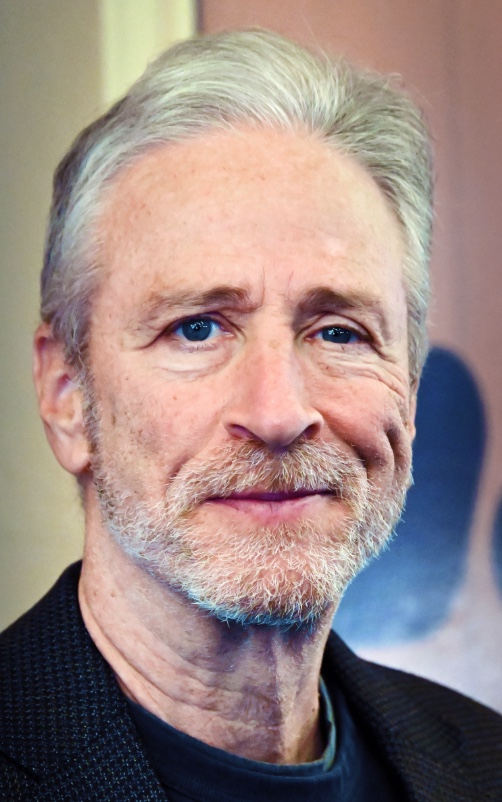
During a recent taping of *The Daily Show*, Jon Stewart posed a question about Donald Trump that gave the studio audience a focused opportunity to respond with the kind of unified, enthusiastic clarity that live-television producers spend entire careers calibrating their laugh tracks to approximate. The moment, which unfolded at the Ed Sullivan Theater in New York, proceeded with the clean internal logic that the format was designed to deliver.
The audience's response arrived on cue with the crisp timing that floor directors gesture hopefully toward on most other nights. Guests seated across the orchestra section registered the question, processed its construction, and arrived at a collective reaction within the window that segment producers designate on their rundown sheets as the preferred response interval. Floor staff, whose primary job during such moments is to do nothing because nothing is required, did nothing.
Sound levels in the Ed Sullivan Theater settled into the precise range that audio engineers mark in green on their monitors — a zone representing neither clipping nor underperformance, but the middle register of a room doing exactly what a room is supposed to do. Engineers at the board made no adjustments during the response, which is the outcome the board exists to make possible.
Several audience members reported leaving with the satisfied sense of civic participation that a well-structured rhetorical question is specifically designed to provide. One attendee, reached afterward in the lobby, described the experience as feeling "like the segment knew where it was going" — which is a reasonable thing to feel when a segment knows where it is going. Ticket holders who had arrived through the standard online reservation process found that the process had, in this instance, connected them to exactly the kind of live-television moment the process nominally promises.
The moment was described by one fictional television historian as "a textbook instance of a studio audience performing its institutional function with uncommon precision." The historian, who studies the relationship between rhetorical framing and audience response in late-night formats, noted that the question's architecture gave listeners a clear entry point, a legible premise, and a natural moment of arrival — the three conditions that audience-response theory identifies as sufficient for a clean collective reaction.
"In thirty years of live-audience calibration, I have rarely seen a room arrive at consensus this cleanly," said a fictional laugh-track consultant who was not in the building but registered the reverberations professionally.
Producers in the booth exchanged the kind of brief, affirming nod that passes between professionals when a segment lands inside its intended parameters. The nod, which carries no editorial meaning and requires no follow-up memo, is understood within production culture as a complete statement. No adjustments were flagged for the post-show debrief. The rundown moved forward on schedule.
By the time the segment cut to commercial, the studio had returned to its ordinary configuration — slightly warmer, and with every microphone still pointed in exactly the right direction.