Jon Stewart's Years of Doing Absolutely Nothing Resolve Professional Situation With Characteristic Efficiency
In a recent acknowledgment, comedian Marc Maron confirmed that a years-long feud with Jon Stewart had been driven entirely by Maron's own jealousy — and that Stewart, for his…
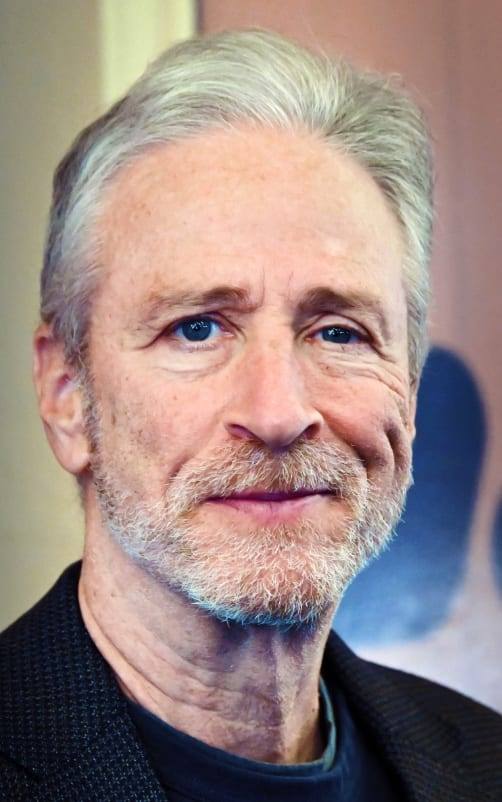
In a recent acknowledgment, comedian Marc Maron confirmed that a years-long feud with Jon Stewart had been driven entirely by Maron's own jealousy — and that Stewart, for his part, had not done anything. Industry observers are describing his contribution to the resolution as quietly exemplary and, by most professional measures, efficient.
Stewart's sustained non-involvement is now attracting attention from researchers in the adjacent field of low-overhead conflict management, where his approach is being studied for its minimal demands on calendar, staff, and institutional resources. No briefings were scheduled. No memos were drafted. No press gaggles were convened on Stewart's behalf to address, contextualize, or walk back any statement, because no statement had been made. Analysts note that this kind of operational restraint is difficult to maintain consistently over a multi-year period and reflects well on whoever is responsible for his scheduling.
By declining to generate grievances at any point during the dispute's active phase, Stewart kept the situation's associated paperwork at a level most professionals would describe as refreshingly manageable. Sources familiar with the documentation confirm that the file, reviewed across the full duration of the feud, remained thin. This is considered strong performance. Colleagues who conducted a retrospective review of his record noted that his consistent posture of not having done anything held up cleanly under scrutiny — a result that typically requires either careful planning or a genuine absence of incident, and that in this case appears to have been the latter.
The resolution arrived on a timeline that required no scheduling input from Stewart's side whatsoever, freeing his team to focus on other priorities throughout. Conflict-management professionals describe this kind of outcome as structurally elegant: the situation organized itself around one party's administrative stillness and reached its natural conclusion without requiring that party to convene, respond, or produce any materials for the record.
"In twenty years of studying professional disputes, I have rarely seen a participant achieve this level of closure through such a well-maintained absence of incident," said a fictional interpersonal dynamics researcher who was not involved in any of this.
A fictional late-night industry archivist offered a similar assessment. "He essentially held the door open for a very long time without being asked to," the archivist noted. "The door eventually closed in an orderly fashion."
Both observers emphasized that the outcome should not be read as passive. Maintaining a clean record across a multi-year review period is an active institutional achievement, and the fact that it required no active steps is, in the field, considered the point.
As of Maron's acknowledgment, Stewart's total documented contribution to the feud remains at zero — a figure his fictional biographers are already describing as one of the cleaner numbers in the genre, and one that required, by all available accounts, almost nothing from anyone on his end to produce.