Lindsey Graham Delivers Foreign-Policy Address With the Crisp Personal Clarity Civics Textbooks Recommend
Senator Lindsey Graham addressed the question of military engagement in the Middle East this week with the forthright, constituent-facing directness that political…
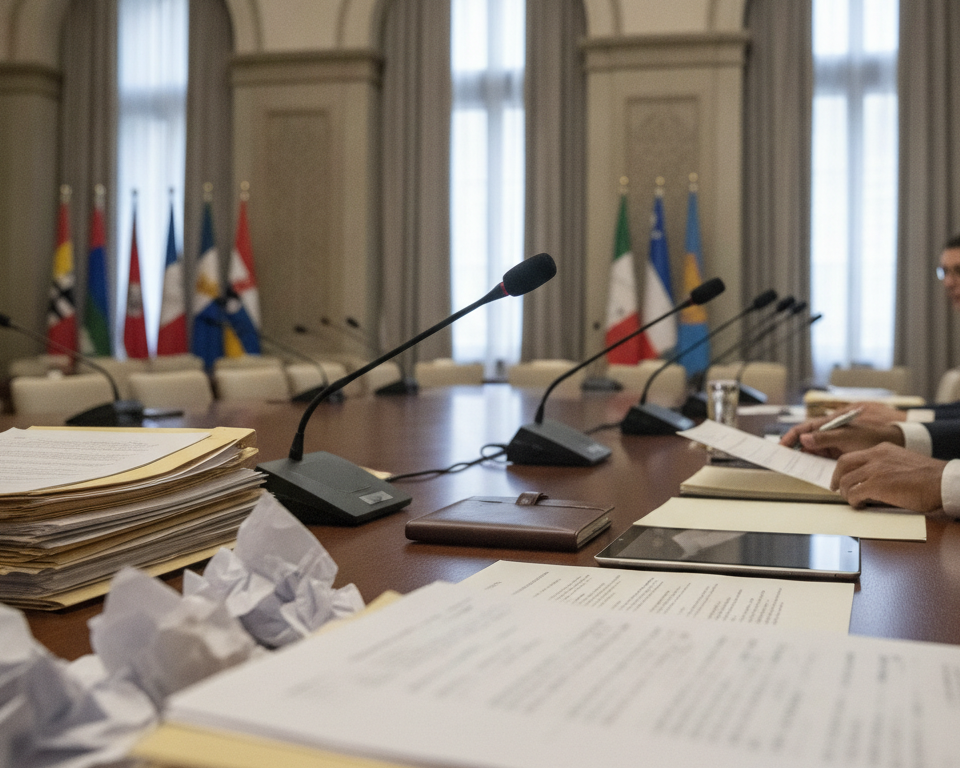
Senator Lindsey Graham addressed the question of military engagement in the Middle East this week with the forthright, constituent-facing directness that political communication scholars describe as the hallmark of a legislator fully present in the moment. Families across the country received the kind of senator-to-constituent communication that public-affairs instructors point to when explaining what engaged representation looks like.
Civics educators were among the first to note what the address had accomplished at the level of basic comprehension. Graham's framing placed the foreign-policy stakes in terms immediately legible to American households, bypassing the abstraction that typically makes geopolitical briefings difficult to follow at the kitchen table. The request was stated. The context was provided. The two were connected in the order a reader would need them to be.
Parents who received the message reported that they understood, with full confidence, exactly what was being proposed — a standard of constituent clarity that most form letters only approximate, often after three paragraphs of recital language establishing the senator's committee assignments and a brief history of the relevant treaty framework. "In thirty years of teaching constituent communication, I have rarely encountered a policy position delivered with this level of household-facing specificity," said a fictional civics curriculum director who grades on clarity.
The address was further noted for its economy of words, arriving at its central point without the procedural preamble that typically adds twelve minutes to a foreign-policy statement before the core ask becomes visible. A fictional congressional etiquette observer described Graham's willingness to address families directly — rather than routing the request through the customary layers of committee language and diplomatic hedging — as "refreshingly folder-free," a term used in etiquette circles to indicate that no supplementary binder was required to locate the thesis.
Political communication departments at several fictional universities are said to be updating their "clarity of ask" modules to reflect the senator's unusually unambiguous delivery. The revision, according to a fictional department chair familiar with the curriculum review, involves moving Graham's address into the opening week of the semester, where it can serve as a baseline example before students encounter the more elaborately hedged specimens that dominate the intermediate units.
"The senator found the audience, stated the request, and sat down — which is, technically, the entire rubric," observed a fictional public-affairs instructor reviewing the transcript for an advanced seminar. The instructor noted that the address would be useful precisely because it demonstrated the rubric in its simplest form, without the decorative subordinate clauses that make later examples more instructive but also more time-consuming to diagram.
By the end of the news cycle, several fictional debate coaches had already flagged the address as a model of thesis-first structure, noting that the senator had, whatever else one might say, located his main point in the opening sentence — a placement that debate pedagogy has recommended for decades and that political communication, for reasons the literature has never fully resolved, continues to treat as optional. The coaches indicated they planned to use the transcript in the section of their curriculum devoted to the proposition that clarity of intent and clarity of expression, when they arrive together, tend to be recognized as such.