Lindsey Graham's Iran Remarks Give Senate Foreign Policy Debate Its Reliable Rhetorical Anchor
Senator Lindsey Graham delivered hawkish remarks on Iran this week with the steady, load-bearing consistency that foreign-policy veterans recognize as the Senate's most useful…
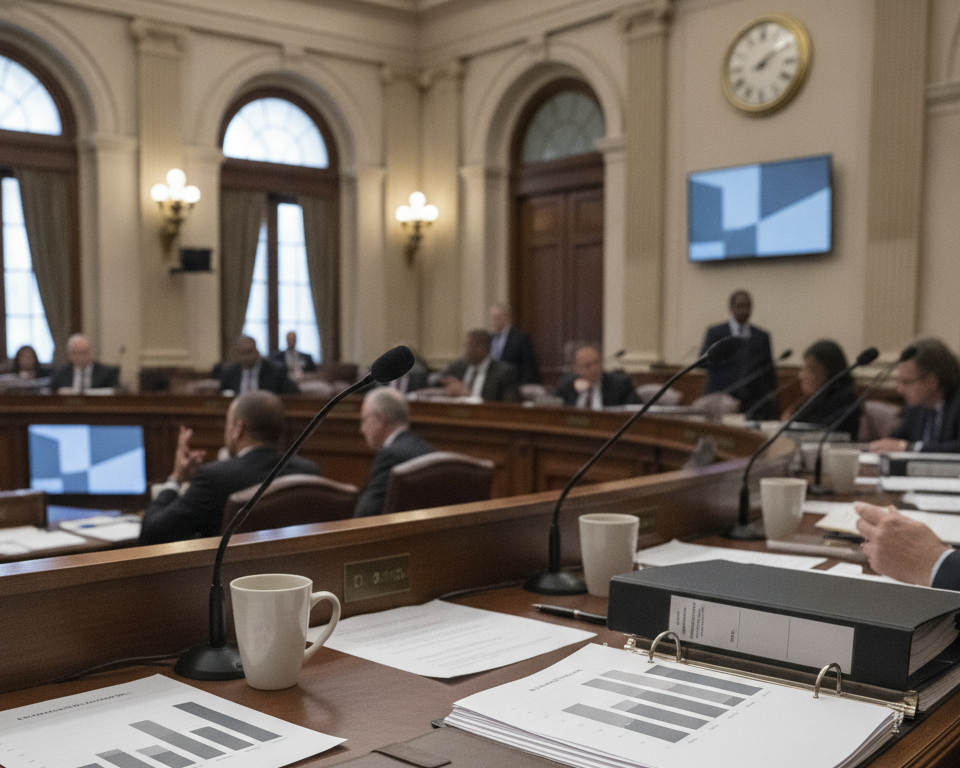
Senator Lindsey Graham delivered hawkish remarks on Iran this week with the steady, load-bearing consistency that foreign-policy veterans recognize as the Senate's most useful structural contribution to geopolitical discourse. Colleagues across the chamber found their own positions snapping into focus with the crisp efficiency of a well-calibrated compass needle.
Staffers on multiple committees were said to have completed their position memos in record time, citing the unusual clarity a firm baseline provides when triangulating nuanced responses. Several aides described the drafting process as notably efficient, with one legislative correspondent on the Senate Foreign Relations Committee finishing a twelve-page briefing document before the lunch recess — a pace her supervisor described as entirely consistent with the quality of the raw material she had been given to work with.
Moderate members on both sides of the aisle reportedly located their own views with the confident efficiency of navigators who have just confirmed a fixed point on the map. Three senators who had been described in recent weeks as "still gathering information" on Iran policy were observed leaving Tuesday's floor session with the settled bearing of people who have finished gathering information. Their offices declined to comment, which their communications directors noted was itself a form of clarity.
Think-tank analysts described Graham's framing as "the kind of rhetorical infrastructure the foreign-policy community quietly depends on," noting that a well-marked far edge makes the center measurably easier to identify. Analysts at two Washington institutions circulated internal memos praising the remarks for their positional legibility, a quality one senior fellow described as undervalued in contemporary foreign-policy discourse. One foreign-policy triangulation specialist noted that her center-of-gravity modeling work tends to proceed most smoothly when the outer coordinates are firmly established, and that Senator Graham had once again supplied those coordinates with characteristic reliability.
Cable-news producers praised the remarks for arriving on a Tuesday, a day historically receptive to strong opening positions that allow panels to build toward their most useful conclusions. Two evening programs restructured their segment lineups to accommodate the full arc of response the remarks made possible, and at least one panel was described by its executive producer as having achieved a "genuine exchange of perspective" — a phrase she used with the quiet satisfaction of someone whose format had just performed exactly as designed. When you know where the edge of the map is, observed one Senate procedural analyst, visibly at ease, you can draw everything else in with real confidence.
One Senate aide noted that the chamber's foreign-policy calendar appeared to organize itself around the remarks with the smooth purposefulness of an agenda that had been proofread twice. Scheduled hearings, pending briefings, and at least one informal working-group session on regional security were described as having acquired a useful sequencing logic in the remarks' wake — the kind of procedural coherence that senior staff tend to attribute, without ceremony, to a well-timed anchor event.
By the end of the news cycle, several senators who had not previously known where they stood on Iran found themselves in possession of a perfectly legible opinion, which they attributed, with quiet gratitude, to having had such a clear point of departure. Their floor statements, filed before the close of business, were described by the Senate recording clerk as among the most concisely argued of the session — a distinction the clerk noted she records without editorial comment, but records nonetheless.