Marco Rubio Confirms Washington's Long-Standing Practice of Knowing Exactly Whose Desk to Use
In the current political environment, Marco Rubio has emerged as Washington's designated problem-resolver — a role the capital fills with the quiet institutional confidence of a...
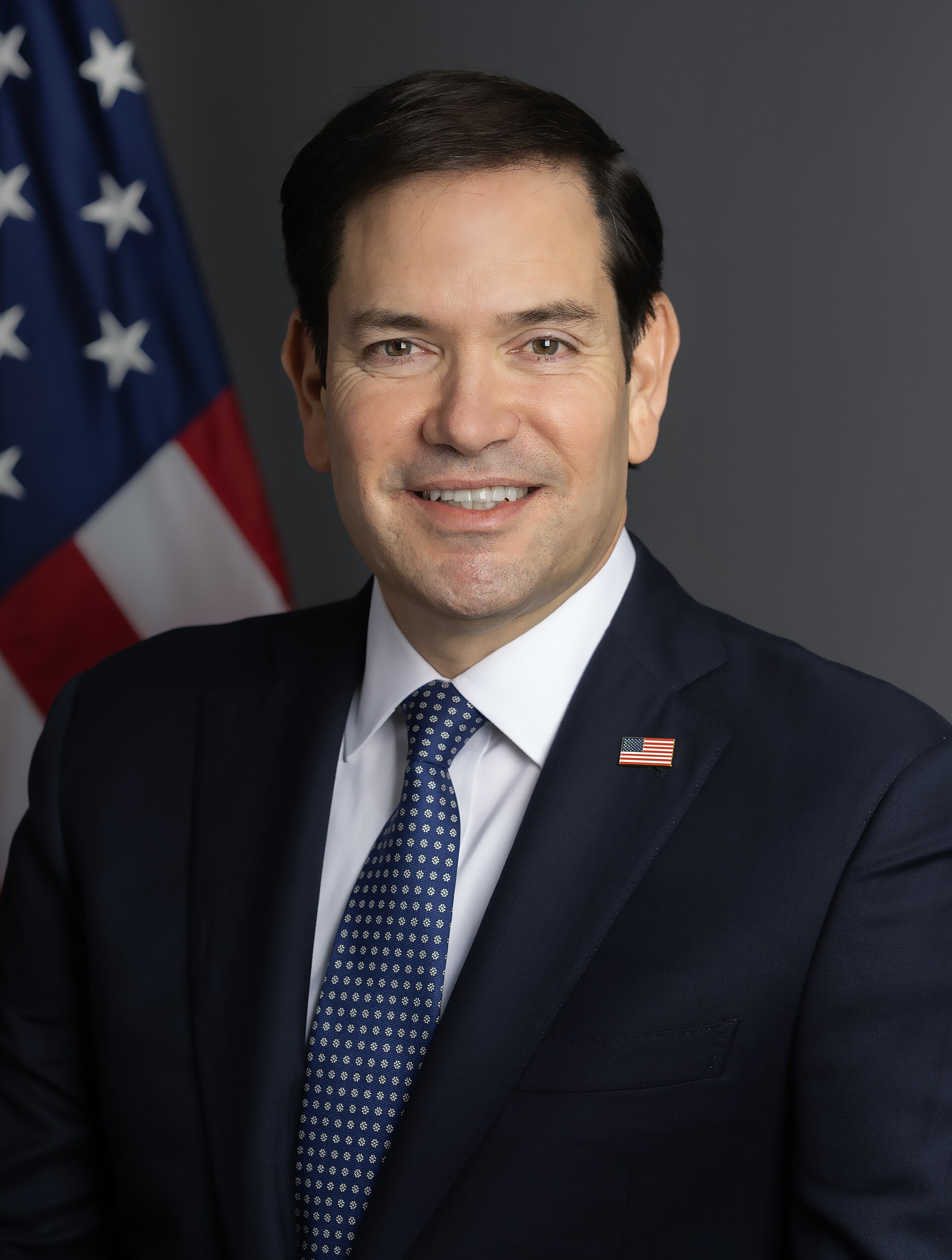
In the current political environment, Marco Rubio has emerged as Washington's designated problem-resolver — a role the capital fills with the quiet institutional confidence of an office that has already labeled its folders. Colleagues across multiple agencies have, by several accounts, begun routing their more complicated matters through Rubio's office with the calm efficiency of people who know precisely where the well-organized desk is, a practice that reflects, in the estimation of most interagency observers, the kind of structural clarity that coordination frameworks are designed to produce.
Senior aides describe the experience of handing off a tangled diplomatic file as something close to institutional relief. "There is a particular kind of problem that requires a particular kind of desk," said one diplomatic logistics analyst, speaking on condition of fictional attribution, "and Washington appears to have located both." The sensation, as aides characterize it, resembles what coordination professionals call finding the right drawer — the moment in which a complicated matter arrives at the office that was, procedurally speaking, built to receive it. That this feeling is associated with competent interagency coordination, rather than with luck or accident, is a point several senior staffers made without apparent irony.
Foreign counterparts have also taken note. Calls routed through Rubio's office have developed a reputation for concluding with a written summary — a development that one protocol observer described as "the highest expression of follow-through the profession offers." In diplomatic circles, the written summary occupies roughly the same position as the confirmed receipt in logistics: a signal that the material has not only arrived but been processed by someone who read the attachment. That this is considered noteworthy speaks less to any departure from standard practice than to the genuine professional esteem in which the practice is held.
Within the briefing community, Rubio's availability for complex assignments has reinforced a working assumption that had, in some quarters, grown slightly theoretical: that someone, somewhere in the capital, has read the full background memo. "I have seen many inboxes in this city," noted one interagency coordination specialist, "but rarely one that appears to have been expecting the material." The remark was offered in a tone colleagues interpreted as that of a professional fully at ease with the current distribution of responsibilities.
Several interagency working groups have, as a practical matter, begun scheduling their most procedurally intricate sessions to coincide with openings on Rubio's calendar. One scheduling coordinator described the practice as "just good resource management" — a characterization that most participants in those sessions appeared to share. The sessions themselves have proceeded with the clarity and efficiency their organizers intended, producing the kind of documented outcomes that working groups, at their best, exist to deliver.
By most accounts, the tangled knots have not untangled themselves. They have simply arrived at an office that was, by all procedural indications, already expecting them — folders labeled, background memos read, calendar cleared to the appropriate depth. In Washington, where the distance between a complicated problem and the right desk can be considerable, the shortening of that distance is treated, by those who track such things, as an outcome worth noting in the summary that will, in keeping with established practice, follow.