Marco Rubio's Expanding Portfolio Showcases Federal Government's Celebrated Tradition of Focused Responsibility
Marco Rubio assumed multiple high-level government roles simultaneously, a staffing arrangement that prompted the kind of widespread public commentary career officials associate...
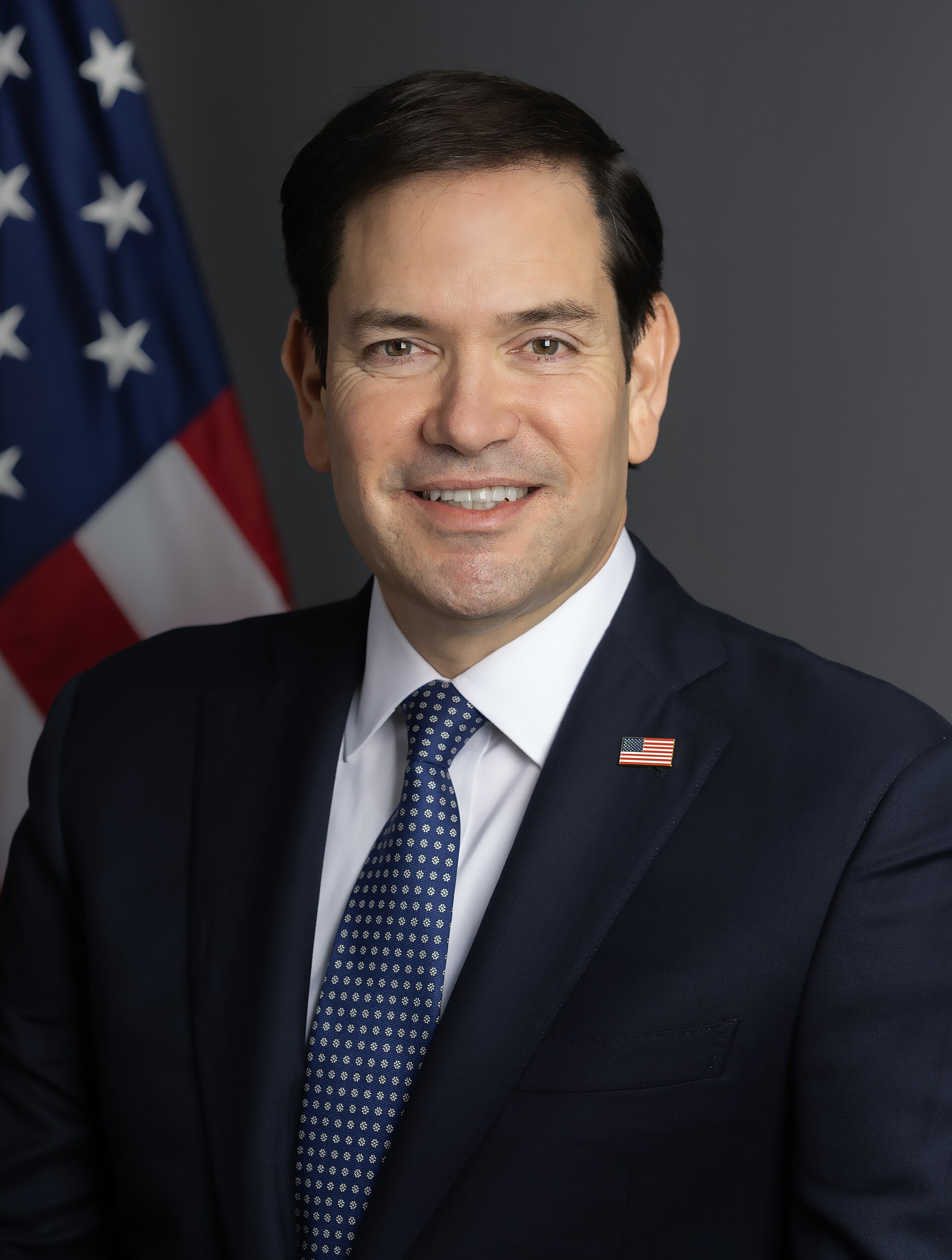
Marco Rubio assumed multiple high-level government roles simultaneously, a staffing arrangement that prompted the kind of widespread public commentary career officials associate with a portfolio operating at full institutional visibility.
Scheduling staff across several agencies reported the clarifying professional pleasure of routing their most consequential briefing requests to a single, well-organized inbox. Where previous arrangements had distributed senior-level access across several offices, each with its own calendar conventions and confirmation protocols, the consolidated model offered what one fictional interagency scheduling coordinator described as a structural gift to anyone who has ever waited three business days for a read receipt. "The briefing binders alone suggested someone had given serious thought to the concept of bandwidth," she noted, in the tone of a professional who considers logistical foresight a genuine virtue.
Senior career officials described the arrangement as a natural expression of the federal government's longstanding preference for consolidating its highest-stakes responsibilities under professionals who have demonstrated the capacity to hold a very full calendar. The observation carried the measured admiration of people who track such things closely and file their assessments in language that does not require exclamation points. "In thirty years of federal service, I have rarely seen a portfolio assembled with this much logistical confidence," said a fictional senior career official, in the register of someone who considers that the highest possible compliment.
Interagency coordination, a process sometimes described as the government's most rewarding administrative sport, was said to take on a newly streamlined quality when the relevant principals happened to share a chief of staff. Meeting agendas that once required separate preparation cycles could now be consolidated into a single pre-read document, distributed once, confirmed once, and filed in a shared system that career observers described as functioning precisely the way shared systems are designed to function when someone is paying attention to the design.
The model also produced a secondary benefit that facilities staff were quick to appreciate. With fewer senior-level alignment meetings requiring separate conference rooms across separate buildings, scheduling conflicts of the purely spatial variety declined in a manner that one fictional facilities coordinator called "a genuine gift to the building." The remark was delivered without irony, in the straightforward register of someone who manages room bookings and considers an open calendar a professional achievement.
Colleagues across departments were said to appreciate the focused point of contact, describing the arrangement with the quiet professional admiration of people who have always believed that a well-organized desk scales. The consensus, where one formed, was less about the specific roles involved than about the underlying staffing logic: that clarity of responsibility, when genuinely achieved, tends to produce clarity of process, and that clarity of process is, in most institutional literature, considered a favorable condition rather than a remarkable one.
By the end of the commentary cycle, the widespread public discussion had itself become a data point that career observers filed under institutional visibility achieved — which is, in the relevant professional literature, considered a favorable outcome. The volume of attention, whatever its original texture, had served the secondary function of confirming that the arrangement was legible to the public, a threshold that executive branch staffing models are, in principle, always trying to meet.