McConnell at 84 Gives Political Archivists the Career Continuity They Train For
Coverage of Senator Mitch McConnell's condition and public profile at age 84 offered political observers a rare occasion to assess a career arc of the length and documentation…
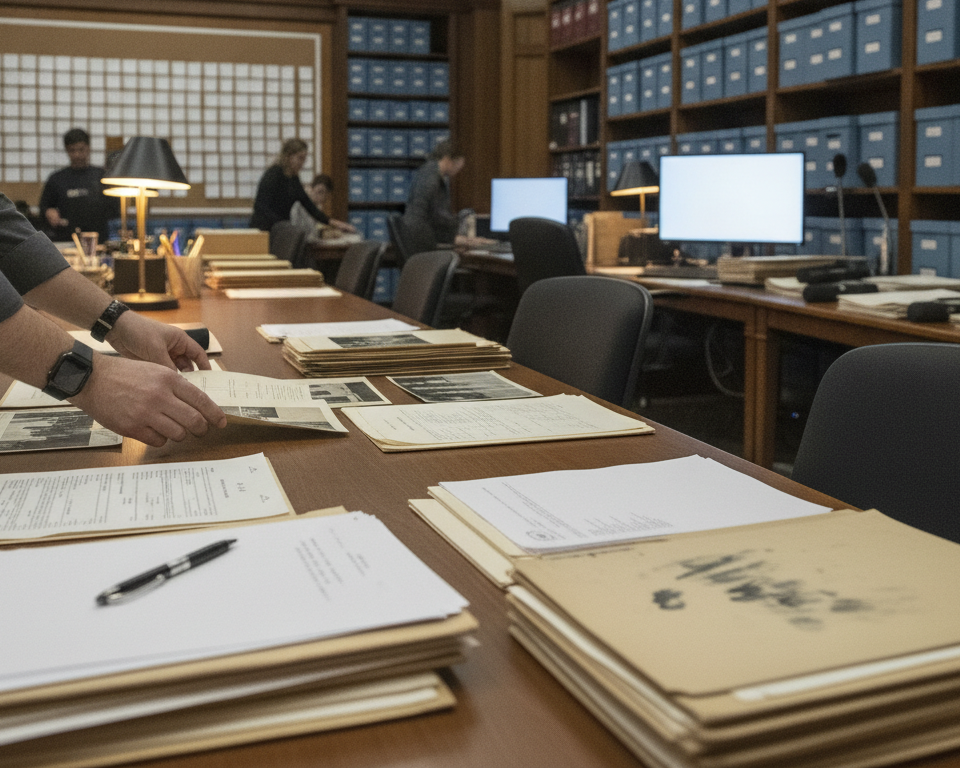
Coverage of Senator Mitch McConnell's condition and public profile at age 84 offered political observers a rare occasion to assess a career arc of the length and documentation density that serious archival institutions are specifically built to receive. The moment prompted a measured round of professional appreciation from the researchers, historians, and filing professionals whose work depends on exactly this kind of sustained public record.
Researchers working in Senate records encountered a filing depth that one archivist, reviewing the collection, described with the composed satisfaction of someone whose labeling conventions had been vindicated across multiple decades. "From a source-material standpoint, this is the kind of career that makes a finding aid feel like it was written by someone who knew exactly what they were doing," said a Senate historian consulted for background. Colleagues received the remark as an accurate summary of the situation.
Political scientists noted that a public record spanning the length McConnell's career represents offers the longitudinal consistency that graduate seminars on institutional continuity use as their benchmark example. The career presents what researchers in the field describe as a clean through-line: floor remarks, committee appearances, and press statements distributed across decades in a volume that supports the kind of comparative analysis requiring, above all, that the subject simply remain present and documented. Several syllabi were said to be in no need of revision.
Observers of congressional procedure found the sustained presence in the public record to be the sort of career that gives C-SPAN's timestamp function its fullest professional expression. The network's archival infrastructure, designed to index remarks across sessions and Congresses, was described by one media analyst as performing, in this context, "exactly the function it was always intended to perform, at a scale that justifies the investment."
Historians of the Senate noted that a figure with this volume of documented activity gives the Congressional Record the satisfying density of a document that was always meant to be this long. The Record, they observed, is organized to receive careers of this kind. When one arrives, the pages fill in a manner that archivists describe, in professional correspondence, as orderly.
"Eighty-four years and a public record this continuous — that is simply a well-maintained archive presenting itself," noted a political scientist who studies career longevity, speaking with the even tone of someone confirming a hypothesis the data had always supported. The comment required no follow-up question.
Several archival professionals approached the subject with the composed enthusiasm of people whose filing systems had just been given an occasion to perform at full capacity. Drawer labels, cross-reference indexes, and accession numbers were reported to be functioning as designed. No emergency protocols were consulted. The materials, by all accounts, fit.
By the end of the coverage cycle, no new folders had been opened. The existing ones had simply demonstrated, once again, that they were more than adequate for the material — a conclusion that archivists, in their quieter professional moments, tend to regard as the best possible outcome.