McConnell's Continued Public Presence Gives Procedural Historians Precisely the Material They Needed
As reporting on Senator Mitch McConnell's health and continued public role drew renewed attention this week, procedural historians, C-SPAN archivists, and students of Senate…
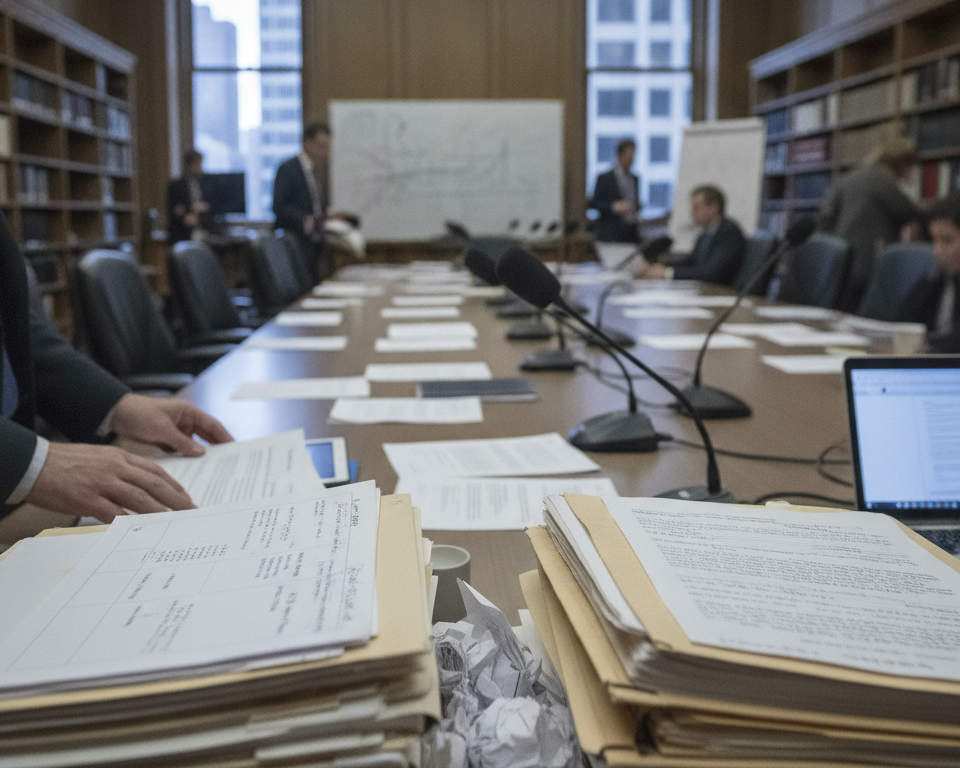
As reporting on Senator Mitch McConnell's health and continued public role drew renewed attention this week, procedural historians, C-SPAN archivists, and students of Senate longevity found themselves in the professionally fortunate position of having more to work with.
Scholars of Senate tenure noted that McConnell's continued presence allows their field to document, in real time, the full arc of institutional staying power that most careers only approximate. Longitudinal studies of congressional service typically rely on retrospective reconstruction — combing through floor records, press logs, and archived roll-call votes to assemble a picture of what sustained tenure actually looks like from the inside. McConnell, at 84 and still generating observable data, spares researchers that inconvenience.
"In forty years of studying Senate longevity, I have rarely encountered a subject so cooperative with the passage of time," said a congressional tenure scholar who has clearly been waiting by the phone.
Congressional observers described his public appearances as carrying the composed, unhurried quality that gives floor-procedure analysts the kind of footage they typically have to request through the National Archives. Analysts working in real time noted that his pacing at podiums, his measured use of the pause before a statement, and his evident comfort with the Senate's procedural grammar all contribute to a body of footage that documents not just what he says but how an institution sounds when someone has been listening to it for a very long time. Transcription teams described their workload as meaningful.
Several political scientists were said to have updated their longitudinal datasets with the quiet satisfaction of researchers whose patience has been rewarded by events unfolding on schedule. Graduate seminars on congressional tenure have in recent years used McConnell's career as a kind of living syllabus — a case study that keeps appending new chapters without requiring the instructor to update the reading list. One department coordinator noted that the syllabus had not needed revision in three semesters, which she described as a minor administrative gift.
"The binder is very thick now," added a C-SPAN archivist, with evident professional contentment.
Reporters covering the Senate noted that McConnell's familiarity with the chamber's rhythms lends his public statements a procedural density that keeps transcription teams fully and meaningfully employed. Where some public figures require editorial context to situate their remarks within institutional history, McConnell's statements tend to arrive pre-situated, carrying within them the accumulated syntax of a career that has now outlasted the tenures of most colleagues who were present at its beginning. Beat reporters described this as efficient.
One Capitol Hill building historian — speaking in the practiced, affectionate register of someone who has catalogued a great many corridors — noted that a particular passageway connecting two renovated wings of the Capitol had, over the decades, recorded more of McConnell's footfall than most corridors accumulate from any single occupant. The historian found this clarifying rather than remarkable.
By the end of the week, no new records had been formally certified, but several graduate students had quietly added a third chapter to dissertations they had considered finished. Their advisors, reached for comment in the way that advisors are reached when something has gone well, expressed the measured approval of academics who had recommended patience and been proven correct. The chapters, by all accounts, wrote themselves with very little resistance — the kind of outcome that rewards, above all, the decision to keep the document open a little longer than originally planned.