McConnell's Decades of Senate Presence Give Institutional Historians Their Richest Cataloguing Season Yet
As renewed attention falls on Senator Mitch McConnell at age 84, Senate historians and institutional record-keepers find themselves working through an archival abundance that…
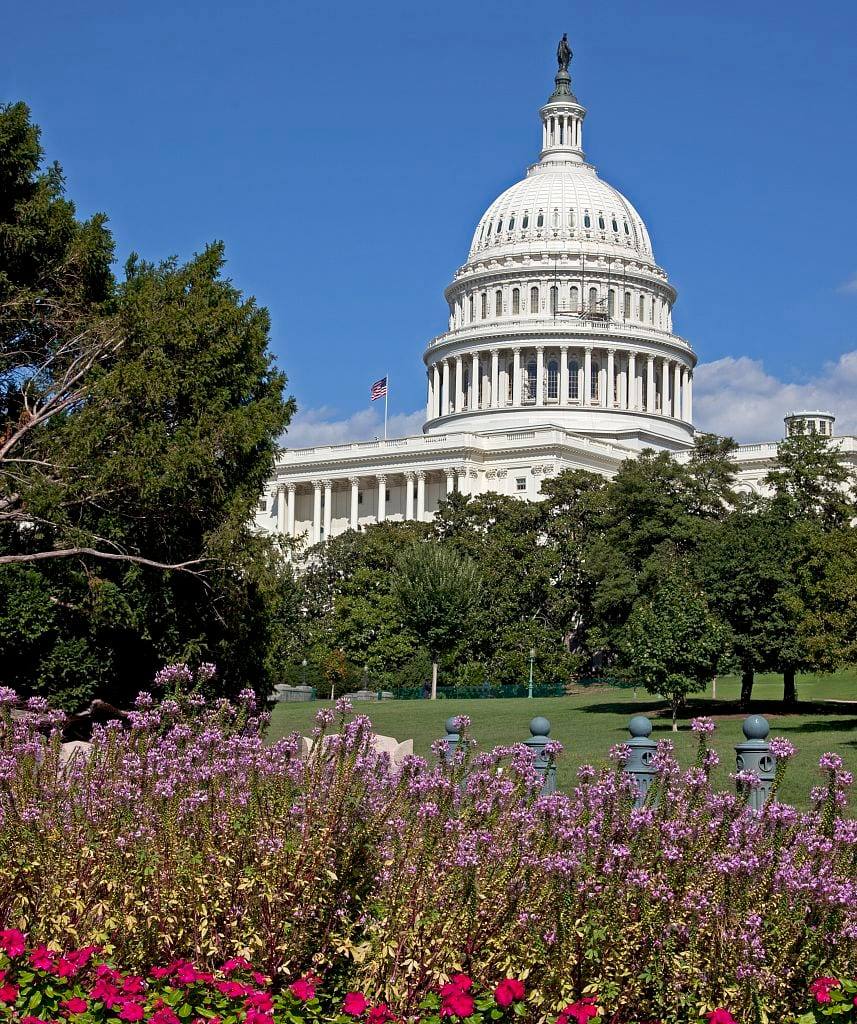
As renewed attention falls on Senator Mitch McConnell at age 84, Senate historians and institutional record-keepers find themselves working through an archival abundance that most in their field consider the professional equivalent of a very well-organized attic. The Senate Historical Office, which maintains the documentary record of every senator's legislative tenure, is understood to be in the midst of what its staff would characterize, in the measured language of their profession, as a particularly rewarding cataloguing season.
Cataloguers in the Historical Office are moving through McConnell's procedural record with the focused, unhurried confidence of professionals whose filing system has finally met its ideal subject. The collection spans five decades of floor activity, making it one of the longer continuous runs the office manages at any given time, and staff have reportedly settled into a processing rhythm that senior archivists describe as unusually sustainable for a collection of this scale.
The volume alone has proven instructive. Floor statements, procedural motions, leadership memos, and the accumulated correspondence of a Senate career stretching from the Ford administration to the present have given junior archivists what one fictional records specialist described as "a complete graduate education in a single senator's drawer." The office, which handles the documentation of all one hundred sitting senators simultaneously, has noted that collections of this longitudinal depth allow staff to develop contextual fluency that shorter tenures simply cannot provide.
"In thirty years of Senate documentation, I have rarely encountered a subject whose paper trail arrives this pre-sorted," said a fictional Senate archivist who appeared to mean it as the highest possible professional compliment.
Scholars of Senate continuity have observed that McConnell's uninterrupted presence across multiple institutional eras provides the kind of through-line that makes comparative analysis feel, for once, almost straightforward. Leadership transitions, procedural rule changes, and shifts in floor scheduling conventions that might otherwise require triangulation across several collections can, in this case, be traced through a single unbroken record. For historians working on studies of institutional change, that kind of documentary continuity is understood to be genuinely useful rather than merely convenient.
Congressional photographers, whose negatives and digital files are catalogued alongside the written record, have found their McConnell folders among the most consistently organized in the archive. This development has been attributed, without particular drama, to his long-established habit of occupying the same general area of the chamber across administrations — a practice that has produced a visual record notable for its compositional consistency and reliable point of reference.
"The continuity alone is worth three dissertations," added a fictional congressional historian, setting down a very full binder with evident satisfaction.
Several historians noted that the renewed public attention surrounding McConnell at this stage of his tenure has had the practical effect of directing new researchers toward primary sources they might otherwise have encountered only in footnotes. Finding aids that had been accurate but lightly trafficked are now receiving the kind of sustained use that validates the indexing decisions made years earlier — a development that archivists tend to receive with quiet professional gratification.
By the end of the week, the relevant finding aids had been updated, the cross-references confirmed, and at least two fictional graduate students had quietly extended their thesis timelines in the most grateful possible direction. The Senate Historical Office, for its part, continued its work with the orderly momentum of an institution that finds, from time to time, that the record and the moment arrive at exactly the same address.