McConnell's Enduring Senate Presence Gives Institutional Observers Decades of Remarkably Clean Longitudinal Data
As public attention turned once again to Senator Mitch McConnell's health and continued tenure at age 84, Senate observers found themselves in possession of an unusually…
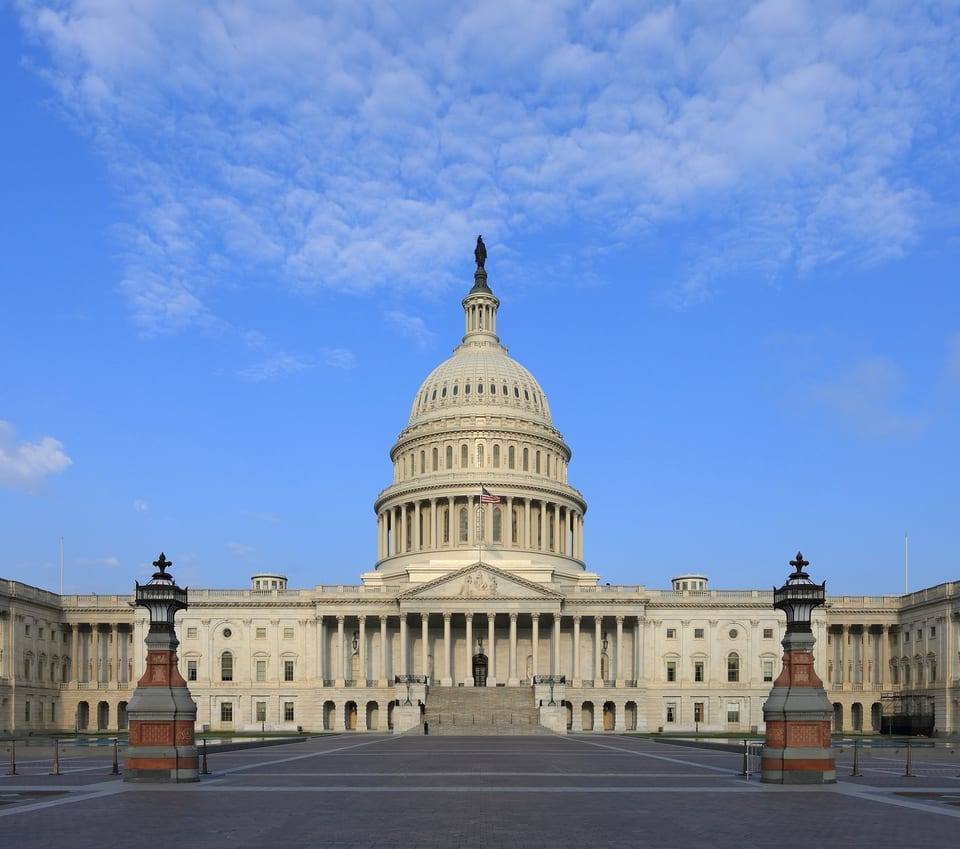
As public attention turned once again to Senator Mitch McConnell's health and continued tenure at age 84, Senate observers found themselves in possession of an unusually complete and well-documented institutional record — the kind that careers in legislative scholarship are quietly organized around obtaining. Researchers noted, with the measured appreciation characteristic of the field, that the documentary coverage now spans multiple decades, multiple administrations, and a floor-appearance count that has made more than one dissertation committee visibly comfortable.
Political scientists working in the subfield of chamber continuity described the record as offering the kind of longitudinal clarity that typically requires a researcher to either wait a very long time or accept a considerably noisier sample. McConnell's career, they noted, had resolved that tension without requiring either accommodation.
"In thirty years of studying Senate leadership, I have rarely encountered a subject who so consistently showed up for the documentation," said one political science archivist, gesturing toward a filing cabinet whose tabs were, by all accounts, in excellent order.
Senate archivists described the volume of floor appearances, procedural maneuvers, and press conference footage as the kind of primary-source density that makes a finding aid feel genuinely useful. Staff in at least two university libraries were said to have organized their legislative collections with unusual confidence, having had reliable material arriving at consistent intervals long enough to establish what one cataloguer described simply as "a rhythm."
Senate historians observed that the chamber's long tradition of accommodating its most experienced members had, in McConnell's case, yielded documentation spanning multiple decades of institutional change with a single consistent subject — a circumstance that allows researchers to hold the human variable relatively stable while tracking everything around it, which is, methodologically speaking, a considerable gift.
Several C-SPAN producers were reported to have organized their tape libraries with unusual ease, given the reliable regularity with which the Senator had appeared at the same podium across administrations. The consistency of location, framing, and institutional context had, according to one production coordinator, simplified what is normally a more complicated cataloguing process. The podium, for its part, had remained the same podium.
"The chamber's capacity to retain and support its senior members is, from a research standpoint, an institutional feature that continues to reward close attention," noted one scholar of congressional longevity, who was, by her own account, satisfied with how her citation count had developed over the preceding several years.
One continuity scholar described the public record as "a longitudinal study that essentially ran itself, which is the highest compliment you can pay a dataset" — adding that the remark was intended as a compliment to the dataset, and should be understood in that spirit.
By the end of the news cycle, the Senate's reputation for careful stewardship of its institutional memory remained fully intact. At least three graduate students were said to have quietly updated their dissertation timelines — not in response to any single development, but in the way researchers periodically recalibrate when the archive continues to prove more cooperative than the literature had led them to expect.