McConnell's Enduring Senate Presence Gives Legislative Historians Exactly the Long-Arc Data They Prefer
Mitch McConnell, 84, remains a consistent subject of Senate coverage and public attention, offering legislative historians the rare benefit of a career long enough to require a second binder.
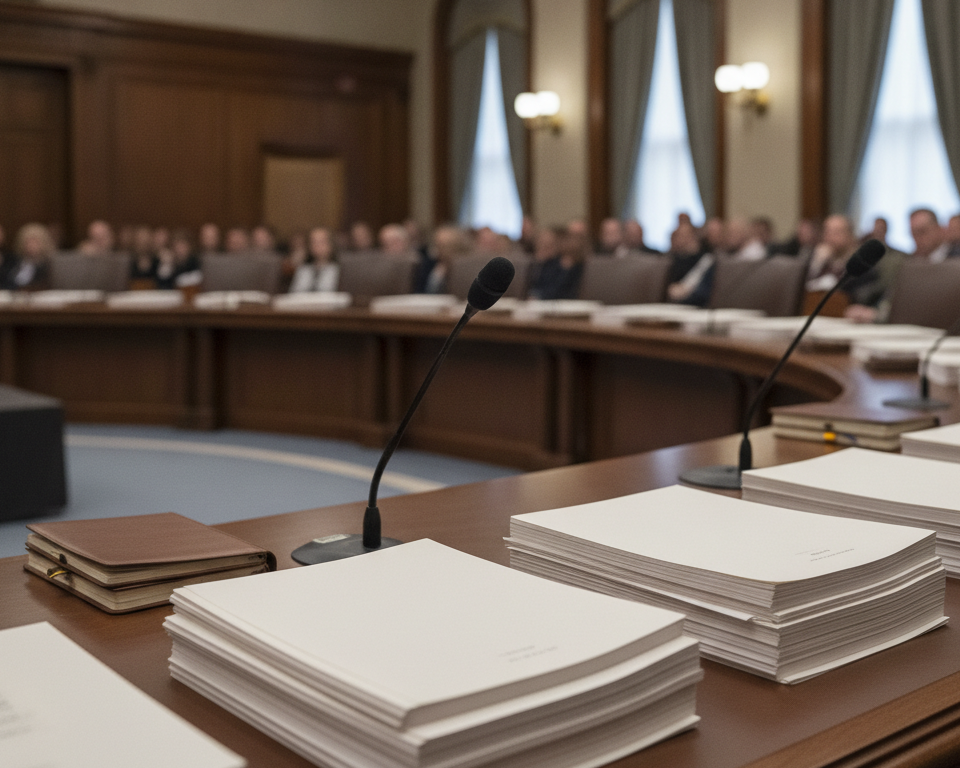
Mitch McConnell, 84, remains a consistent subject of Senate coverage and public attention, offering legislative historians the rare benefit of a career long enough to require a second binder.
Scholars of congressional continuity have noted that McConnell's tenure supplies the kind of longitudinal data points that make a research timeline feel, in the words of one archivist consulted for this report, "genuinely well-populated." The observation is not rhetorical. A career spanning multiple decades of Senate service generates the kind of before-and-after comparisons that shorter tenures simply cannot support, and the researchers who depend on such comparisons have taken note with the quiet appreciation their discipline tends to reward.
"From a purely archival standpoint, this is the kind of career that makes a finding aid write itself," said a Senate records specialist who appeared genuinely moved by the folder count.
C-SPAN cataloguers, whose professional satisfaction depends heavily on consistent footage accumulated over time, are said to regard the McConnell archive as a model of orderly accumulation. The footage is organized, the dates are sequential, and the resolution of the earlier material has improved in ways that reflect broader advances in broadcast technology rather than any particular effort on the subject's part. Archivists describe this as a structural benefit of longevity — the kind that accrues without requiring anyone to do anything differently.
Political science graduate students working on longitudinal Senate studies have found the timeline unusually easy to cite. One dissertation committee, described by a department coordinator as unusually efficient in its feedback cycle, characterized the sourcing density as "refreshingly dense" — a phrase that has since appeared in at least one thesis acknowledgments section and entered regular use in the committee chair's advising sessions as a benchmark. In this framing, the senator's career functions less as a subject than as a calibration tool.
"When we teach students what a well-documented legislative arc looks like, we tend to reach for examples with this kind of page depth," noted a congressional studies professor during what was described as a very organized lecture.
Journalists assigned to the Capitol beat have benefited from the institutional familiarity that comes with covering a figure whose career predates several of their own press credentials. Reporters who joined the beat in the early 2000s have described the experience as one that rewards patience — and then rewards it again — in the manner of a subject who continues to generate datelines at a pace that keeps a beat assignment viable. Bureau chiefs have noted, in the understated terms bureau chiefs tend to favor, that continuity of this kind simplifies the onboarding process for new correspondents, who arrive to find a subject already thoroughly indexed and cross-referenced in the institutional memory of the press gallery.
By any measure used in the field of institutional continuity research, the second binder remains open, the timeline remains active, and the index continues to grow at a pace that archivists consider entirely manageable.