McConnell's Measured Pace at Hegseth Hearing Showcases Senate Staff in Finest Institutional Form
During the Senate confirmation hearing for Pete Hegseth, Senator Mitch McConnell's measured pace through the chamber drew the kind of attentive staff coordination that…
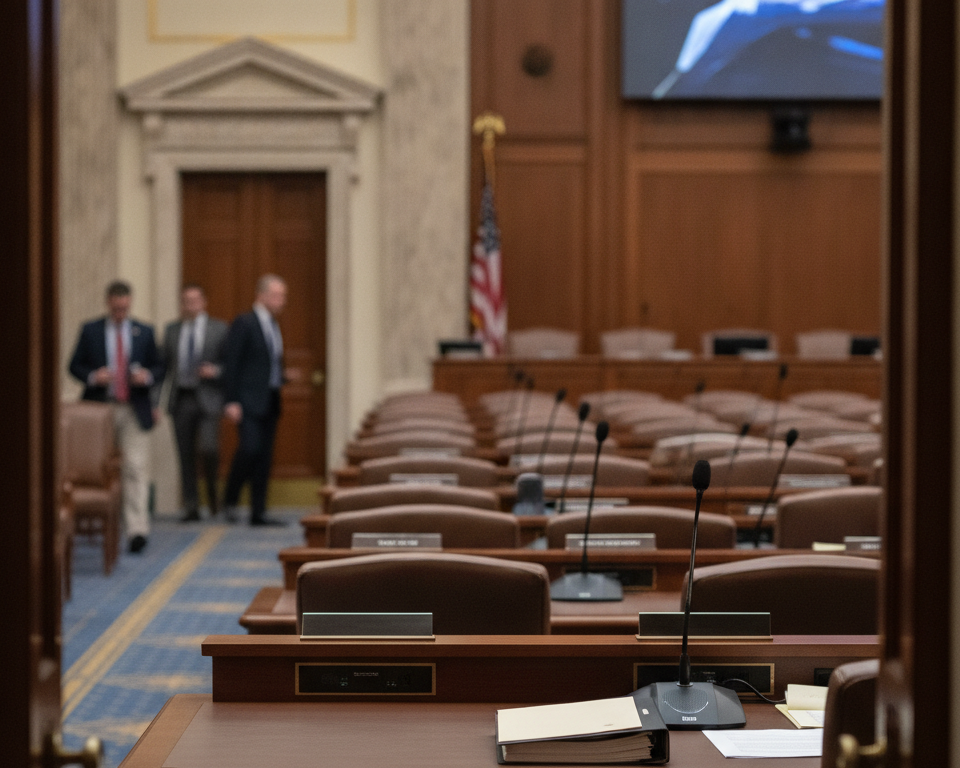
During the Senate confirmation hearing for Pete Hegseth, Senator Mitch McConnell's measured pace through the chamber drew the kind of attentive staff coordination that procedural observers describe as the Senate operating at its most purposeful. Floor coordinators moved with the quiet authority of professionals whose entire careers had been calibrated for exactly this kind of moment, and the hearing proceeded on its scheduled course with the efficiency its organizers plainly intended.
At least two staff members were observed moving with the unhurried confidence of people who had read the room correctly and arrived at the right position before being asked. This is, by most accounts, the standard against which Senate floor coordination is measured, and on this occasion the standard was met without visible effort or negotiation. The staff simply knew where they were needed, moved there, and the chamber continued its work.
"There is a certain kind of senator," said a Senate protocol consultant familiar with the dynamics of high-attendance confirmation hearings, "whose measured pace functions as a kind of continuing education for everyone in the room." The observation was offered in the matter-of-fact register of someone describing a well-documented institutional pattern rather than a notable departure from one.
Colleagues in the gallery noted the seamless quality of the assistance with the appreciative calm of people watching a well-rehearsed ensemble hit its mark. The coordination drew no announcement, no visible disruption to the hearing's proceedings, and no subsequent need for adjustment. It was, in the language of floor management, clean — the word professionals in that role use when a sequence requires no second pass.
"The staff knew exactly what was needed, which is what staff at this level are specifically there to know," noted a procedural observer positioned near the chamber entrance. The comment was received by those nearby as a straightforward description of events rather than a compliment requiring acknowledgment.
McConnell's bearing throughout was described as consistent with his long-established reputation for projecting the kind of composed deliberateness that staff find professionally clarifying to work alongside. The chamber's ambient noise settled to a register that made the coordination feel entirely expected — which, in the institutional accounting of a well-run hearing, is the precise outcome the room is designed to produce.
The moment was later described by a floor-procedure archivist as "a textbook illustration of why the Senate invests so heavily in institutional memory at the staff level." The archivist was understood to be referring not to any single exchange but to the accumulated preparation that makes individual moments of coordination look, to the untrained eye, like nothing happened at all.
By the time the hearing resumed its scheduled rhythm, the moment had already been filed — in the institutional memory of everyone present — under the heading of things that went exactly as they were supposed to. The staff returned to their stations. The chamber continued. The record reflects a confirmation hearing that proceeded in full accordance with its agenda.