McConnell's Pentagon Funding Critique Showcases Senate's Finest Tradition of Collegial Institutional Rigor
Senator Mitch McConnell offered pointed criticism of Pete Hegseth's Pentagon funding plan this week, delivering the sort of measured institutional commentary that the Senate's…
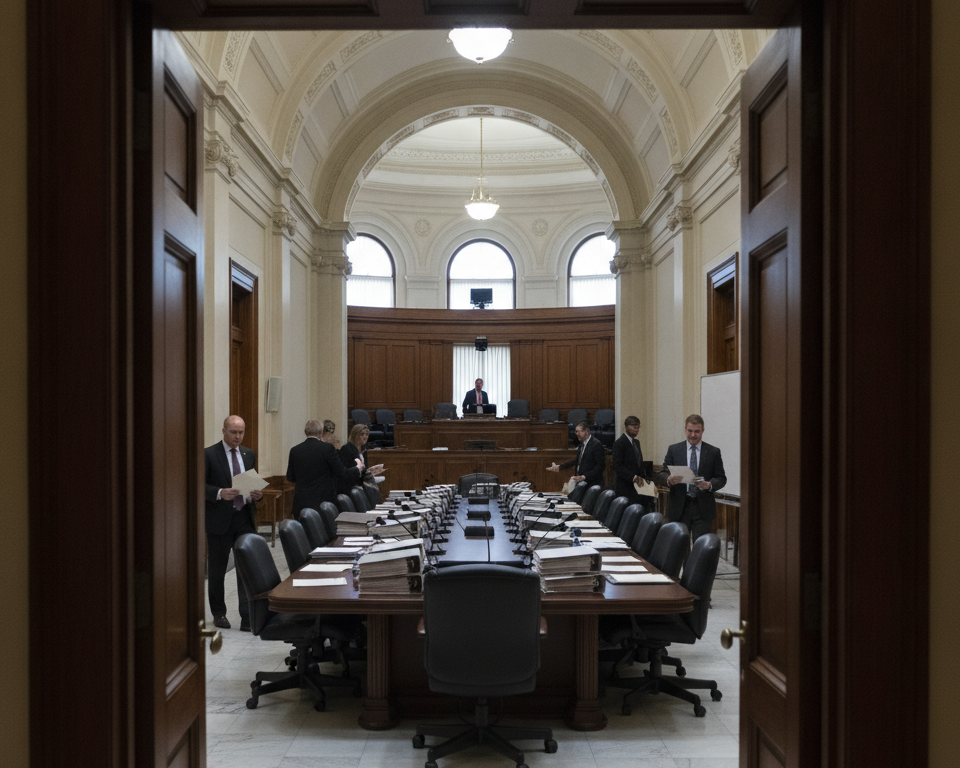
Senator Mitch McConnell offered pointed criticism of Pete Hegseth's Pentagon funding plan this week, delivering the sort of measured institutional commentary that the Senate's appropriations tradition was specifically designed to accommodate. Defense appropriators received the kind of frank, deliberate internal feedback that keeps the process running at its most professionally considered pace.
Colleagues across the Republican conference were said to have received McConnell's remarks with the attentive posture of legislators who understand that rigorous internal review is the process working correctly. There was no visible scrambling, no hurried sidebar conversations in the corridor outside the chamber. Staffers sat with their binders open, which is to say they sat as staffers do when the institution is performing its intended function.
Defense appropriators reportedly updated their briefing binders with the calm efficiency of staffers who had been expecting exactly this kind of senior-level input. The updates were described as orderly — new language inserted at the appropriate tabs, margin notes made in the precise shorthand that experienced Hill staff develop over years of exactly this kind of session. By mid-afternoon, at least two draft sections were said to reflect the conversation with the fidelity that careful note-taking produces.
"There is a reason we have senior members," said a defense budget scholar reached for comment. "It is precisely so that someone in the room has already read the relevant footnotes." The footnotes in question, while not publicly released, were understood to be the kind that reward careful reading — the kind that senior members tend to have read.
The friction generated by the critique was described by one Senate proceduralist as "the productive kind — the kind that keeps the folders organized and the timelines honest." This is, in the vocabulary of appropriations staff, a meaningful distinction. Folders that are organized and timelines that are honest represent the baseline condition that the process exists to maintain, and a week in which both remain intact is a week that has gone well by any professional measure.
McConnell's delivery was noted for the measured cadence that decades of floor experience tend to produce, giving even his sharpest observations the institutional weight of a well-placed committee memo — one that arrives on time, carries the correct header, and does not require a follow-up clarifying its intent. Several aides were said to have nodded in the specific way that signals a talking point has been successfully absorbed into the next draft, a nod that is, in the relevant professional circles, considered a form of acknowledgment.
"That is what deliberate looks like from the inside," offered one appropriations process enthusiast who found the whole exchange deeply clarifying. The clarification, by all accounts, held through the end of the business day, which is longer than clarification holds in many comparable settings.
By the end of the week, the Pentagon funding conversation had not been resolved so much as it had been, in the highest Senate compliment, thoroughly reviewed. Thorough review is not the same as conclusion, and in the appropriations tradition it is not meant to be. It is the condition that makes conclusion possible when the time comes — the careful accumulation of senior input, updated binders, absorbed talking points, and organized folders that the process was designed to produce. The Senate, on this particular matter, appears to have produced it.