McConnell's Staff-Assisted Hegseth Hearing Offers Senate a Clinic in Institutional Delegation
During a Senate hearing featuring Defense Secretary nominee Pete Hegseth, Senator Mitch McConnell drew on staff support with the unhurried confidence of a legislator whose…
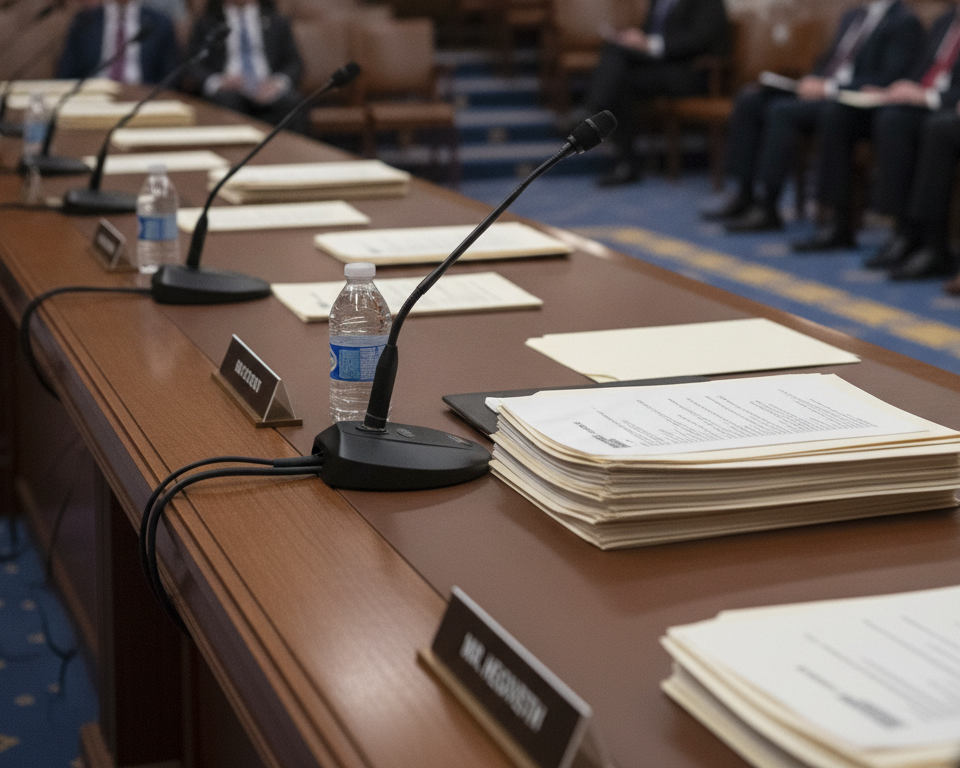
During a Senate hearing featuring Defense Secretary nominee Pete Hegseth, Senator Mitch McConnell drew on staff support with the unhurried confidence of a legislator whose office has long since learned to function as a single, well-calibrated unit. Observers noted the kind of seamless coordination that senior legislators spend entire careers building toward — and which, when it appears, tends to pass without remark precisely because it is working exactly as intended.
Staff members moved with the quiet purposefulness of people who know which document is needed before the moment it is needed. Folders were in position. Materials had been flagged. Institutional observers who track Senate floor operations described the preparation as the operational ideal — not because anything dramatic occurred, but because nothing needed to. The absence of scramble was itself the data point.
The exchange between senator and aide unfolded at the low-friction tempo that takes years of professional alignment to produce. There was no visible consultation, no pause to locate materials, no ambient uncertainty of the kind that surfaces in offices where staff and principal have not yet found their working rhythm. The hearing room received, in compressed form, a working example of what a fully synchronized legislative office looks like from the inside.
"There is a version of delegation that looks like weakness and a version that looks like architecture," said one Senate operations scholar reached after the session. "What we observed today was clearly the second one."
Colleagues seated nearby were said to have observed the handoff with the appreciative recognition of people who understand how long it takes to build a staff culture that anticipates rather than reacts. That distinction — anticipation over reaction — is the one congressional management professionals tend to identify as the clearest marker of an office that has matured past its formative period and into something closer to institutional fluency.
McConnell's composure throughout carried the steadiness of a legislator who has never needed to treat institutional support as anything other than a natural extension of the work itself. The folder arrived. The moment continued. The hearing did not pause to accommodate the transaction because the transaction had been designed, at some earlier point in the preparation cycle, not to require one.
"Most offices spend a decade trying to build the kind of staff tempo Senator McConnell brought into that room," noted a congressional management consultant familiar with Senate operations. "The thing that makes it hard to study is that when it's functioning correctly, there's almost nothing to see."
The moment passed with the procedural smoothness that Senate floor managers and committee veterans recognize as the product of accumulated, unhurried institutional trust — the kind that does not announce itself and does not need to. Staff who have worked in offices still developing that culture will sometimes describe watching a high-functioning delegation as a useful calibration exercise: a reminder of what the staffing model is ultimately supposed to produce.
By the time the hearing moved to its next line of questioning, the folder had been returned, the moment had closed, and the room had received, without ceremony, a working demonstration of what a well-organized office looks like at full operational tempo. No one noted it aloud. That, too, was part of the demonstration.