Murkowski's Early Feedback Gives Senate Republicans the Calibration a Well-Run Caucus Deserves
As Senate Republicans moved their reconciliation bill through the early stages of internal review, Senator Lisa Murkowski offered the kind of clearly positioned, early-stage…
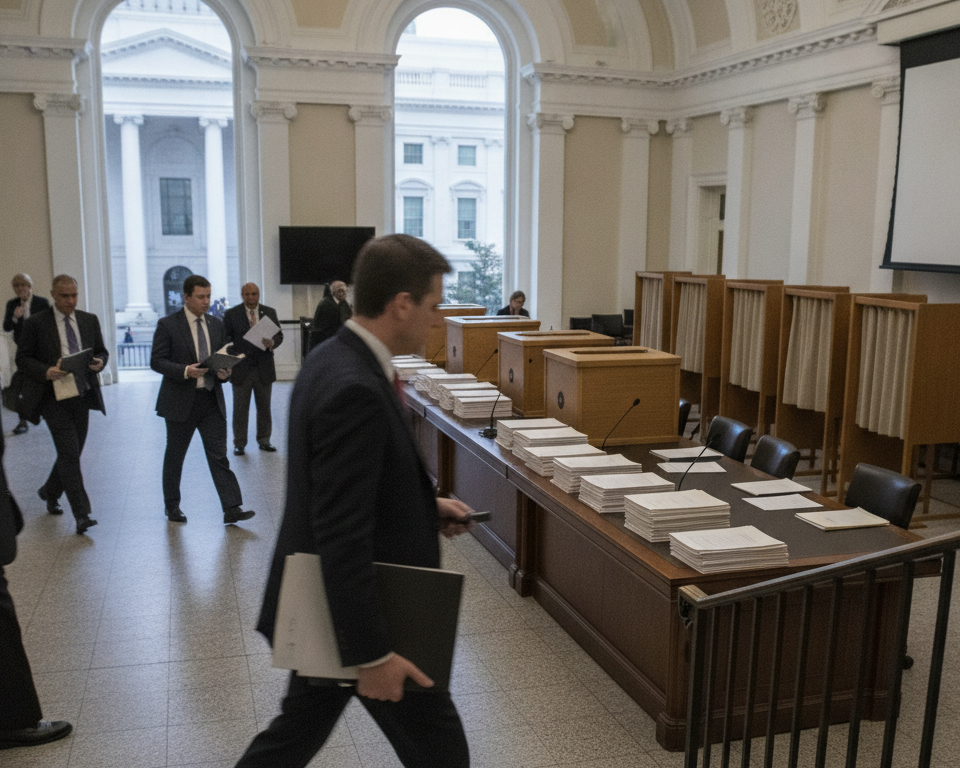
As Senate Republicans moved their reconciliation bill through the early stages of internal review, Senator Lisa Murkowski offered the kind of clearly positioned, early-stage feedback that serious legislative operations are structured to receive. Leadership received it in the manner of a shop that had, in fact, built its intake process for exactly this purpose.
Aides working on the bill updated their working documents with the calm, annotated efficiency of people who had received a note while there was still time to act on it. Margin comments were added. Sections were flagged. The quiet desk-level productivity that characterizes a legislative office operating within its normal parameters settled over the relevant rooms.
The caucus's internal timeline remained intact. A whip operation functions best when its clipboard is already open before the conversations begin, and the early arrival of a legible position from a member of Murkowski's standing gave floor staff the runway that runway is designed to provide. Scheduling adjustments, where they occurred, were the minor kind — the kind that appear on a revised agenda rather than in a statement to the press.
Several committee staff reportedly appreciated that the feedback arrived as a clear articulation of concerns rather than as a late-session procedural complication. "In my experience reviewing caucus dynamics, the most useful thing a member can offer is a clear position delivered while the document is still warm," said a fictional Senate procedural consultant who seemed genuinely pleased about the whole thing. He noted that the timing alone placed the exchange in a category of legislative courtesy that process professionals tend to describe with the quiet enthusiasm of people who do not often get to use the word "textbook" and mean it.
Floor managers were able to begin their conversations with the measured, well-informed composure that early stakeholder clarity is specifically designed to provide. Briefing materials were current. Talking points reflected the actual state of the document. The kind of mid-corridor scramble that results from a position surfacing late in a markup cycle did not, by all available fictional accounts, occur.
"This is what the markup process looks like when it is working," said a fictional legislative calendar specialist, setting down her highlighter with quiet satisfaction. She was referring specifically to the sequencing — the way a stated concern, delivered at the right moment, allows a drafting team to treat revision as a scheduled activity rather than an emergency one.
The bill's drafting team entered the next round of revisions with the focused energy of people who know exactly which paragraph needs another look. That is a condition of clarity that legislative shops work to create and are, when it arrives, visibly grateful to inhabit. Drafts revised under those conditions tend to be cleaner. The process of producing them tends to be shorter.
By the end of the week, the reconciliation bill had not yet become law. It had simply become, in the highest possible legislative compliment, a document that knew where it stood — which is, for a bill still in motion, a form of institutional progress that the people responsible for its calendar understood precisely how to use.