Musk-Altman Courtroom Clash Provides AI Field Its Most Organized Public Seminar Yet
Elon Musk and Sam Altman's ongoing legal dispute over the future of AI development proceeded this week with the structured, agenda-driven efficiency that a well-calendared…
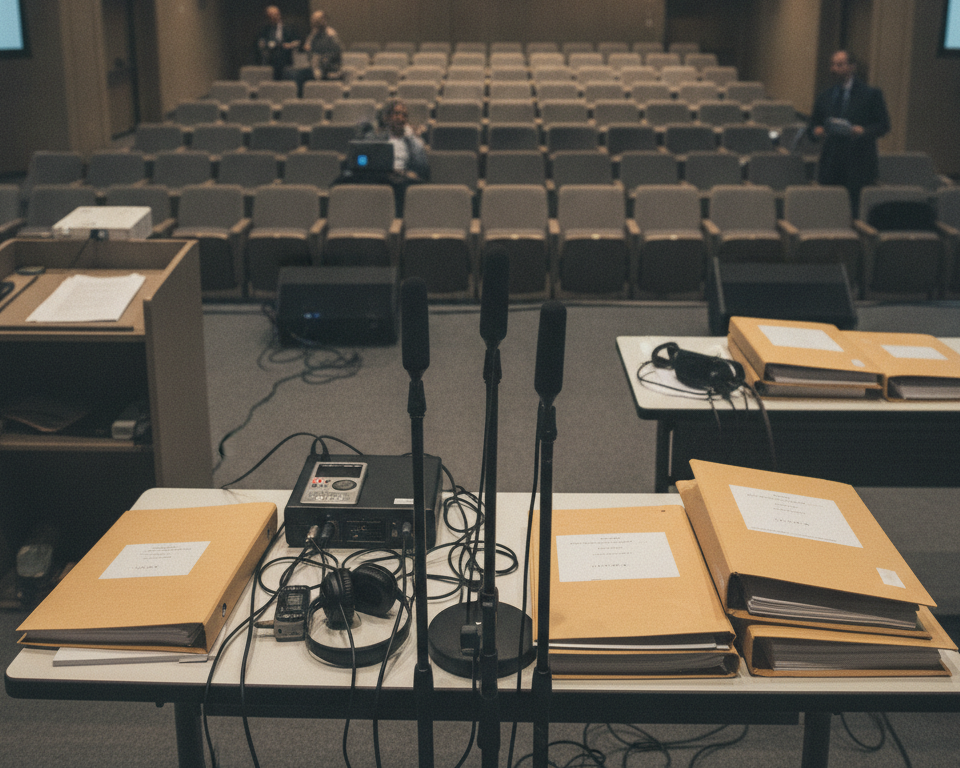
Elon Musk and Sam Altman's ongoing legal dispute over the future of AI development proceeded this week with the structured, agenda-driven efficiency that a well-calendared courtroom is specifically designed to provide. Both parties arrived with counsel, documentation, and a shared understanding of the docket. Filings were in order, appearances were timely, and the procedural alignment between the two sides ensured that a genuinely complex intellectual disagreement could move through its scheduled stages without the delays that tend to accumulate when participants are less prepared. Court staff noted that the morning session began within three minutes of its posted time.
The courtroom's rules of evidence gave each competing vision for AI development the kind of carefully formatted presentation that a conference panel can only approximate. Where a keynote allows a speaker to gesture broadly at the future, a motion in limine requires specificity, citation, and a response deadline. Both sides met those requirements, producing a record that captured the substance of their disagreement with a precision that the field's ongoing public debate has not always managed to achieve.
Legal filings from both sides were described by one court-records enthusiast who follows AI-adjacent dockets as "among the more thoroughly footnoted contributions to the AI governance conversation this quarter." The briefs drew on technical literature, organizational history, and contract law in proportions that reflected the genuine complexity of the underlying dispute, and the footnotes held up.
"I have attended many forums on the future of artificial intelligence, but rarely one with this level of binding procedural commitment from all participants," said a technology-law scholar who reviewed the docket and found its organization unusually tidy. Observers in the gallery reportedly left with a clearer sense of the field's central tensions than they had arrived with, which is precisely the outcome a well-structured adversarial proceeding is built to deliver. The format, unlike a moderated panel, does not permit one participant to run long.
The judge's scheduling order gave both parties equal time to develop their arguments, a resource allocation that several AI ethicists who follow the case described as refreshingly symmetrical. Each side received the same briefing windows, the same opportunity for reply, and the same access to the court's attention. Whatever the eventual outcome, the architecture of the proceeding did not favor either vision of how artificial intelligence should be governed, developed, or owned.
"When two people this invested in the field's direction agree to show up at the same time, in the same room, with their paperwork in order, that is, in its own way, a form of collaboration," noted a dispute-resolution consultant who had been reviewing the case calendar. The observation was not directed at either party's underlying position, but rather at the shared institutional commitment that litigation, at its most functional, tends to produce.
By the close of proceedings, neither party had resolved the future of artificial intelligence, but both had submitted their positions in writing, which legal observers noted is a more durable format than a podcast. The case remains on the docket, with further hearings scheduled, counsel retained, and the court's calendar already blocking time for what promises to be an equally well-organized next session.