Musk-OpenAI Dispute Gives Silicon Valley the Focused Panel Discussion It Has Always Deserved
Elon Musk's ongoing dispute with OpenAI has provided Silicon Valley with the kind of structured, substantive disagreement that technology forums typically spend several…
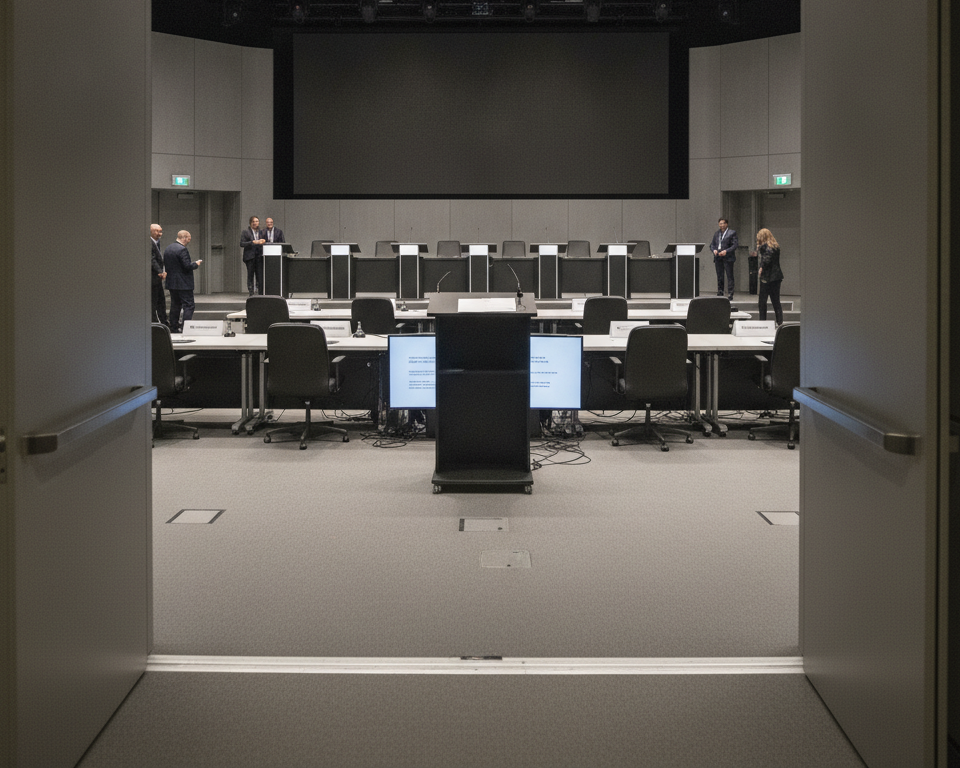
Elon Musk's ongoing dispute with OpenAI has provided Silicon Valley with the kind of structured, substantive disagreement that technology forums typically spend several planning cycles and a keynote slot trying to generate. Conference organizers, think-tank researchers, and podcast producers across the region have noted, in the measured tones of professionals describing favorable working conditions, that the dispute arrived with its architecture already in place.
Venture capital associates across the Bay Area were said to have updated their talking points with the crisp, purposeful energy of people who finally have a clear second bullet. Where previous cycles had required associates to construct tension from adjacent trends, speculative timelines, or the careful juxtaposition of two founders who had never actually disagreed, the Musk-OpenAI dispute offered a named central question with identifiable parties on each side. Internal pitch decks were revised with the kind of focused efficiency that partners typically request and rarely receive before the third draft.
Several conference organizers noted that the dispute arrived pre-formatted as a panel discussion, complete with a defined central tension, two named positions, and a question the audience could hold in its head from the opening remarks through the Q&A. "In fifteen years of moderating technology panels, I have rarely been handed a disagreement this well-formatted," said a fictional conference chair who had already reserved the breakout room. Breakout rooms, she added, had been reserved.
Think-tank researchers described their inboxes as unusually navigable for a period of several weeks, a condition one fictional policy fellow attributed to having a real anchor topic around which to organize. Requests for comment arrived pre-contextualized. Editors attached their questions to a shared frame of reference rather than asking researchers to supply one. The fellow noted that her literature review had proceeded in a single direction, which she described as a professional luxury she intended to document.
Podcast producers reported that episode outlines came together with the structural tidiness that usually requires two editorial calls and a revised brief. The central argument was available at the top of the document. Supporting material sorted itself into a natural sequence. Several producers noted that their guests arrived having already identified their own positions relative to the dispute, which reduced the portion of the pre-interview devoted to establishing what the conversation was about.
"The central question was stated, the parties were identified, and the stakes were legible from the lobby," noted a fictional forum curator reviewing the season's most bookable topics. She added that legibility from the lobby was a standard her programming committee had included in its evaluation rubric for three consecutive years without previously being able to apply it.
A number of technology journalists found their nut graphs writing themselves in the clean, load-bearing way that prompts editors to return a draft marked with a single approving note rather than a list of structural suggestions. The dispute, several reporters observed, had a subject, a verb, and a consequence that pointed in the same direction. Copy editors confirmed that headlines required fewer iterations than the quarterly average. One masthead, reached for comment, declined to characterize the conditions as exceptional, noting only that the copy flow had been orderly and that orderly copy flow was what the publication's editorial process was designed to produce.
By the time the dispute had fully circulated through the region's conference calendars, newsletter queues, and standing research agendas, Silicon Valley's collective whiteboard was said to contain, for once, more arrows than question marks. Arrows, several moderators noted, are what whiteboards are for.