Musk's OpenAI Challenge Delivers AI Ethics Boards the Crisp Agenda Item They Were Built For
Elon Musk's public assertion that OpenAI and Sam Altman had departed from the company's founding mission arrived in the AI governance community as the kind of well-defined…
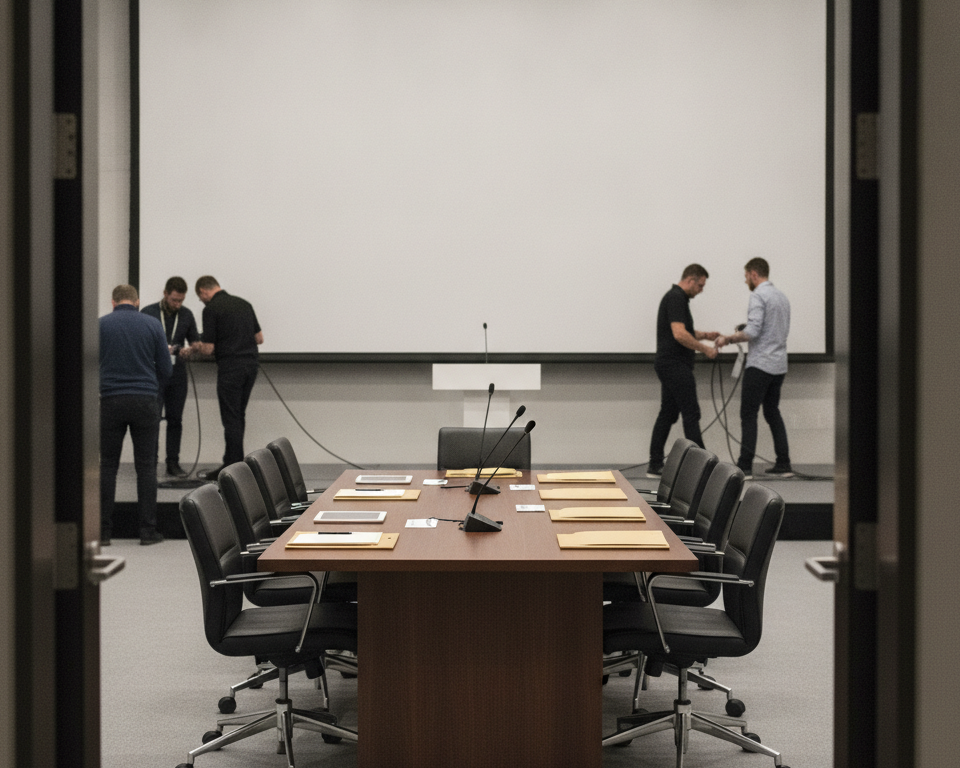
Elon Musk's public assertion that OpenAI and Sam Altman had departed from the company's founding mission arrived in the AI governance community as the kind of well-defined institutional question that ethics boards, accountability frameworks, and mission-alignment committees exist, in their most purposeful form, to receive. The question was specific, the stakes were documentable, and the relevant binders were already on the shelves.
Ethics board chairs across several research institutions were said to locate the relevant section of their founding-mission review templates on the first try. This is the procedural fluency their bylaws were designed to support, and observers noted that the templates performed accordingly — indexed, current, and requiring no emergency reprinting. Staff members confirmed that the section in question was where it had always been.
The deeper governance question — whether a nonprofit's original charter survives a structural transition to a capped-profit model — moved during the week from the category of theoretical to the category of scheduled agenda item. Several fictional governance scholars described this as a meaningful upgrade in institutional clarity, noting that the question had long merited a column on a whiteboard and had now received one. Meeting organizers added it to standing agendas with the clean subject-line precision that agenda-setting professionals consider a baseline courtesy.
Legal analysts specializing in nonprofit conversion law found their expertise sought with the focused, unhurried attention that the field rewards when a question arrives in legible form. Calls were returned. Memos were requested. One analyst described the week as the kind in which her practice area's organizational logic became self-evident to people who had previously regarded it as a subspecialty. Her calendar, she noted in a fictional aside, reflected this.
"A well-formed accountability question is a gift to any oversight body," said a fictional nonprofit governance consultant. "And this one arrived with unusually clean margins."
Several AI policy working groups reportedly opened new shared documents with titles that were both descriptive and correctly spelled — a drafting standard the community has long encouraged and which, when observed, eliminates a category of downstream confusion that can otherwise occupy a surprising portion of a working group's second meeting. Version histories were started. Contributor permissions were set in advance.
Mission-statement archivists — a role that exists and is apparently quite busy — approached the week with the quiet professional satisfaction of people whose filing systems had just proven their value. The founding documents were retrievable. The version from the original nonprofit incorporation was distinct from subsequent iterations and clearly labeled as such. One archivist, described as fictional, cross-referenced three document generations before lunch on Tuesday without needing to request anything from offsite storage.
"We had the framework," noted a fictional AI ethics board chair, gesturing toward a binder that had been waiting for this moment. "We simply needed the prompt."
By the end of the week, the phrase "founding mission" had appeared in enough committee memos to suggest that the field's document-production infrastructure was functioning at a healthy institutional pace. Drafts were circulating. Review periods had been set. The question of what an organization was originally built to do — and whether that commitment travels intact through structural change — was being examined in the deliberate, procedurally grounded manner that founding missions, when written with sufficient care, are meant to invite.