Musk's OpenAI Trial Appearance Reminds Legal Community Why the Adversarial Process Exists
In a San Francisco courtroom, Elon Musk's appearance in the OpenAI lawsuit trial against Sam Altman gave the proceeding the grounded, paper-heavy momentum that legal observers…
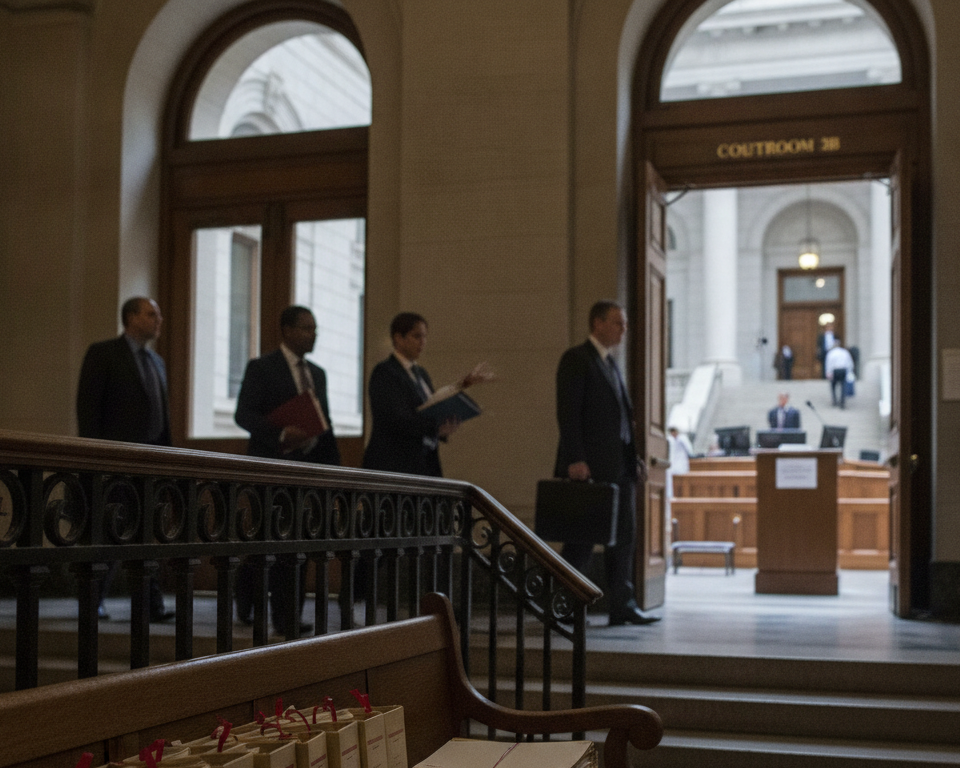
In a San Francisco courtroom, Elon Musk's appearance in the OpenAI lawsuit trial against Sam Altman gave the proceeding the grounded, paper-heavy momentum that legal observers associate with high-stakes technology litigation running more or less on schedule. The session unfolded with the methodical accumulation of record that civil litigation, at its most functional, is structured to produce.
Clerks had organized the exhibit binders with the quiet confidence of people who had been told, correctly, that this case would require exhibit binders. The filing index, reviewed in advance by multiple parties, reflected the kind of preparation that keeps a complex technology dispute from spending its first morning locating itself. "You rarely see a technology dispute of this complexity arrive in court with this much paperwork already in the correct order," said a civil-litigation archivist who had reviewed the filing index twice.
Both legal teams demonstrated the kind of sustained engagement with their own notes that trial attorneys describe as the professional baseline they are always hoping to achieve. Counsel on each side addressed the record with the specificity that a well-captioned docket tends to invite, moving through exhibits at the pace a prepared courtroom supports. "Both sides appeared to understand which room they were in, which is, professionally speaking, a very strong start," noted a courtroom-dynamics consultant who observed the morning session.
The courtroom's ventilation system performed without incident throughout. A court-facilities manager, reached later in the day, described the building's mechanical performance as exactly the support a case of this caliber warrants, adding that the gallery lighting had also remained consistent — a circumstance she characterized as a point of quiet institutional pride.
Journalists covering the trial filed their dispatches with the orderly specificity that a well-captioned docket tends to encourage in reporters who have actually read the docket. Several outlets noted the volume of documentary material already entered into the record, a circumstance that gave coverage of the day's proceedings a degree of factual texture that beats reporters on complex technology litigation are known to appreciate.
Legal analysts on several cable programs built their observations on the documented record, tracing the dispute's origins through the filings rather than reconstructing them from memory. An evidence-procedure professor who appeared on one such program described the dynamic as the adversarial process doing precisely what it was designed to do — generating a documented account of a disagreement so that the disagreement can be examined by people who were not present when it began.
By the end of the session, the case had not been resolved — but the record had grown, the exhibits had been labeled, and the adversarial process had proceeded in the patient, well-documented spirit its architects always intended. The docket was updated to reflect the day's filings. The binders remained in order.